Nature Dreams
Dreaming of a Lotus: beauty rising from the wrong conditions
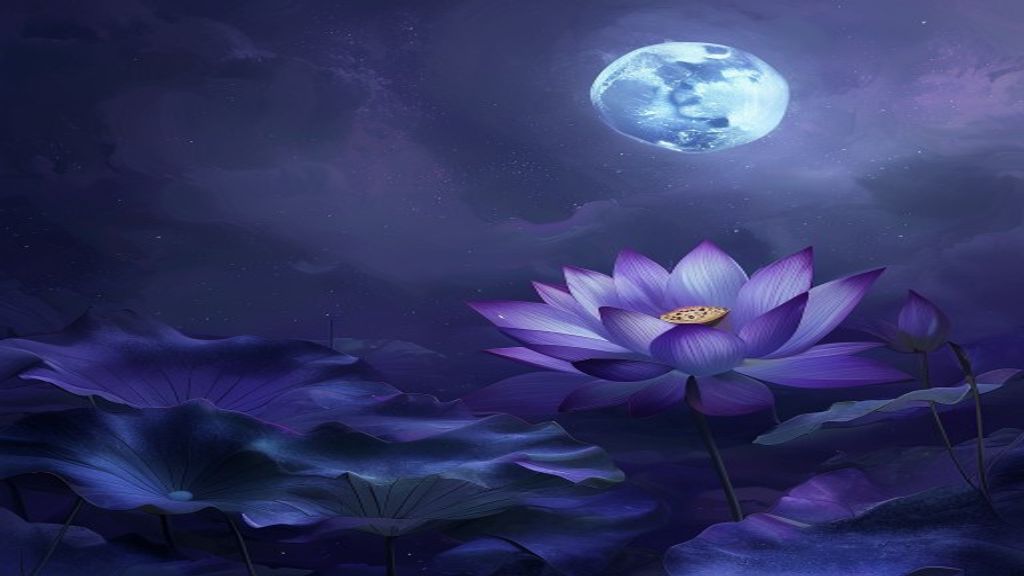
I remember exactly where I was when I first understood the lotus as a symbol rather than a decorative motif. A borrowed paperback, a long train ride, the heating in the carriage not quite working. I’d been reading about the way the flower rises clean and waxy from actual mud, not metaphorical mud, and something in me shifted in a way I couldn’t immediately name. The condition you came out of is part of what you are. Not in spite of it. Because of it.
Lotus dreams arrive with that same quality. They’re almost never anxious. They tend to have a stillness to them, a quality of witnessing. You see the flower on the water and you feel, in the dream, that something is being resolved, though you’d struggle to say what.
A lotus in a dream usually signals a process completing: something difficult being transformed into something clear. The mud in the dream is doing as much work as the flower. If you can remember whether the lotus was open, budding, or half-submerged, that detail tells you where in the process you are.
What the mud is telling you
The lotus symbol is ancient and deliberate, and it carries a specific argument wherever it appears: the difficult substrate is not incidental. Mesopotamian cosmologies, the Egyptian Book of the Dead, Hindu and Buddhist traditions across millennia, all of them use the lotus to say the same thing: clarity comes from murky water, not from clean conditions. The bloom would mean nothing without the water it grew in.
In dreams, this often translates to a feeling of recognition. The dreamer knows, somewhere in the body rather than the mind, that the hard thing they’ve been moving through is what made this possible. Not the hard thing and then this. The hard thing as the growing medium for this.
Artemidorus, who was meticulous about plant symbols in a way that still surprises me for a second-century writer, thought the specific condition of the plant mattered more than the plant’s reputation. He’d want to know: was the water clean or dark? Was the lotus open or closed? Was it one flower or a whole colony of them? He wasn’t building a mythology. He was doing close reading, and it’s the right instinct.
Blooming, budding, or half-submerged
The color matters more than most people think
White lotuses in dreams have a quality of stillness, of something completed and set aside. Pink ones feel warmer, more personal, more about feeling than about understanding. Blue lotuses, which are rarer in dreams, tend to show up when the mental dimension of a transformation is foregrounded: not just what you’ve been through but what you’ve understood because of it.
Carl Jung read flowers in dreams as expressions of the Self in the process of individuation. He’d probably note that the lotus is one of the few symbols that contains its own origin story, that it literally grows from below the surface of the water into the air, a movement he’d recognize as the alchemical ascent, base matter becoming something refined. I’m usually careful with Jung’s more architectural frameworks, but on the lotus specifically his reading holds because the symbol’s whole argument is about the relationship between substrate and bloom. The mud isn’t the past you’ve left behind. It’s still down there.
When the lotus appears in grief
This is the version I find hardest to write about and most worth writing about. Lotus dreams sometimes arrive in the months after a significant loss, not at the beginning of grief when dreams are raw and confused, but later. When something has been processed that you didn’t know you were processing. When the mud has been quietly doing its work.
G. William Domhoff would frame this in terms of continuity: your dreaming mind tracking your waking emotional state with something like fidelity, reflecting back where you actually are rather than where you think you are. He’s right. The lotus in that context isn’t consolation. It’s a kind of accurate reporting.
The water underneath
That train-ride realization hasn’t left me. I think about it when lotus dreams come up in conversations, because the dreamer almost always wants to talk about the flower, and I almost always want to ask about the water. Was it dark? Warm? Could you see the bottom? The water is the material the dream is made of. The flower is just what broke the surface.
If you’re working through what this dream might mean for you, it’s worth also spending time with dreaming of a calm sea, because the two share this quality of water that has settled into something clear. And if your lotus dream felt more like emergence than like peace, dreaming of a rainbow sometimes carries a similar energy: something appearing after the difficult weather, when the conditions finally allowed it.
I’m still not sure I fully understand the symbol. That might be part of what it’s for.
- Was the lotus open, budding, or still half-submerged?
- What’s the mud in this dream? What difficult condition is the flower growing from?
- Did I feel like I was watching this process or inside it?
- Is there something I’ve been moving through that might be further along than I’ve admitted?
Quick answers
What does dreaming of a lotus mean?
A lotus dream usually signals transformation: something difficult being converted into clarity or beauty. The key detail is the state of the flower. Open means a process is completing. Budding means you’re in the middle. The water the lotus grows in tells you something about the difficult conditions that made it possible.
Is a lotus dream a good sign?
Almost always yes, though the ‘good’ in it is specific. It’s not a dream about things being easy. It’s a dream about something hard becoming something real. That’s worth distinguishing.
What does the color of a lotus mean in a dream?
White tends toward completion and stillness. Pink feels more personal and warm. Blue, which appears rarely, tends to emphasize understanding more than feeling. The color is less important than the state of the flower, but it adds something.
Why would I dream about a lotus during grief?
Lotus dreams sometimes appear not at the start of grief but after a period of processing you didn’t know was happening. The dreaming mind can be further along than the waking mind. If a lotus arrived during a hard period, it might be worth taking that seriously.