Object Dreams
Dreaming of a Necklace: What Hangs at Your Throat
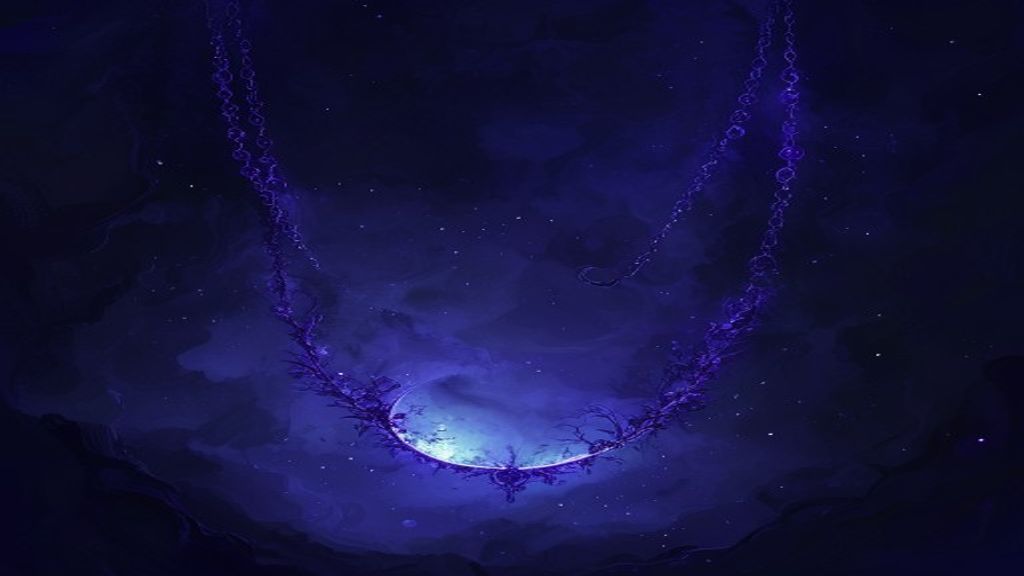
I’ll admit something that took me a while to understand about my own research: I used to treat jewellery dreams as a minor category. Bags, phones, missing keys, those felt substantial to me. A necklace felt decorative. Then I read through the actual accounts, and I stopped dismissing them. A necklace hangs at the throat. That’s not nothing. That’s the place where voice lives.
The throat detail changes everything once you sit with it. Not the chest, not the hand, not the ear. The throat is where you swallow things down or let them out. When a necklace appears there in a dream, tight or loose, familiar or strange, it’s almost always about something you’ve been asked to carry visibly, to display, to commit to in a way that other people can see.
A necklace in a dream tends to represent identity, loyalty, or a visible commitment. A tight necklace points to something that’s constricting your voice or expression. A broken one often signals a bond that’s snapped, not necessarily badly.
How cultures have read it, and why it matters
This is one of those symbols that has held remarkably consistent meaning across a long stretch of human history, which is usually a sign that something real is being tracked.
| Tradition | How it reads the symbol |
|---|---|
| Ancient Egypt (Chester Beatty papyrus, ~1200 BC) | Jewellery at the neck in dream texts carried protective or status significance, particularly for women. The condition of the piece, intact or damaged, was treated as an omen about the wearer’s social standing. |
| Artemidorus (2nd century Oneirocritica) | Necklaces in his catalogue belonged to a class of ornaments that ‘bind’ the dreamer, sometimes favorably, sometimes as chains in disguise. Context of the dream determined which. He was unusual in treating the weight of the piece as part of the reading. |
| Ibn Sirin tradition (Islamic dream interpretation) | A necklace bestowed by a respected figure indicated elevated status or a worthy responsibility. One that broke was not straightforwardly ominous; it could mean release as often as loss. |
| Western folk tradition (19th-20th c.) | In popular almanac traditions, a necklace given in a dream was usually read as romantic, which flattens the symbol considerably. Most serious dream researchers from the twentieth century onward moved away from this. |
What’s consistent across these readings isn’t the specific verdict but the framing: a necklace is something conferred, accepted, or broken. Not merely worn. The social act of putting something around someone’s neck, or having it placed around yours, is rarely neutral in any culture’s symbolism.
The one you already knew was there
There’s a specific version of this dream that I find more interesting than any other: the necklace you weren’t aware of until you touched it. You raise your hand to your neck for some mundane reason, adjusting your collar or reaching for something, and your fingers find a chain. You didn’t know you were wearing it. And your next move in the dream tells you everything.
Do you take it off? Do you try to see what it looks like? Do you just leave it and keep doing whatever you were doing? That sequence is a small diagnostic. The person who takes it off immediately is noticing an obligation they’d like to put down. The person who tries to look at it is curious about something they’ve accepted without fully examining. The person who just leaves it, the most common response, is carrying something so integrated they’ve stopped registering it as a choice.
Domhoff’s continuity hypothesis would say this neatly: waking preoccupations don’t disappear in sleep, they wear costumes. An invisible necklace suddenly felt is an old commitment freshly noticed. I think that’s right, though it leaves out the texture of the thing, the weight, the warmth of a chain that’s been against skin for a long time.
When it chokes versus when it rests
The dividing line in necklace dreams is almost always physical: does the necklace rest against your collarbone the way a comfortable piece of jewellery does, or do you feel it in your throat? The latter is significant in a way the former isn’t. When dreamers describe a necklace that makes it hard to breathe, or a chain they keep pulling away from the skin, they’re almost always navigating a commitment that’s started to feel like it’s taking something from them. Not a bad commitment necessarily. Just one that’s pressing.
Think about what else lives at the throat in symbolic terms. The voice. Speaking up. Saying things you’ve held. Dreams about silence and about being unable to speak often share territory with the tight-necklace dream. If you’ve also been having dreams about dreaming of handcuffs, the two together are worth thinking about in the same sitting: the first is about expression, the second is about freedom of action. They don’t always point to the same thing, but when they arrive together, something is genuinely feeling bound.
The broken chain
Short note, because this version tends to cause more anxiety than it warrants. A broken necklace in a dream is not an omen. It’s a description. Something has snapped, yes, but snapping can be release as much as rupture. Hobson would say the image is just activation noise, and I respect the skepticism even when I don’t share it entirely, because the consistency with which this dream shows up around actual endings and transitions is too precise to be entirely random.
What I’d tell you: notice whether you picked up the pieces in the dream. Picking them up suggests you’re not ready to let go. Leaving them suggests you already have, at some level, and the dream is just confirming it.
If you’re in the middle of something ending, you might also find yourself in the territory of dreaming of losing your ring. Both deal with commitments that have changed shape, but the ring sits on the finger, more private, while the necklace was always visible to others. They often mean different things about who the loss is for.
What you’re asking yourself, underneath
The necklace is not the same as the bracelet or the ring. Its position matters. It sits at the place where you swallow and speak and hold your breath. When it shows up in a dream, the question underneath is almost always some version of: am I wearing this, or is it wearing me?
I’ve been carrying that question myself lately, about a project that started as something I chose and has quietly become something I’m obligated to. I haven’t sorted it out. But I did dream of a necklace last week, light as thread, that I kept trying to see in a mirror that was too fogged to reflect anything clearly. I thought I’d mention it.
- Where exactly did you feel the necklace, resting at your collarbone or pressing at your throat?
- Who put it on you, or did you already have it when the dream began?
- Is there a commitment in your waking life that you display to others but rarely examine for yourself?
- If the necklace broke or was removed, did you feel loss, relief, or something more complicated?
Quick answers
What does it mean to dream of a necklace?
It tends to point to a visible commitment, bond, or identity you’re carrying. The necklace’s position at the throat makes it specifically about expression and what you’ve agreed to show to others, not just to yourself.
What does a tight necklace in a dream mean?
Something in your life is constricting your voice or expression. A commitment, relationship, or role that once fit is pressing in on you now. It doesn’t mean you need to take it off, just that it’s worth noticing the fit has changed.
Is a broken necklace in a dream a bad omen?
Not necessarily. It describes a bond that’s changed or ended, but whether that’s loss or release depends on your feeling in the dream. Picking up the pieces suggests reluctance to let go; leaving them suggests you may already have.
What does it mean if someone gives you a necklace in a dream?
Usually it’s about acceptance: you’re being asked to take on something visible, a role, a commitment, a connection. The character of whoever gives it, and whether you wanted to wear it, tells you how you feel about that invitation.