Nature Dreams
Dreaming of a Sunflower: What You're Turning Toward
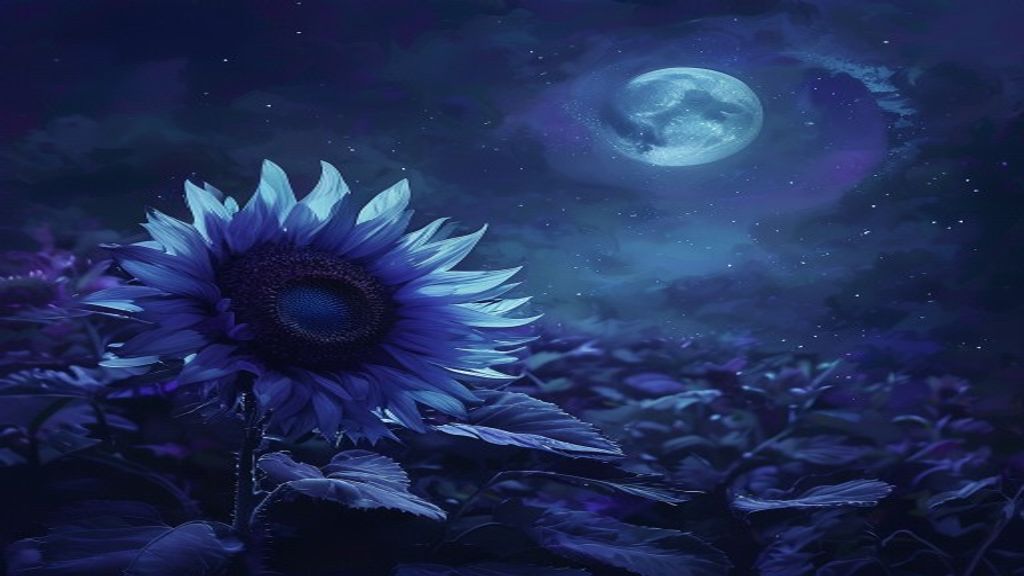
Every kitchen I lived in during my twenties had a phase where someone put sunflowers in a jar on the table. They showed up after good news, after moves, at the start of things. I don’t know when I started associating them with beginnings specifically, but the association is so fixed now that when a sunflower shows up in a dream, mine or someone else’s, I notice it the way you notice a key change in a song you know well. Something has shifted, or something is about to.
Most flower dreams are atmospheric. A sunflower dream is directional. The flower’s defining quality is orientation: it turns toward the light, and it does it visibly, the whole head moving, committing. Your mind chose that image for a reason.
A sunflower in a dream tends to represent conscious aspiration: something you’re actively turning toward. The dream’s feeling and what you’re doing with the flower matter more than the flower itself. A sunflower in good health points to energy moving in a clear direction; a wilting or drooping one suggests the source of your light has shifted or dimmed.
The long tradition of something pointing upward
- Ancient Mediterranean
Artemidorus grouped plants with vertical growth as signs of aspiration and social ascent in his second-century Oneirocritica. The taller the plant in a dream, the more the symbol concerned reaching, visibility, and standing. A sunflower in that framework is almost aggressively upward.
- Medieval and Renaissance symbolism
The flower turned toward the sun became a persistent image of devotion and constancy. In religious iconography it was loyalty made visible. Your dreaming mind still carries a trace of that association, even if you wouldn’t describe yourself as particularly devout.
- Jung’s analytical tradition
Carl Jung read flowers as symbols of the Self in its striving aspect, the psyche in active growth rather than dormant storage. He’d situate the sunflower specifically near what he called individuation: the process of becoming more fully and consciously yourself. I find that reading genuinely useful, though I hold it loosely. Not every sunflower dream is about self-realization. Sometimes it’s about wanting a job that makes you feel good.
- Contemporary dream research
G. William Domhoff’s continuity hypothesis, which he’d frame as stubbornly descriptive rather than interpretive, suggests the sunflower is probably just tracking something already active in your waking mind. Whatever you’re aspiring toward right now is the likely source of the image. The dream is a mirror, not a prophecy.
What the light source tells you
This is the question I find most interesting in sunflower dreams, and almost nobody thinks to ask it until I mention it. In the dream, was there a visible light source? Did the sunflower seem to be turning toward something, or just standing? Was the sun present in the sky, implied, or somehow absent?
A sunflower with no apparent sun is the version that stays with me. It’s like a compass with no magnetic north: the shape of orientation without anything to orient toward. People who’ve described this dream to me have often been in transitions, between roles, between relationships, between versions of themselves, where the aspiration is still present but the target isn’t clear yet. The flower is ready. It just hasn’t found its direction.
A sunflower turning away from the light, or with its head drooping despite sun overhead, is rarer and carries more weight. It tends to appear when someone is withdrawing from something they once wanted, sometimes by choice, sometimes by exhaustion. The dream isn’t judging the withdrawal. It’s noting it.
Scale
A single sunflower in a vase, a field stretching to the horizon, one enormous bloom filling your entire field of vision: these are not interchangeable. A single flower tends to point to a single thing, specific and particular. A field is a life condition, something more ambient and pervasive. And the oversized single bloom, which people describe to me more often than you’d expect, feels to me like joy being treated as spectacle: something so obviously good you almost can’t take it in at normal scale.
The field version is worth comparing with what people experience in dreaming of golden rain, because both carry an abundance quality, something more than can be held, distributed across the whole scene rather than focused. The emotional register is different but the underlying question is similar: what in your life feels like it’s coming in at a scale you’re not quite ready to receive?
The unasked question
Here’s the part I find I always end up saying: a sunflower dream is less about what you want and more about whether you’re allowing yourself to want it. The flower doesn’t hedge. It commits. Fully, visibly, with the whole face. Plenty of people dream of sunflowers during periods when they know what they want but have been circling it for months without moving. The dream isn’t revealing the desire. It’s asking why the movement hasn’t started.
If the image in your dream was darker, if the vibrancy felt inverted or the color was off, the dreaming of an abyss piece addresses that shadow quality, the sensation of aspiration that suddenly drops. They’re not opposite dreams so much as the same question from different angles: what are you reaching toward, and what happens if the ground isn’t where you thought?
The jar on the table
Those kitchen sunflowers from my twenties eventually stopped. At some point I moved into a place where I didn’t put flowers on the table, and I didn’t notice I’d stopped until recently. I’m not sure what to make of that. Maybe nothing. Maybe the association stuck with beginnings and at some point beginnings felt less like something to mark. Or maybe I just forgot to buy them. Probably that. But the sunflower in a dream keeps its charge regardless. The image knows what it means even when the dreamer doesn’t.
And if the tulip crossed your mind as you read this, the dreaming of a tulip piece is worth a look. The two flowers share a domestic familiarity but carry different emotional registers. The tulip is quieter, more interior. The sunflower can’t help being seen.
- Was there a visible light source, and was the flower turning toward it? That direction is the subject.
- Single flower, or field? Is what the dream is pointing to specific and named, or ambient and pervasive?
- Was the sunflower in good health, or drooping? What in your life has been getting your full energy versus your depleted attention?
- Is there something you want but haven’t moved toward yet? The sunflower is rarely subtle about that question.
Quick answers
What does it mean to dream of a sunflower?
A sunflower in a dream tends to represent something you’re actively aspiring toward or turning your energy to. The flower’s condition and what you’re doing with it in the dream give you the specific reading. It’s almost always a forward-facing, aspiration-related symbol.
Is dreaming of sunflowers a good sign?
Generally yes. A healthy, vivid sunflower tends to appear when something in your life has clear direction and genuine energy behind it. Even a wilting sunflower is informative rather than ominous: it’s asking where your light has gone, which is a useful question.
What does a field of sunflowers mean in a dream?
A field usually signals something pervasive rather than specific: a life condition, a mood, a general orientation rather than a single desire or goal. People often dream of sunflower fields during periods of felt abundance or, interestingly, during periods of yearning for that abundance.
What does it mean if the sunflower is drooping or dead in my dream?
A drooping sunflower tends to surface when energy that was once directed toward something has quietly withdrawn. It might reflect a fading aspiration, a relationship that’s lost its original draw, or simple depletion. The image is honest rather than harsh about it.