Nature Dreams
Dreaming of the Moon: Cycles, Moods, and What's Lit From the Side
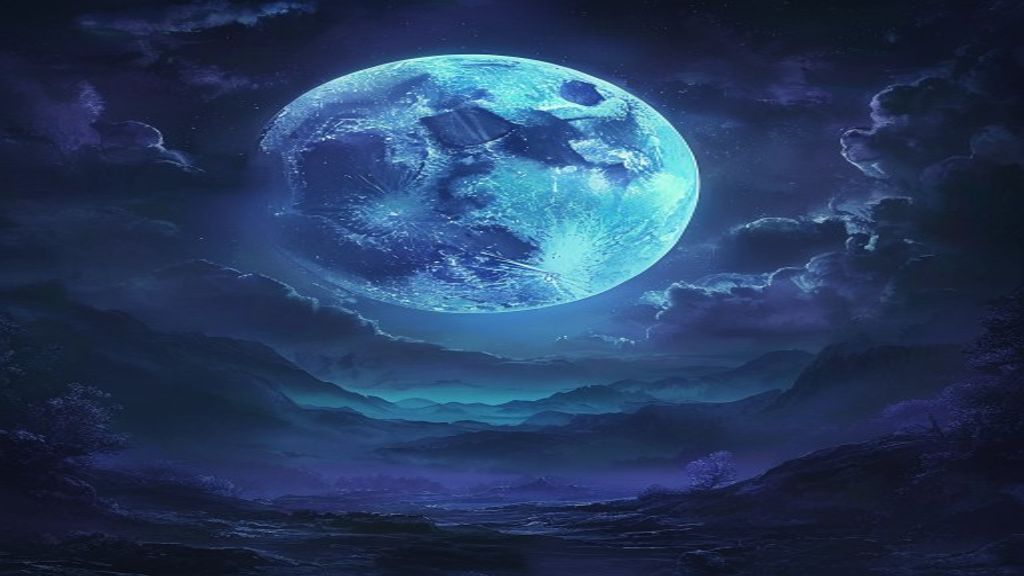
The moon doesn’t generate any light. Every illuminated thing you see in a moonlit dream, the pale road, the silver water, the face just barely visible across the room, is actually reflected sunlight arriving from an angle you can’t directly see. It’s borrowed light, showing you something real. That technical fact is also a perfect description of what the moon does in a dream.
Moon dreams have a different texture than sun dreams. Sun dreams tend to be declarative, lit from everywhere, clear about what they want to say. Moon dreams are conditional. Things are visible but not fully. There’s something else off to the side, outside the frame, doing the illuminating. You’re never quite getting the direct story.
The moon in a dream usually signals something cyclical, emotional, or partially hidden. The phase matters: a full moon tends to arrive at moments of emotional intensity or heightened awareness; a crescent at beginnings; a dark moon at the end of a cycle you haven’t fully acknowledged yet. The feeling tone of the dream matters most.
The radiator and the winter window
The anchor I keep returning to for moon dreams is this: a radiator in a cold room at night. You know the particular quality of warmth from that source. It’s not the clean overhead warmth of a lamp. It hisses. It comes and goes. It’s old and reliable and it has its own schedule, slightly out of sync with what you actually need. You learn to work around it: awake earlier than you want to be because the room’s gone cold, falling asleep in front of it when it finally gets going. The moon in a dream has that quality for me. Present, rhythmic, reliable in a way that’s not quite calibrated to your immediate preferences.
Moon dreams almost always carry a sense of cycle. Not usually a threatening one. More like a tide: something that was low is getting higher, or something that was full is pulling back. The dream catches you at a particular moment in that cycle and asks you to notice where you are in it.
Reading the phase
- Full moonPeak emotional intensity, everything lit at once. This version arrives at moments of heightened awareness, when something you’ve been aware of at the edges is now impossible to avoid. Not necessarily bad. Sometimes it’s clarity. Sometimes it’s overwhelm. The full moon makes the room bright enough that you can’t pretend you didn’t see something.
- Crescent or waxingBeginning. Something is gathering itself. A new phase is building and you’re at the very early part of it: the momentum is present but the shape isn’t visible yet. Crescent moon dreams often accompany the early days of a new project, relationship, or personal shift, when excitement and uncertainty are still evenly mixed.
- WaningSomething is completing. The dream tends to arrive in the closing phase of a chapter: the last weeks of a job, a relationship that’s running out of its own energy, a season of life that’s winding down without a dramatic ending. The waning moon doesn’t collapse. It just gets quieter.
- Dark or absentThis is the one that unsettles people, because they expect the moon and it isn’t there. A sky where the moon should be and isn’t tends to mark the gap between cycles, the genuine pause when one thing has ended and the next hasn’t started. Rest, if you can receive it that way. Blankness, if you can’t.
- Two moons or a wrong moonSomething’s off in the cycle. Two moons or an impossibly large one tends to reflect a situation where two conflicting rhythms or needs are both demanding full attention. The dream is registered overwhelm, not magic.
Reflected light and what you’re not seeing directly
The borrowed-light quality of the moon translates into something specific in dream interpretation: the moon tends to represent things you’re understanding indirectly. Emotions you’re inferring rather than feeling straight. A relationship you’re assessing through secondhand information. A fear you can see the outline of without quite being able to look at its source. The moon lights the road but the sun, the direct cause, the real thing, is somewhere else.
Jung worked with the moon as a symbol of the unconscious itself, particularly as it relates to cyclical emotional processes. I cite that carefully because his framework can get unwieldy, but the basic observation holds: the moon appears in dreams when your emotional life is running on its own rhythm, in sync or out of sync with your conscious intentions. The radiator and its hissing, not the switch you control.
The moon over water
This is the briefest section because the image does its own work. A moon reflected in still water is a dream about a reflection of a reflection: indirect understanding of something that’s already not being seen straight. Beautiful, often. Accurate in its indirection. If your dream held this image, you already know what you’re circling without quite being able to face.
What the long tradition says
Artemidorus catalogued the moon with unusual care for a second-century writer, separating its effects by phase, brightness, and the dreamer’s occupation. He’d note, for instance, that a waning moon meant different things to a farmer than to a sailor. Practical, contextual, refreshingly undramatic about it. The broad tradition that runs from the Chester Beatty papyrus through Islamic dream interpretation into Western symbolism treats the moon as female energy, cyclical time, and the hidden aspects of things, which isn’t wrong, just partial.
Domhoff, whose continuity work I find more useful than most for grounding these symbols in actual life, would point out that moon dreams cluster predictably: around transitions, around emotional processing that hasn’t been completed in waking life, around the particular kind of tiredness that comes from being in the middle of something long. The moon is a slow symbol. It belongs to things that are taking their time.
If your moon dream felt connected to a larger landscape, dreaming of a beautiful garden often carries similar cyclical and tended qualities, while dreaming of an overflowing river sits at the high-water end of the same emotional-cycle territory. And if the moon appeared over flowers or still ground rather than water, the dreaming of a lotus piece explores that serene, emerging quality in its own right.
The radiator in that cold room: I’ve noticed I trust it more than I trust the central heating. The central heating comes on when you tell it to. The radiator does what it does. Some nights it wakes you up at 3am for no reason you can explain. Some nights you’re grateful for it. I haven’t fully worked out what that means about the moon symbol either. Maybe I don’t need to.
- What phase was the moon in? Was it full, waxing, waning, or absent?
- Was I watching it, or was it simply there, lighting something else I was paying attention to?
- What in my waking life is currently on a cycle that doesn’t match my conscious schedule?
- Was there something the moon was illuminating that I kept not quite looking at directly?
One symbol, two traditions
The disagreement is honest: one school sees moon as self-communication, the other as an image to be discerned against Scripture. They can inform each other, but they do not merge.
The moon in a dream is never just light. Nora Vance on the phases, the pull, and the emotional cycle your sleeping mind is actually tracking.
You are reading this oneWhat Scripture actually says about the moon, from Joseph's dream to Revelation's woman clothed with the sun. KJV passages, honest gaps, and discernment for moon dreams.
Read the full biblical meaning →Quick answers
What does it mean to dream of the moon?
Usually it signals something cyclical, emotional, or partially hidden in your waking life. The phase tells you where you are in a cycle: full for peak intensity, crescent for beginnings, waning for closings. The moon tends to represent things you’re understanding indirectly rather than seeing straight on.
Is dreaming of a full moon a good sign?
It depends on the feeling in the dream. A full moon means everything is lit at once, which can be clarity or overwhelm. It tends to arrive when something you’ve been aware of at the edges of your attention is now fully visible. That’s useful, though it’s not always comfortable.
What does a dark or absent moon in a dream mean?
A sky where the moon should be and isn’t tends to mark the gap between cycles: one thing has ended and the next hasn’t started. People find this version unsettling because they expect the light and it isn’t there. It can be read as genuine rest, or as a pause you haven’t yet made peace with.
Why do I keep dreaming about the moon?
Recurring moon dreams often track something cyclical in your waking life that you haven’t fully acknowledged. The moon’s rhythm in dreams tends to mirror emotional cycles: grief, recovery, transition, exhaustion. If the dream keeps returning, the cycle it’s tracking probably hasn’t completed.