Action Dreams
Dreaming of Being Lost in a Forest: Reading the Trees
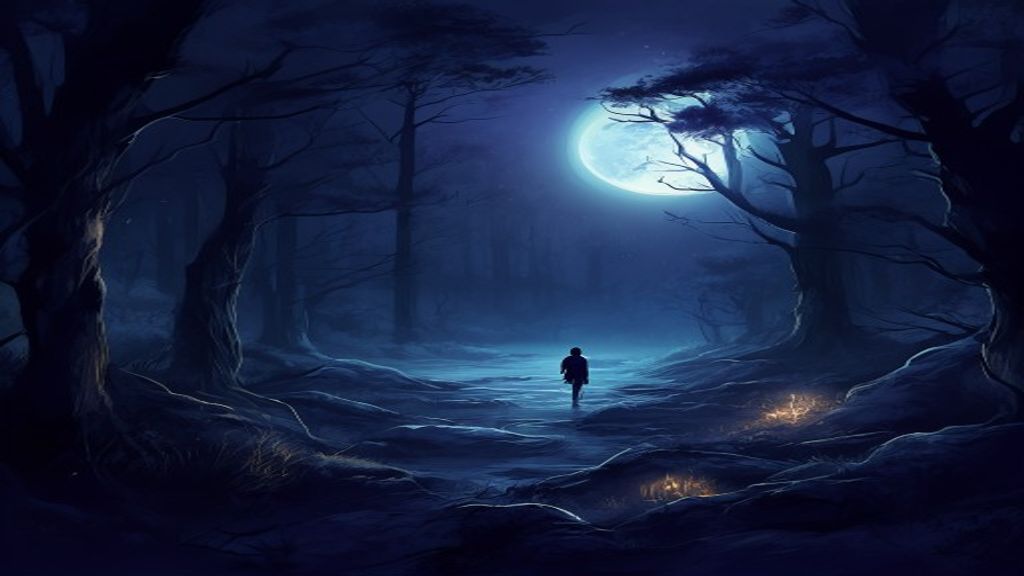
“I knew the path and then I didn’t.” That’s how a colleague put it when she described a dream she’d been having for three weeks. She wasn’t describing a hiking accident. She was describing the moment, in her dream, when the trail behind her stopped existing. She’d look back and there was just more forest. She didn’t remember walking into the trees. She was just already deep in them, and the way back had sealed itself off.
I’ve heard this shape of dream more times than almost any other, and the detail that people keep returning to isn’t the darkness or the distance or even the fear. It’s that specific surprise: I knew where I was, and then I didn’t. The transition wasn’t dramatic. It was quiet. And that quietness is usually the whole point.
Being lost in a forest dream often captures a moment in waking life where you’ve drifted out of your known territory so gradually that you can’t quite name when it happened. The forest’s character matters: dense and threatening reads differently from vast and indifferent, which reads differently from beautiful but impossible to navigate.
The trail that closed behind you
Forests in dreams carry a very old symbolic weight, and it’s consistent across traditions in a way that makes me take it seriously. The forest is the place beyond the path, beyond the known, where the rules that organize ordinary life don’t quite apply. That’s not purely literary. It’s how the dreaming mind seems to reach for it: as the version of the world that hasn’t been cleared and ordered.
What’s particular about being lost there, rather than simply being in the forest, is the loss of orientation. You’re not exploring. You’re not following the trees with intention. You’re in a place you entered without quite noticing, and you can’t get your bearings back. The trees look the same in every direction. The light, if there is any, is the wrong kind of even.
Most people who have this dream don’t describe panic, which surprises them. What they describe is something closer to resigned bewilderment. Moving forward because stopping feels worse. That texture, continuing without knowing where continuing leads, is often what the dream is actually about.
Which kind of lost are you
The forest-lost dream isn’t monolithic. Paying attention to its specific qualities can shift the reading considerably. These aren’t firm categories, but they’re the distinctions I find most useful.
Why threat simulation doesn’t fully cover it
The biological reading of this dream type is coherent enough. Revonsuo’s threat simulation framework would place the forest-lost dream in the category of scenarios that challenged our ancestors, circumstances where disorientation in an unknown environment carried genuine risk, and argue that we still rehearse them in our sleep as a kind of vestigial preparation. That holds up as a starting point. But I’m not fully satisfied with it for this particular dream.
Because the forest dream, in most of the versions I encounter, isn’t really a survival scenario. The dreamer isn’t running from something. They’re not in immediate danger. They’re in a situation with no clear next move, no visible horizon, no way to tell which direction leads out. That’s not a threat in the predator sense. It’s an existential disorientation, and I think those are different enough to deserve a different reading.
What I find more useful is the idea that the dream is doing a kind of honest accounting. G. William Domhoff’s continuity hypothesis, which holds that dreams closely track our real preoccupations and emotional conditions, fits this one well. If you’re lost in a forest repeatedly, the waking question worth asking isn’t “am I in physical danger?” It’s “what have I been moving through without knowing where it leads?”
There’s a thread that often connects this dream to dreaming of being locked in, which is its spatial opposite. Where locked-in is about too much enclosure, forest-lost is about too much open space, too many equally possible directions. Both are forms of having no clear exit. And both tend to track real circumstances where your options are either too few or too many.
Trees as the dream’s own honest language
The detail I circle back to most when I think about this dream is the sameness of the trees. People describe this constantly: every direction looks identical. And I think the forest dream uses that feature as a kind of image for a state of mind that’s genuinely hard to describe otherwise. The situation where you have options but they all look equivalent. The problem where no branch of the decision tree stands out as clearly right.
That’s a forest made of choices, and you’re standing in the middle of it, and every tree is the same height.
If this resonates, there’s a related texture in dreams about drowning in a pool, where the medium changes but the loss of orientation is similar, and in being unable to scream, where the helplessness is communicative rather than spatial but comes from the same territory of feeling without traction.
When the trees thin out
The dream has a handful of resolutions, and they’re all worth knowing. Sometimes you find a clearing, and wake before you reach it. Sometimes you find another person, also lost, and the loneliness changes shape. Sometimes the dream just ends, no exit, still in the trees, and you’re left with the feeling of having been suspended in there rather than released.
That unresolved version is the most common. And I think it’s actually appropriate to the situation it’s usually describing. Being in the middle of an unmapped stretch of life doesn’t resolve in the night. You don’t find the path. You wake up and you’re still in it, and the dream has simply been company while you’re there.
My colleague’s dream ended after she made a decision she’d been circling for months. She didn’t know the dreams were about the decision until after, when she noticed they’d stopped. That’s usually how it works. The forest doesn’t clear until something in your waking life does. And sometimes not even then.
- Was the forest dark and threatening, or open and disorienting? That texture is almost the whole reading.
- Do I know when I entered the trees, or was I already deep in them when the dream started?
- Is there a stretch of my waking life I’ve been moving through without knowing where it leads?
- What would “finding the path” actually mean for me right now?
Quick answers
What does it mean to dream of being lost in a forest?
It usually reflects a period of disorientation or unmapped territory in waking life. You’re somewhere you drifted into without quite noticing, and you can’t find your bearings. The forest’s character tells you about the emotional tone: dark and closing in suggests active anxiety, vast and beautiful suggests a situation that should feel right but that you can’t quite navigate.
Is dreaming of being lost in a forest a common dream?
Very common. Disorientation and entrapment rank among the most widely reported dream themes. The forest setting is a specific version of that, drawing on one of the oldest images the dreaming mind reaches for when it wants to represent the unknown or the uncharted.
What does it mean if I find a path in the forest in my dream?
Finding a way out, even if you wake before reaching it, usually signals that the waking situation has a resolution available even if you can’t see it clearly yet. The relief you feel in the dream is worth paying attention to. It tells you something about what you actually want.
Why do I keep having this dream about being lost in trees?
Recurring forest-lost dreams typically follow an ongoing situation that hasn’t resolved or been acknowledged. The dream tracks your real preoccupations closely: while you’re navigating something without a clear map in your waking life, the forest stays. It tends to ease when you either find direction or genuinely accept that you don’t have one yet.