Animal Dreams
Dreaming of a Cockroach: Survival, Disgust, and What Won't Die
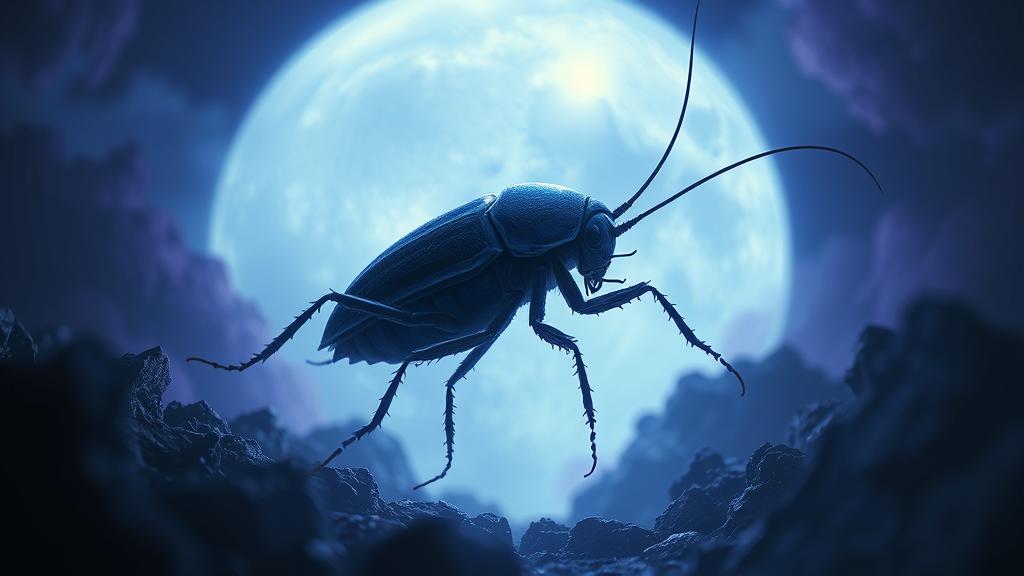
Cockroaches have outlasted every mass extinction event in the last three hundred million years. That fact used to seem irrelevant to dream interpretation, and I’ve changed my mind about that. Because the single most striking thing about cockroach dreams isn’t the disgust they leave behind, it’s the persistence. The creature keeps moving. You can’t quite get it. Or you do, and then there are more. The dream’s emotional core isn’t the insect. It’s that.
Let me say the thing most dream sites don’t: a cockroach in a dream is almost never bad luck in any literal sense. Almost no one who emails me after a cockroach dream has something terrible happen the following week. What they often do have is something they’ve been putting off, avoiding, or hoping would quietly disappear on its own. The cockroach is the dream’s slightly theatrical way of pointing at that thing and noting: it hasn’t disappeared.
Dreaming of a cockroach usually points to something persistent in your waking life, a problem, a feeling, or a situation you’ve been trying to ignore. The cockroach’s indestructibility is the message: this won’t go away by itself. How you respond to it in the dream (freeze, chase, swat, watch) often mirrors how you’ve been handling the waking equivalent.
The kitchen light moment
I once lived somewhere that had a cockroach problem for about four months. The defining experience wasn’t finding them. It was that specific moment of turning on the kitchen light at two in the morning and watching them scatter. Not shocking exactly, just deeply, solidly unwelcome. The awareness that they were always there, that you just weren’t always watching. I’ve thought about that sensation many times when people describe their cockroach dreams, because that specific feeling, of something operating in the background that you didn’t choose to see, is what comes through again and again in the accounts I hear. The dream is turning on that light.
Antti Revonsuo’s threat simulation framework gives this some ground to stand on: the dream is registering something as a threat worth processing. But cockroach dreams almost never feel like the high-alert threat that, say, a scorpion or a predator dream does. They’re lower register. The threat is accumulation, persistence, background contamination. Something seeping in at the edges.
What different cultures made of it
| Tradition | How it reads the symbol |
|---|---|
| Ancient Greek tradition (Artemidorus) | Insects in dreams signaled small irritants or minor enemies, rarely mortal threats. Persistence and quantity mattered more than the creature itself. |
| West African interpretive traditions | Cockroaches in some traditions signal ancestors trying to communicate, particularly through persistent or recurring imagery. The disgust response is secondary to the message. |
| Chinese folk dream interpretation | Finding cockroaches in a house in dreams was often linked to financial disruption, specifically hidden losses rather than overt ones. |
| Contemporary Western psychology (Jung) | The cockroach fits the shadow archetype neatly: the rejected, the repressed, the thing you’ve pushed into the dark that refuses to stay there. |
| Ibn Sirin tradition (Islamic dream interpretation) | Small crawling creatures in dreams often pointed at minor enemies or ongoing social difficulties, with the dreamer’s emotional response as the key variable. |
What strikes me about that cross-cultural spread is that almost no tradition reads the cockroach as a simple bad omen. The persistent note is persistence itself, and the secondary note is something hidden. Those two readings travel together across very different interpretive systems, which at minimum suggests they’re tapping into something real about the animal’s nature and what it stirs in us.
Jung’s shadow in a hard shell
Jung would read a cockroach dream with interest, and I think he’d be more direct than usual. The creature that survives everything, that lives in the walls, that people can’t bear to look at directly: that’s a shadow image almost too obvious to miss. The part of yourself you’ve declared unacceptable. The impulse, the desire, the old wound that you’ve tidied away into the dark corners of how you think about yourself.
Dreaming of a panther has a shadow quality too, but it’s glamorous shadow, the kind you almost want to claim. The cockroach is unglamorous shadow. The thing you’re embarrassed by, not afraid of exactly, but unwilling to look at in decent light. That distinction matters for how you read the dream.
One cockroach versus an infestation
These are not the same dream at all. A single cockroach tends to be a specific message about a specific thing. An infestation, rooms full of them, walls moving, is a dream about scale and overwhelm. The problem isn’t one contained thing anymore. It’s accumulated. Multiple neglected situations, a build-up of avoidance, a long stretch of not dealing with something that’s now started to spread.
Killing a cockroach in the dream and feeling relief is fairly legible: you’re ready to address what it represents. Killing one and then finding more is the dream’s dry editorial comment on whether the approach you’ve been taking is actually working. Being unable to kill it at all, chasing it and failing, points at something you’ve tried to resolve but haven’t found the right method yet. The cockroach isn’t taunting you. It’s just doing what cockroaches do.
There’s something clarifying about the fact that cockroaches have no particular interest in people. They’re not predators. They’re not aggressive. They just survive, and in surviving, they’re remarkably good at living inside the structures we build without our permission. I think that’s why cockroach dreams land the way they do. The feeling isn’t danger. It’s contamination. The sense that something has taken up residence in a space you thought was yours. Dreaming of an animal transforming often carries a different kind of unease, more identity-shaped, but cockroach dreams are specifically about occupation. And about what’s been quietly there all along.
I still turn on the kitchen light slowly, by the way. Old habits.
- Was there one cockroach or many? One points to something specific; many point to something that’s accumulated.
- What did I do when I saw it? My reaction in the dream often mirrors what I’ve been doing with the waking situation.
- Which room was it in? Kitchen, bedroom, workplace, a stranger’s house, each location shifts which area of my life is being addressed.
- Is there something I’ve been telling myself has gone away, or will go away on its own, that probably hasn’t?
Quick answers
What does dreaming of a cockroach mean?
It usually points to something persistent in your waking life that you’ve been avoiding or hoping would disappear. The cockroach’s defining quality in dreams is the same as in nature: it doesn’t go away. The dream is registering something that’s still there.
Is a cockroach dream a bad sign?
Not necessarily. It’s more of an attention signal than an omen. The dream’s tone matters: disgust mixed with helplessness suggests avoidance, while disgust that leads to action in the dream often reflects readiness to deal with whatever the cockroach represents.
What does it mean to dream of a cockroach infestation?
An infestation suggests accumulation, multiple avoided things rather than one, or a single problem that’s been left unaddressed long enough to spread. It’s the same symbol as a single cockroach, scaled up to emphasize urgency.
Why do I keep having cockroach dreams?
Recurring cockroach dreams tend to share the same root as other recurring animal dreams: something in your waking life hasn’t been directly addressed. The persistence of the dream usually mirrors the persistence of whatever it’s pointing at.