- Tradition
- Psychological readingFood dreams
- Also read in
- The BibleSame symbol, other tradition
- Draws on
- Domhoff, Artemidorus
- Reviewed
- 6 min read
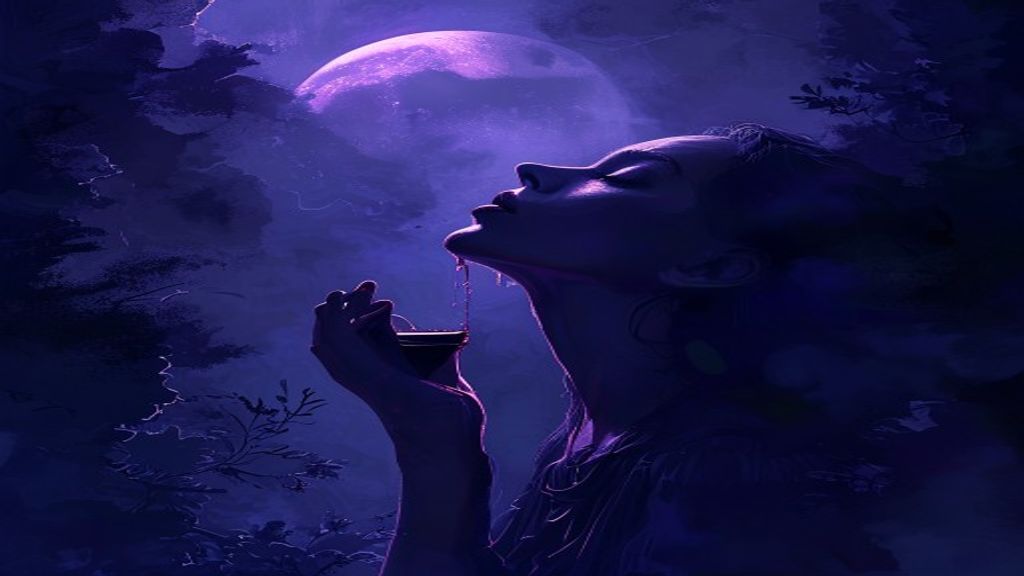
You drink the blood willingly, calmly, and without the revulsion you would expect. Then you wake up ashamed, not of the blood but of how little it bothered you. The worry that follows is rarely about the image. It is about what the missing disgust says about your hunger.
That’s the thing about drinking-blood dreams. They don’t usually feel like horror. They feel like appetite. And appetite, in dreams, is always worth taking seriously, even when, especially when, the object of it makes you want to change the subject at breakfast.
Dreaming of drinking blood is almost never about violence or the supernatural. It tends to map onto hunger for life-force: vitality, power, intimacy, or the parts of someone else you want to absorb. What matters most is whether the dream felt like transgression, satisfaction, or something closer to need.
Blood as the concentrated thing
Across almost every tradition that has bothered to think carefully about symbols, blood has meant life force. Not death. Life. The thing underneath everything else, the concentrated essence. When your dreaming mind reaches for it as something to drink, it’s reaching for that: not the literal fluid but what the fluid stands for. Vitality. Energy. The aliveness of something or someone. The question is always whose, and why yours feels insufficient.
Artemidorus, working in the second century and writing about dreams with more care than many modern theorists give him credit for, held that the same dream means different things for different dreamers, and that is a good rule here. Our vampire associations are a later cultural overlay. Look past them and the fundamental image is simple: you are taking in what another living thing has. That exchange is what the dream is staging.
What kind of hunger this is
Not all blood-drinking dreams are the same kind of hungry. Some feel like desperation. Some feel almost tenderly intimate. Some have the flavor of a power grab, and the dreamer wakes knowing exactly who the blood belonged to. The version matters enormously, and the decide below isn’t to sort your dream into a verdict but to help you locate the right question.
Domhoff’s continuity hypothesis keeps me honest here. He’d push back on any reading that drifts too far from what’s actually happening in the dreamer’s waking life. The blood image isn’t free-floating symbolism. It’s attached to real situations, real hungers, real people. The question ‘whose?’ is always worth answering first before reaching for the more abstract interpretations. If the blood in your dream was only seen, not drunk, the general reading of blood dreams covers that version.
The shame that comes with it
Most people who have this dream don’t tell anyone. It gets filed with the other dreams too unsettling to share, which is a shame, because the shame itself is useful data. The dream is showing you an appetite you haven’t admitted to having. Not a dangerous one. Just an uncomfortable one. Wanting more power in a relationship. Wanting someone’s energy, their way of commanding a room, their certainty. Feeling depleted enough that you’re reaching for something raw and fundamental. None of those are admissions you need to make at the dinner table. But noting them, even privately, tends to be worth something. If the appetite in your dream was for raw flesh rather than blood, dreaming of eating raw meat covers that rawer version of the same hunger. The dream isn’t reaching for something pleasant. It’s reaching for something necessary.
The vampire frame and why it gets in the way
We have a lot of cultural machinery around blood-drinking, and most of it gets in the way of the actual dream. The vampire is a useful literary figure for thinking about predation, seduction, and the extractive relationship. But your dream probably didn’t cast you in a Gothic novel. The image is older than Bram Stoker and simpler. Drinking blood in ritual contexts has frequently been associated with receiving vitality, with healing, with initiation. The ritual use of blood in ceremony across cultures is almost always about life-force transferred, not destruction enacted. If you can set down the vampire associations for a moment and ask what vitality you were reaching for, the dream usually becomes much clearer.
The discomfort is part of the reading
I find these dreams harder to write about than most, because the discomfort people feel about them is real and I don’t want to paper over it with reassurance. Not every appetite is fine just because it shows up in a dream. The dream that felt tender and loving is one thing. The dream that felt like a power grab, where you woke knowing exactly whose energy you’d been feeding on, that one is asking you to look at whether a waking dynamic is working for both people involved. If the energy was being taken from you rather than by you, dreaming of a vampire reads that reversed dynamic.
I’d rather examine what the dream was reaching for than dismiss it as just a weird one. Scripture has its own long history with blood and what it means to drink it, which the biblical reading of drinking blood sets out separately from the psychological view here.
- Did I know whose blood it was? That person is the key.
- Did I feel satisfied, guilty, or something that didn’t have a clean name?
- What quality or energy have I been low on lately?
- Is there a relationship where the exchange of energy feels unequal?
One symbol, two traditions
Read side by side, the two traditions pull in different directions: drinking blood as a signal from your own mind, or drinking blood as an image to test against the text. Knowing which question you are asking is half the interpretation.
Dreaming of drinking blood is almost never about violence or the supernatural. It tends to map onto hunger for life-force: vitality, power, intimacy, or the parts of someone else you want to absorb. What matters most is whether…
You are reading this oneMaybe, and maybe not, and that uncertainty is itself biblical. Joel 2:28 promises that your old men shall dream dreams, and Numbers 12:6 acknowledges that God speaks through dreams. But Ecclesiastes 5:7 cautions that in the…
Read the biblical meaning →Quick answers
What does it mean to dream of drinking blood?
It almost never means harm. Blood in dreams tends to represent concentrated life-force or vitality, so drinking it usually points to a hunger for energy, power, or a quality you’ve identified in someone else and feel you lack. The feeling inside the dream matters more than the image.
Is dreaming of drinking blood a bad omen?
Historically some traditions read blood dreams as signs of strength or inheritance rather than danger. Psychologically, the image points to appetite and hunger for vitality, which can be uncomfortable to acknowledge but is rarely a sign of anything pathological. The dream is showing you what you’re reaching for.
Why did I feel no disgust in the dream?
That absence of disgust is significant. It usually means the dream-logic has already framed this as sustenance, as something your dreaming self needed rather than something it feared. Your waking reaction to that calmness is often the more revealing response to examine.
What if someone else gave me blood to drink?
The reversal matters. When you receive rather than seek, the dream tends to be about what someone is offering you or asking you to accept. Think about who did the offering and what that relationship asks of you in waking life.
Sources for this reading
- Domhoff, G. W. (2003). The Scientific Study of Dreams: Neural Networks, Cognitive Development, and Content Analysis. American Psychological Association.
- Domhoff, G. W. (1996). Finding Meaning in Dreams: A Quantitative Approach. Plenum Press.
- Artemidorus of Daldis (2nd century CE). Oneirocritica. English edition: Harris-McCoy, D. E. (2012). Artemidorus’ Oneirocritica: Text, Translation, and Commentary. Oxford University Press.
Full bibliography on Sources and method. Found a mistake? Tell us and see the corrections log.