- Tradition
- Biblical reading
- Also read as
- PsychologySame symbol, other tradition
- Scripture
- Leviticus, Genesis, John, Acts
- Reviewed
- 5 min read
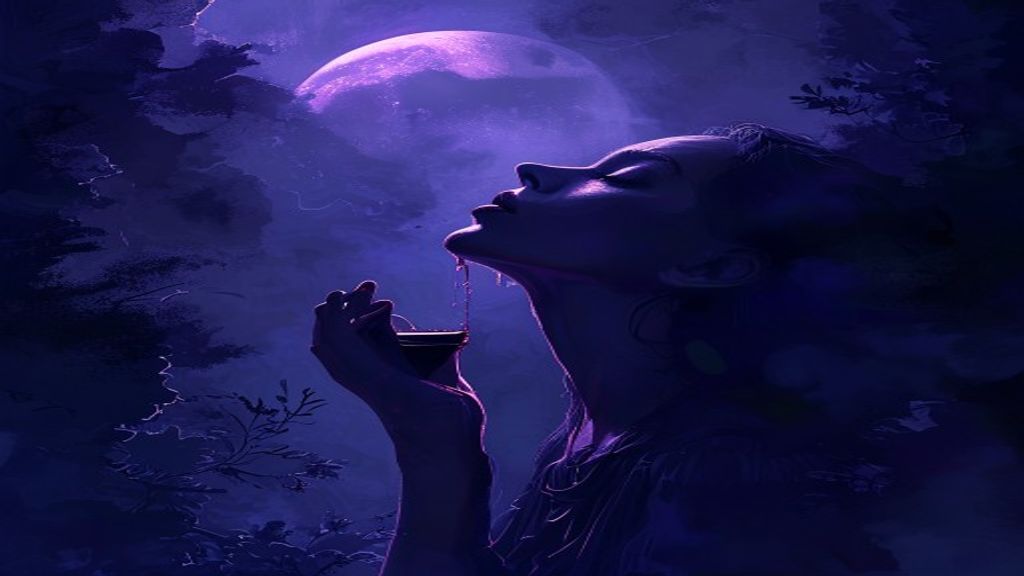
Drinking blood in a dream tends to leave people somewhere between confusion and shame on waking. Not because they are superstitious, but because anyone who knows a little of the Bible knows that blood is never a casual symbol there. It carries weight. The dream sticks through the morning and keeps circling a question that is hard to answer honestly: what does Scripture actually say about blood, and does any of it touch this?
If you’ve dreamed of drinking blood, you may have landed here carrying exactly that. A weight you can’t shake. A half-remembered verse. And probably a pile of websites telling you it means either spiritual attack or, stranger still, divine anointing, with nothing cited. You deserve better than that.
What the Bible Actually Says About Blood
Blood is one of Scripture’s most freighted symbols, and the passages below pull in opposite directions. That tension isn’t a problem. It’s the whole point.
| Passage | What it says |
|---|---|
| Leviticus 17:14 | “For it is the life of all flesh; the blood of it is for the life thereof.” Consuming blood was strictly forbidden in the Mosaic law because blood represents life belonging to God. |
| Genesis 9:4 | The prohibition goes back to Noah. Blood represents life itself, and eating it crossed a boundary between the human and the sacred. |
| John 6:53-54 | Jesus says that unless you eat his flesh and drink his blood, you have no life in you. The same image the law forbids becomes, in Christ, the only source of life. |
| Acts 15:29 | The Jerusalem council still asks Gentile believers to abstain from blood, showing the old weight of the symbol didn’t vanish overnight even in the early church. |
| Revelation 12:11 | The saints overcome the accuser by the blood of the Lamb, where blood is redemptive power working on their behalf, not something consumed but something applied. |
Hold those passages in the same hand and you’ve got the Bible’s actual position: blood represents life, and the act of taking it into yourself is either a profound transgression or, in Jesus’s deliberate and shocking use of the image, the only act that gives real life. There’s no easy reading. That’s partly why the dream unsettles you.
The Levitical prohibition wasn’t arbitrary disgust. It rested on a theological claim: the blood is the life. To drink blood was to consume what belonged to God alone. Anyone who knew the Levitical prohibition would have heard John 6 as shocking. He intended that. He was asking them, asking us, to consider that in him the boundary had shifted in ways that couldn’t be explained casually.
No Biblical Dream Features Anyone Drinking Blood
Here’s what most biblical-dream sites won’t tell you: no dream in the Bible features someone drinking blood. Not Joseph’s dreams, not Nebuchadnezzar’s, not the visions in Daniel or Revelation. The blood imagery in Scripture is vivid and significant, but it lives in waking instruction, sacrifice, and prophecy, not in recorded dream content. When someone tells you that dreaming of blood has a specific biblical meaning, they’re applying biblical symbolism to a dream context. That’s not dishonest; this article does the same. But it’s different from saying the Bible says this dream means X. It doesn’t. What it does is give us rich, multi-layered thinking about blood that can help us reflect honestly.
Two Directions the Reflection Might Run
The psychological reading of dreams like this, which you can explore in the secular interpretation of drinking blood dreams, tends toward life-force and vitality. The biblical reading doesn’t contradict that entirely; blood as life is, after all, the Bible’s own equation. But it adds the dimension of what that life costs and who it belongs to. Both readings are worth your time, and neither one should replace honest conversation with someone who knows you well.
Within the biblical tradition, readings of vivid symbolic dreams have always varied. Some readers within the tradition would see blood in a dream as carrying sacramental weight. Others, in more cautious strands, would warn heavily against reading dreams as messages at all, pointing to Ecclesiastes 5:3 and the warnings in Jeremiah 23 about those who prop up their own views with dream claims. The honest position sits somewhere in between: take the feeling seriously, hold the interpretation loosely, and bring it to prayer and counsel rather than certainty.
The words of the cup at the Last Supper, ‘This is my blood of the new testament’ (Matthew 26:28), are where the John 6 image became a table, and the biblical meaning of dreams about communion follows that thread. If the blood was in a cup, the biblical meaning of wine in dreams covers the covenant and joy the same cup carries. For blood without the drinking, the biblical meaning of blood in dreams works through the wider symbol.
The strangeness of John 6 is worth a last look, the moment when Jesus took the most forbidden image in the Hebrew tradition and made it the center of his self-description. Whatever you think that passage means theologically, it tells you something about how Scripture handles shocking images: not by sanitizing them, but by asking you to sit with them until the thing you thought was only about death turns out to also be about life. Your dream might be doing something similar. That’s not a promise. It’s just an honest reading of what the texts leave open.
- Was the blood in the dream something you sought out, or something that came to you? That difference can matter for reflection.
- What in your waking life feels like it carries the weight of life itself, something you might be consuming too quickly or something you’ve been refusing?
- Is there a guilt or a transgression you haven’t brought into the open yet? Not to rehearse shame, but to actually address it.
- If you heard Jesus’s words in John 6 fresh, without the ritual familiarity, what would it actually mean to let something sacred into the deepest part of who you are?
One symbol, two traditions
Read side by side, the two traditions pull in different directions: drinking blood as a signal from your own mind, or drinking blood as an image to test against the text. Knowing which question you are asking is half the interpretation.
Dreaming of drinking blood is almost never about violence or the supernatural. It tends to map onto hunger for life-force: vitality, power, intimacy, or the parts of someone else you want to absorb. What matters most is whether…
Read the psychological meaning →Maybe, and maybe not, and that uncertainty is itself biblical. Joel 2:28 promises that your old men shall dream dreams, and Numbers 12:6 acknowledges that God speaks through dreams. But Ecclesiastes 5:7 cautions that in the…
You are reading this oneQuick answers
Is dreaming of drinking blood a message from God?
Maybe, and maybe not, and that uncertainty is itself biblical. Joel 2:28 promises that your old men shall dream dreams, and Numbers 12:6 acknowledges that God speaks through dreams. But Ecclesiastes 5:7 cautions that in the multitude of dreams and many words there are also divers vanities, and Jeremiah 23:25-28 warns sharply against treating every vivid dream as divine communication. The honest answer: take it seriously as a possible prompt for reflection, don’t announce it as prophecy, pray over it, and if it keeps returning with urgency bring it to a pastor or trusted spiritual director. Peace, not dread or spiritual inflation, is the test.
Does the Bible say drinking blood is a sin?
The Mosaic law forbids consuming blood explicitly and repeatedly, grounding the prohibition in the identification of blood with life (Leviticus 17:14). In that sense, yes, it was transgression in the covenant context. But Jesus deliberately inverted the image in John 6:53-54 to describe spiritual union with him. So the Bible holds both the prohibition and the reclamation. Neither cancels the other, which is part of what makes this symbol so charged.
Why does this dream feel so disturbing?
Partly because blood carries deep cross-cultural weight, but within the biblical world specifically, blood was never casual. It was the medium of sacrifice, of covenant, of the Passover described in Exodus 12. Your discomfort isn’t imaginary. The symbol carries real freight. That doesn’t mean the dream is bad news; it means it’s asking for real attention rather than a quick internet answer.
What if the dream felt peaceful or sacred rather than frightening?
Worth sitting with honestly. John 6’s imagery, which early Christians connected directly to the Eucharist, presents this as a longed-for union, not a horror. A dream that felt like receiving something sacred rather than transgressing might be pointing toward spiritual hunger, something you’ve needed and haven’t let yourself want. Bring it to prayer without forcing a conclusion either way.
Sources for this reading
- The Holy Bible, King James Version (1611). Public domain. Scripture quotations on this site are from the KJV.
Full bibliography on Sources and method. Found a mistake? Tell us and see the corrections log.