- Tradition
- Psychological readingNature dreams
- Draws on
- Domhoff, Jung
- Reviewed
- 5 min read
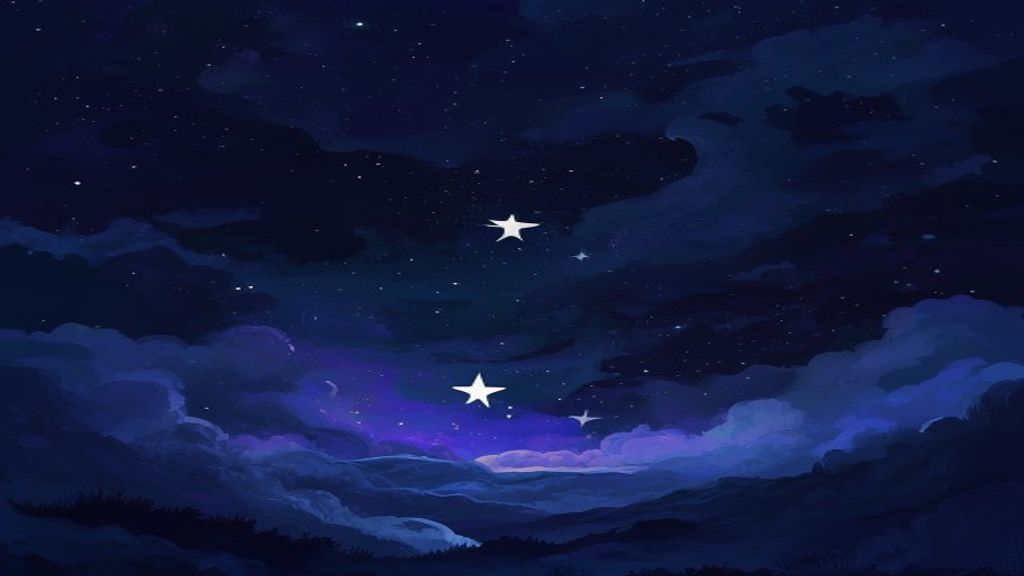
Read as an omen, a starless night becomes darkness as doom, fear, or being abandoned by something larger than you. It rarely feels like that from inside. You look up and there is simply nothing to find, no stars, no moon, just the flat fact of darkness above you. You can’t navigate by it, can’t wish on it, can’t even tell where the tree line ends and the sky begins. It isn’t sinister. It’s sealed, a sky with nothing to offer, and that is a different message from a threat.
A sky with nothing to navigate by
The thing about stars in dreams, and in the human imagination generally, is that they’re not primarily about beauty. They’re about orientation. Sailors used them. Shepherds used them to mark the season. The constellations were invented as a kind of sky-map, a way of reading where you are and what time it is in the year. When a dream removes that entirely, when it gives you the night sky and then takes everything out of it, the absence carries a specific kind of weight. You’re not in darkness. You’re in an unreadable dark.
The dream is usually remembered in a similar way: you were outside, it was night, you looked up and felt something solidify in your chest. Not dread exactly. More like the sensation of realizing a map you’d been relying on has gone blank.
- Ancient Egypt
The Chester Beatty papyrus dream book, about 1200 BC, sorts dreams into good and bad omens. A sky emptied of its lights is the kind of image that would have had to be judged one way or the other.
- Greek antiquity
Dream incubation at the temples of Asclepius meant going to sleep in the sanctuary in the hope of a healing dream, so the night itself was treated as a place where guidance could arrive.
- Medieval European tradition
In medieval Christian thinking light stood for divine favor, so a lightless sky was an easy image to read as a gap in that conversation, though not necessarily a permanent one.
- Jungian psychology (20th c.)
In Jungian thinking the collective unconscious is the boundless uncharted depth beneath everyday life. A featureless dark sky might point to a moment when that deeper level offers nothing recognizable to hold onto.
- Contemporary dream research
Domhoff’s continuity hypothesis holds that dreams extend waking concerns, so a closed or empty sky is the kind of image you would expect in a transition without clear direction.
What the sealed sky tends to accompany
It’s probably Domhoff I should cite here, and I will, but first: the continuity hypothesis is almost aggressively common-sense. It says dreams reflect the concerns and emotional texture of waking life. Which means a starless-night dream doesn’t arrive from nowhere. It tends to show up during a particular kind of period, not crisis exactly, but the kind of time when your usual reference points have gone quiet. The job that was supposed to tell you who you were has ended. The relationship that organized your sense of future has shifted. The thing you were moving toward for years has arrived, and now you’re not sure what comes next.
I’d call that a map-blank moment. The sky’s closed. Not because anything catastrophic happened, but because the usual lights are off and you haven’t found new ones yet. A winter dream has this quality too, that specific sense of a world between versions of itself, but the starless night is more disorienting because winter at least tells you there’s a season on the other side. The sealed sky just tells you: not tonight.
Jung, and why I’m cautious
A Jungian reading connects the night sky to the collective unconscious, the uncharted deep under conscious life, and would take a featureless sky as a moment when that depth offers nothing legible. No archetype surfaces. No light from the interior. I find this reading beautiful and slightly too tidy. Jung was better at naming things than he was at sitting with the ones that don’t resolve into meaning. Sometimes a starless sky is just a starless sky, and the thing it reflects is a period in which meaning itself is temporarily suspended.
That’s not nothing. It might be the most honest image the dreaming mind can produce during a transition that hasn’t found its shape yet.
The difference between dark and absent
Here’s the distinction worth making: a dark sky and a starless sky are not the same experience. A dark sky is still the sky. It has presence. The starless sky is defined by removal: you looked up expecting a reference point and the reference point wasn’t there. The psychological difference is significant. Darkness you can move through. Absence is what stops you mid-step.
Compare a full-moon dream, which is almost always about visibility, about being seen or about seeing clearly, and the contrast sharpens. The starless night is its shadow twin: not terror, but the specific experience of ordinary guidance having quietly switched off.
The thing worth holding on to is that this isn’t permanent. A closed sky is not a vanished one. Skies open again, and transitions move, even when they feel stalled. For a slower and kinder version of the same sky, dreaming of a sunset is light leaving on a schedule rather than never arriving. The dream knows you looked up. That might be enough for now.
- What were you looking for when you looked up, and what did it feel like not to find it?
- Is there a reference point in your waking life that’s recently gone quiet or moved?
- Was the darkness peaceful, oppressive, or simply neutral, and what does that quality tell you?
- What would it mean to navigate for a while without stars?
Quick answers
What does dreaming of a starless night mean?
A starless sky tends to reflect a period of disorientation, not crisis, but a time when your usual reference points have gone quiet. It often accompanies transitions: endings without clear next chapters, or moments when the map you’d been using has gone blank.
Is a starless night dream a bad omen?
Culturally, lightless skies have carried heavy meaning, but psychologically this dream is more about a temporary suspension of orientation than a prediction. It tends to arrive during transitions, and transitions, by definition, eventually land somewhere.
What’s the difference between dreaming of a dark sky and a starless sky?
The distinction is between darkness and absence. A dark sky is still present. A starless sky is defined by what was removed from it. The emotional texture of the two is quite different: one is simply night, the other is the experience of a familiar guide having quietly switched off.
Why do I dream of a night sky with no stars during a difficult period?
Domhoff’s work on dream continuity would say directly: because the dream reflects your waking emotional state. A period without clear direction produces imagery without clear orientation. The dream isn’t telling you something new. It’s confirming what you already feel.
Sources for this reading
- Domhoff, G. W. (2003). The Scientific Study of Dreams: Neural Networks, Cognitive Development, and Content Analysis. American Psychological Association.
- Domhoff, G. W. (1996). Finding Meaning in Dreams: A Quantitative Approach. Plenum Press.
- Jung, C. G. (Ed.). (1964). Man and His Symbols. Doubleday.
Full bibliography on Sources and method. Found a mistake? Tell us and see the corrections log.