- Tradition
- Psychological readingNature dreams
- Also read in
- The BibleSame symbol, other tradition
- Draws on
- Domhoff, Hartmann
- Reviewed
- 5 min read
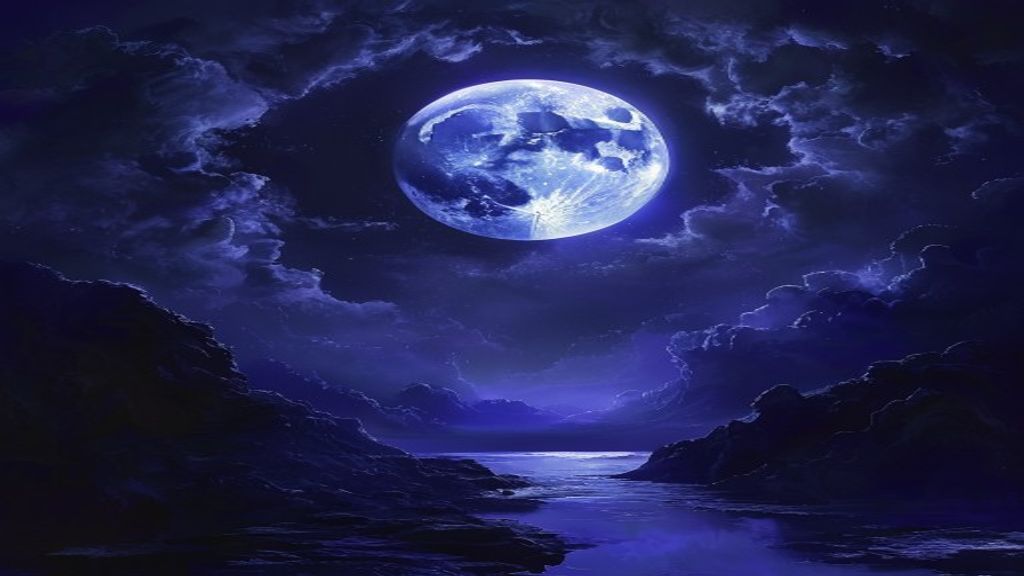
Hartmann argued in Dreams and Nightmares (1998) that dreams put emotion into a central image, and few images do that job as efficiently as a full moon: one bright, round, unmistakable object that makes everything beneath it visible. That is why the moon in these dreams is rarely scenery. It tends to arrive framed, slightly too bright, somehow watching, with nothing left in shadow.
That quality of being watched is what registers first in a full-moon dream. The light isn’t warm or cold. It’s attentive. And it’s usually doing something else in the dream besides just hanging there. It’s pulling the tide of a conversation you’re having. It’s illuminating a road you weren’t sure existed. It’s making you feel simultaneously exposed and chosen.
A full moon in a dream usually signals a moment of emotional peak or visibility: something in your life has reached completion, or a feeling you’ve been carrying is finally out in the open. The quality of the light matters more than the moon itself.
The thing about light that doesn’t hide anything
Moonlight in a dream doesn’t illuminate things gently, the way morning does. It flattens shadows. Objects stand out with that slightly wrong clarity you recognize from camping or from walking home late on a cloudless December night. Nothing is hidden, but nothing feels quite familiar either. That’s the particular quality your mind is borrowing when it drops a full moon into the scene.
What does it mean for something to be fully illuminated in your inner life? Usually it means the period of ambiguity is over. You know. You may not have admitted it yet, but the thing that’s been half-formed is now fully formed. The full moon is the dream’s way of holding up the lamp and refusing to look away. It tends to arrive at the end of something, or at the point where continuing to not-know has become impossible.
A Jungian reading of lunar imagery is basically this: the moon holds everything that the rational, solar self would rather not look at directly. Instinct, shadow, the emotional undercurrent that runs beneath the organized life. I don’t swallow every Jungian symbol wholesale, but that one is persuasive. Full-moon dreams rarely feel random. They feel like arrivals.
A full moon rising
Moon just clearing the horizon, often enormous. This version tends to mark beginnings: a phase starting, an emotion that’s been building finally surfacing. The exaggerated size is the dream’s emphasis. Your mind isn’t being subtle.
A full moon overhead
High and white, usually with that hard-edged shadow quality. This is the completeness reading: whatever arc you’ve been in has peaked. You’re at the top of something, which means the other side is already implied.
The difference matters because the direction of the feeling changes. Rising moons belong to anticipation; overhead moons belong to clarity; and moons that are setting, which show up less often, tend to carry the particular ache of knowing something is ending before you’ve said so out loud. If a dream of morning light shows up alongside the full moon, the two mark the same shift from opposite ends: moonlight is the clarity of the end of something, morning light the clarity of a beginning.
What the light was falling on
Here’s the question I’d actually ask you: not what the moon looked like, but what it was illuminating. Because a full moon over an ocean and a full moon over a city and a full moon over an empty field are three completely different dreams. Your subconscious didn’t just generate atmospheric lighting. It chose a subject.
The moon over water almost always touches emotion that’s larger than the container you’ve built for it. The moon over a building or room points toward a specific situation. The moon over a crowd or a gathering suggests something about your visibility: being seen by many, or feeling like your private self has somehow become public. And the moon over a single person, someone you know, is usually about what you see in them now, clearly, that you couldn’t quite see before.
A brief note on the frightening version
Some full-moon dreams are genuinely unsettling. The light feels like surveillance. The moon is too close. Domhoff’s continuity hypothesis, that dreams extend rather than distort waking concerns, would say this version maps to a specific pressure: something in your life that you cannot get away from, some gaze you feel you’re under. It’s not mystical. It’s that the full moon is the only metaphor big enough for that particular kind of exposure.
Think of hanging a towel over a bedroom window on a bright night: a small practical barrier against something enormous and indifferent. There’s a reflexive impulse to do the same thing in waking life. When something has become fully visible, when you can’t honestly claim not to see it anymore, it is tempting to hang a towel over it anyway. Full-moon dreams, I think, arrive specifically to note that the towel isn’t actually doing anything. You already know what you’re trying to not see. Dreaming of a sunrise is the opposite light, the one that arrives with a beginning rather than at the end of something. And dreaming of autumn shares the full moon’s sense of completion, the season in which things are finally allowed to finish.
Full-moon dreams are, more often than not, less threatening than their light suggests. They feel more like being held accountable, which is uncomfortable but not the same thing. Like a very old, very patient presence that doesn’t need to say anything because the light is already saying it.
- What was the moon illuminating? The subject it lit is the subject of the dream.
- Was it rising, overhead, or setting? The direction tells you which part of the arc you’re in.
- Did the light feel like clarity or exposure? Your gut answer separates insight from anxiety.
- Is there something you’ve been covering up with a towel that the dream finally named?
One symbol, two traditions
The disagreement is honest: one school sees full moon as self-communication, the other as an image to be discerned against Scripture. They can inform each other, but they do not merge.
A full moon in a dream usually signals a moment of emotional peak or visibility: something in your life has reached completion, or a feeling you’ve been carrying is finally out in the open. The quality of the light matters more…
You are reading this oneThe moon in Scripture is primarily about God’s ordering of time and seasons, not about mystery or omen. It appears in creation texts, in apocalyptic visions, and in Israel’s calendar. Full moon specifically connects to the major…
Read the biblical meaning →Quick answers
What does dreaming of a full moon mean?
A full moon usually signals completeness or peak visibility: emotionally, something has reached its height. You may have arrived at the end of an ambiguous period, or something you’ve been carrying is finally fully out in the open. Jung connected lunar imagery to the parts of ourselves that run deeper than the organized rational life.
Is a full moon in a dream a good omen?
Usually yes, though it’s more accurate to say it’s a clarifying sign than a lucky one. It marks peaks and completions. If the light felt peaceful and clear, that’s an arrival of understanding. If it felt oppressive or too close, the dream may be tracking a pressure you feel watched by in waking life.
Why did the moon feel frightening in my dream?
When the full moon feels like surveillance rather than illumination, the dream is usually mapping a real-world experience of exposure or inescapable scrutiny. Something in your waking life may have you feeling unable to move outside someone’s gaze. The moon is just the metaphor large enough for it.
What does a full moon rising over water mean in a dream?
Water in dreams typically represents emotion, and a rising moon over it tends to signal an emotional peak that’s bigger than the structures you’ve built to hold it. The dream may be registering that what you feel is exceeding the container, and that’s not necessarily a bad thing.
Sources for this reading
- Domhoff, G. W. (2003). The Scientific Study of Dreams: Neural Networks, Cognitive Development, and Content Analysis. American Psychological Association.
- Domhoff, G. W. (1996). Finding Meaning in Dreams: A Quantitative Approach. Plenum Press.
- Hartmann, E. (1998). Dreams and Nightmares: The New Theory on the Origin and Meaning of Dreams. Plenum Trade.
Full bibliography on Sources and method. Found a mistake? Tell us and see the corrections log.