- Tradition
- Psychological readingAnimal dreams
- Draws on
- Revonsuo, Jung, Artemidorus
- Reviewed
- 5 min read
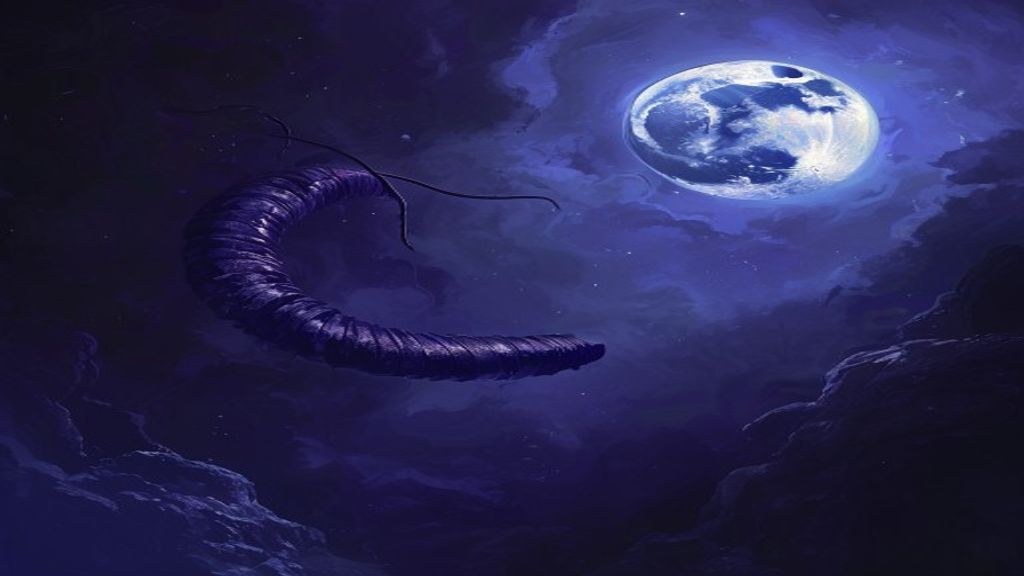
Does dreaming of a leech mean someone in your life is draining you? Sometimes it does, and it’s the reading most people reach for first, with a little satisfaction in it. The vindication. But a dream that hands you a verdict that clean deserves caution, because dreams aren’t usually in the business of confirming what you already believe about someone. The leech may be a person, a habit, or a part of yourself you haven’t let go.
Leeches are old. Medically old. The kind of creature that was a serious therapeutic tool for centuries before we understood what was actually happening, and then became disgusting by association. That arc, from valued to reviled, is worth keeping in mind when one shows up in your sleep. The symbol carries both meanings whether you want it to or not.
A leech in a dream most often points to something draining your energy, time, or emotional resources. But it can equally point to something that’s been attached to you far longer than you realized, not always external. Sometimes the leech is a habit, a belief, a version of yourself you haven’t let go.
A brief and uncomfortable history
- 2nd century CE
Artemidorus’s Oneirocritica rests on the idea that the same dream means different things for different dreamers. A bloodsucking creature could therefore be read as something that takes without return, or as an agent of relief, the blood drawing out what’s wrong, depending on who was dreaming.
- Medieval Europe
Leeches were the respectable physician’s tool. Applied to fevers, infections, swellings. The creature that attached itself to you was doing necessary work. The image of the leech as healer was culturally current for a very long time.
- 19th century
Mass leech demand stripped European wetlands nearly bare. The creature became associated with excess, with exploitation, specifically financial exploitation. The leech as an insult for a person who takes without giving had plenty of material to draw on.
- 20th century onward
Modern biology rehabilitated them again, anticoagulant properties, post-surgical use in microsurgery. They’re still in hospital drawers. The leech that seemed disgusting and obsolete turned out to be quietly irreplaceable.
I go through that history because your dream is drawing on all of it, whether you’re consciously aware of it or not. The leech in your dream might be villain, physician, or parasite, and it might be all three at once.
What’s actually being drained
The first thing most leech dreams bring to mind is a relationship. That’s a reasonable first reading, and often the right one. Antti Revonsuo’s work on threat simulation would predict exactly this: the dream brain flags things that drain your survival resources, and energy depletion is a real threat even when the cause isn’t physical. If someone in your life takes reliably and gives almost nothing back, your sleeping brain may be less diplomatic about naming it than your waking brain has been willing to be.
But the second reading is less comfortable: sometimes the leech is you. Not as condemnation, just as honest inventory. Jung’s framework for the shadow, the parts of the self you’d rather not claim, often surfaces as an animal in dreams that you’re repelled by. If the leech in your dream was on your own skin and you couldn’t get it off, the question isn’t necessarily who’s doing this to you. It might be which part of yourself has been feeding on something it shouldn’t, a grievance, a dependency, an identity you’ve outgrown but kept attached.
I’m not trying to make this about self-blame. I’m saying the dream rarely has only one target.
Where it was attached matters
Leech dreams are specific in a way most people notice when they think back. The location of the attachment in the dream is often meaningful in the way body locations tend to be in dreams generally: leeches on the hands can point to work and what you’re putting your effort into; on the neck or throat, to communication and voice; on the chest or heart, to an emotional relationship that isn’t reciprocal. Not a rule, a starting point. Your version will have a logic of its own.
The underwater leech version, where you’re wading and they find you, tends to come up during periods of emotional depth, when you’ve been in your own inner life more than usual and something has latched onto the attention you brought there. I think of that one as the dream’s way of noting that extended introspection also has costs.
Removal
Short section, because this is the part people skip to and it’s less important than they think: if you removed the leech in the dream and it came off cleanly, that’s the straightforward version of setting a limit. If you couldn’t get it off, the attachment is still being negotiated in waking life. If you removed it and felt bad, it’s worth asking what you were actually attached to in the removing.
If the dream keeps returning in different forms, dreaming of a giant spider shares the sense of being caught and held by something you haven’t fully named yet. And dreaming of a panther asks the other question a leech dream can raise: who holds the power in the arrangement, the one who feeds or the one who is fed?
Whichever reading you land on, there is one more question worth asking: when the leech came off in the dream, was there relief, or was there a mark you kept touching? That’s not a question about the other person. That’s a question about what the attachment cost you that you hadn’t tallied yet.
The leech that was a serious medical tool for centuries didn’t stop being that because it also became a metaphor for exploitation. It held both. Your dream’s version holds both too, and the interpretation that’s most useful to you probably isn’t the cleanest one.
- Was the leech on you, or were you observing it on someone or something else?
- Where on the body was it attached, and what does that area mean to you in waking life?
- Did you remove it, try to remove it, or did the dream end before you could?
- Is there something in your life that’s been drawing on your resources longer than you’ve admitted?
Quick answers
What does dreaming of a leech mean?
It most often points to something that’s been draining your energy without adequate return, a relationship, a habit, or even a part of yourself that’s feeding on something you’d rather it didn’t. The location and your reaction in the dream are usually more specific than the creature itself.
Is dreaming of leeches a bad omen?
Psychologically it’s an honest signal rather than an omen. The dream is naming a drain that your waking mind may have been politely ignoring. Uncomfortable, but useful information rather than a verdict.
What does it mean to remove a leech in a dream?
If it came off cleanly, you’re in the process of ending something that’s been taking too much. If you struggled to remove it, the attachment hasn’t been fully resolved. How you felt after removal is usually the more important detail.
Why do I dream of leeches repeatedly?
Recurrence usually means the drain hasn’t been addressed. Something is still attached in waking life, whether that’s a person, a situation, or a pattern you haven’t quite named. The dream will generally ease once the source is acknowledged, even before it’s fixed.
Sources for this reading
- Revonsuo, A. (2000). The reinterpretation of dreams: An evolutionary hypothesis of the function of dreaming. Behavioral and Brain Sciences, 23(6), 877-901.DOI
- Jung, C. G. (Ed.). (1964). Man and His Symbols. Doubleday.
- Artemidorus of Daldis (2nd century CE). Oneirocritica. English edition: Harris-McCoy, D. E. (2012). Artemidorus’ Oneirocritica: Text, Translation, and Commentary. Oxford University Press.
Full bibliography on Sources and method. Found a mistake? Tell us and see the corrections log.