- Tradition
- Psychological readingBody dreams
- How common
- 23.8%of people have had itNielsen et al., 2003
- Also read in
- The BibleSame symbol, other tradition
- Draws on
- Domhoff, Artemidorus
- Reviewed
- 5 min read
Recall fades within minutes of waking, and what tends to survive of this dream is a single frame: a lorry through the side door, a fall, a gunshot with no warning, and then the cut. No pain. Just the vertiginous sense that the world kept going without you in it. You wake unable to tell whether you’re relieved or strangely offended.
That odd double feeling is typical of the sudden-death dream. Not terror, exactly. More like: wait, that’s it? The abruptness is the point. Your mind didn’t give you a long illness, a dramatic finale, a speech. It just cut the scene. And that cut is where the meaning lives.
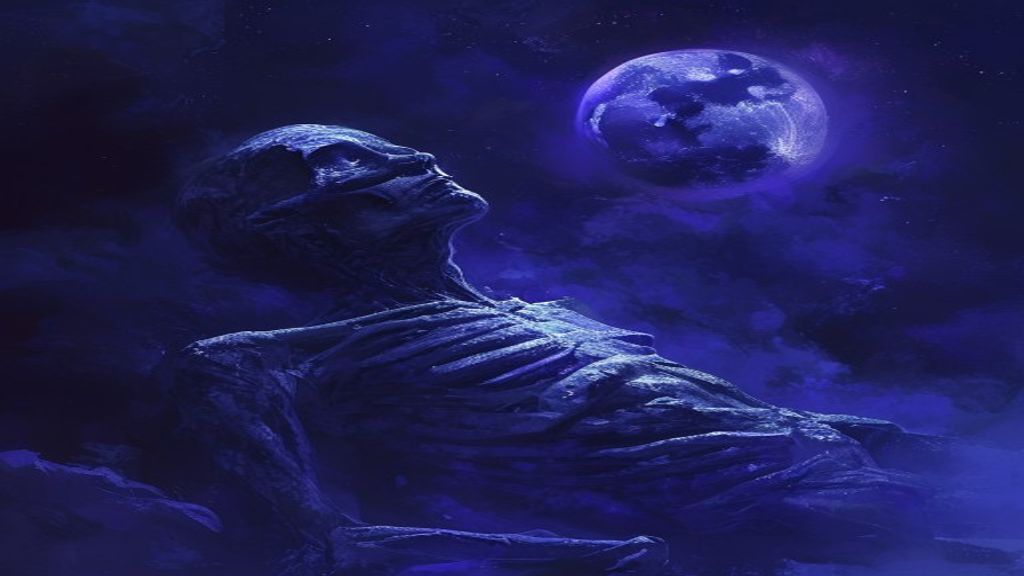
Dreaming of your own sudden death almost never predicts anything. It’s the mind staging an abrupt ending to something that feels like it’s been building in your waking life: pressure, a role you’ve outgrown, or a version of yourself you’re quietly done with. The shock of it is the message, not the death itself.
Why sudden and not slow
There’s a real difference between dreaming of a long illness and dreaming of a car door, a fall, a gunshot with no warning. Gradual-death dreams tend to track actual health anxiety. Sudden-death dreams tend to track a different category of pressure: things that feel like they could just snap. A relationship already cracking. A job held together with politeness. A version of yourself you’ve been performing so long you’ve forgotten whether you still believe in it.
The suddenness is the emotional truth. Nothing about this transition in your life has been discussed, processed, or gracefully wound down. It just ended, or it feels like it could. The dream doesn’t editorialize. It reenacts the structure of the feeling.
What kind of sudden death it was
You’re killed by something impersonal: a car, a fall, a collapsing structure. The waking echo tends to be circumstances spinning out of control. Something large is happening to you rather than being chosen by you.
This one is harder to sit with. It doesn’t mean the person in the dream wants you harm. It usually points to a relationship where you feel powerless, unheard, or backed into a corner in waking life. The dream exaggerates it to the furthest extreme.
Flood, lightning, earthquake. Sudden death by natural force often accompanies major transitions: the self being remade by something bigger than daily life. These dreams frequently follow births, bereavements, or the end of long chapters.
You simply die. No visible mechanism. Waking up mid-cut. This is arguably the most unsettling version, and often the one that sits with you longest. It tends to arrive when something has already ended and your mind hasn’t caught up yet.
After you die in the dream
What happens next matters as much as the death itself. Often the dreamer doesn’t die and then wake: they die and then watch. They float above the scene, or find themselves elsewhere, and the world carries on without them. That post-death awareness is its own signal. It suggests you’re not actually afraid of the ending. You’re curious what will remain. What will people do? What will the version of life you left look like from the outside?
If you just cut to waking, no aftermath at all, the dream was probably about shock: the abrupt end itself was the content. If there was an aftermath, a funeral you attended in ghost form, a family continuing without you, something like that, the material is about legacy, contribution, what-does-my-being-here-actually-mean. Not morbidly. Just honestly.
Sometimes the aftermath is peaceful. People describe a dream where they died and felt genuinely fine. That’s worth noting. If you were still aware after the death but had no body, hearing and seeing without being anywhere, dreaming of a voice without a body reads that disembodied state, and the feeling in those moments is often the purest signal in the whole dream.
The old readings
Artemidorus, the second-century Greek who catalogued dreams, held that the same dream means different things for different dreamers, depending on age, status and occupation, so a death dream was read against the dreamer’s own life rather than taken as a verdict. I find that less mystical than it sounds. It comes close to what a decent therapist would say: the self that’s dying in the dream isn’t you. It’s a version of you that’s outlived its context.
Domhoff’s continuity hypothesis is more measured. It says dreams tend to reflect ongoing concerns rather than dramatic revelations, and sudden-death dreams would slot in as an exaggerated staging of accumulated pressure. That’s probably right and also slightly unsatisfying, the way accurate things sometimes are. Though it does mean the question to ask is concrete: what’s been building?
When they recur
Once is usually a spike: something happened or is about to, and the dream was the mind’s bluntest way of registering it. Twice or three times starts to mean something more persistent is unresolved. If the same nights also bring dreaming of transforming, waking up as someone or something you’re not, that pattern can point to a bigger identity transition that hasn’t been consciously acknowledged.
I’m not going to tell you there’s a clean fix. Recurring sudden-death dreams usually retire when whatever pressure is producing them is either resolved or named out loud. Named is often enough. Not resolved. Just admitted.
Morbid. Disturbed. Prophetic. It is easy to apologize for these dreams as if having them were a fault. It isn’t. You’re not in unusual territory. You’re having a dream your brain generates at fairly predictable moments: high stress, major transitions, unresolved endings.
Many people keep a dream like this to themselves. It can feel like information that’s only for you, and that instinct isn’t necessarily wrong. A small ritual often follows: looking at your hands in the dark, checking they’re still there, reassurance by way of inventory. Then comes the more useful question: what, lately, has been feeling like it’s running out of road? You may not like the answer. But that’s where the dream was pointing. For the wider range of dreams in which the dreamer dies, from peaceful to violent, see dreaming of your own death.
- What was abrupt about it: the death itself, or what happened after?
- In waking life, what feels like it could just snap or end without warning?
- Was there an aftermath: did you watch, float, attend? What did the world do without you in it?
- Is this the first time, or has the dream found you before?
One symbol, two traditions
The disagreement is honest: one school sees own sudden death as self-communication, the other as an image to be discerned against Scripture. They can inform each other, but they do not merge.
Dreaming of your own sudden death almost never predicts anything. It’s the mind staging an abrupt ending to something that feels like it’s been building in your waking life: pressure, a role you’ve outgrown, or a version of…
You are reading this oneScripture does not interpret dreams of personal death as premonitions. The biblical tradition treats death as a profound theological reality, not a scheduling announcement, and it handles dreamers who wake frightened with…
Read the biblical meaning →Quick answers
Is dreaming of your own sudden death a bad omen?
No. It’s not predictive and it’s not a sign something is wrong with you. It’s one of the most common dream types there is, and it almost always tracks psychological pressure or transition rather than anything physical or prophetic.
Why do I wake up just before I die in the dream?
The body’s arousal response kicks in at the moment of peak anxiety in the dream, pulling you out. Waking before death doesn’t mean you avoided something: it just means the nervous system interrupted the scene. The content before the cut is what to pay attention to.
What does it mean if I die in the dream and feel calm afterward?
That’s actually one of the more useful versions. A peaceful aftermath often signals readiness for a real ending or transition in waking life. Something may be genuinely over, or nearly so, and part of you has already made its peace with it.
Does the cause of death in the dream matter?
Yes, more than people think. Accidental death tends to track feelings of circumstances out of your control. Death by another person tends to track powerlessness in a specific relationship. Death by natural force often accompanies major life transitions. Unknown cause tends to mean something has already ended and the mind is still catching up.
Sources for this reading
- Domhoff, G. W. (2003). The Scientific Study of Dreams: Neural Networks, Cognitive Development, and Content Analysis. American Psychological Association.
- Domhoff, G. W. (1996). Finding Meaning in Dreams: A Quantitative Approach. Plenum Press.
- Artemidorus of Daldis (2nd century CE). Oneirocritica. English edition: Harris-McCoy, D. E. (2012). Artemidorus’ Oneirocritica: Text, Translation, and Commentary. Oxford University Press.
- Nielsen, T. A., Zadra, A. L., Simard, V., Saucier, S., Stenstrom, P., Smith, C., & Kuiken, D. (2003). The typical dreams of Canadian university students. Dreaming, 13(4), 211-235.DOI
Full bibliography on Sources and method. Found a mistake? Tell us and see the corrections log.