- Tradition
- Psychological readingBody dreams
- How common
- 23.8%of people have had itNielsen et al., 2003
- Also read in
- The BibleSame symbol, other tradition
- Draws on
- Artemidorus
- Reviewed
- 5 min read
You cannot die by dreaming it. That’s the factual floor, and it’s worth stating plainly because the dream is so convincing that the anxiety follows you out of bed. The more useful fact is older: in the second century, Artemidorus of Daldis held that the same dream means different things for different dreamers, depending on age, status and occupation. A dream of your own death is the clearest test of that rule, because what it marks depends entirely on whose life it ends in. So the real question is why your mind staged its own ending at all.
Take someone who has just finished a very long project, after weeks of pressure have finally lifted, and who feels weirdly flat. Not relieved. Flat. Like a frequency has dropped out of the room. It is the silence of no longer being needed. That silence, that particular species of aftermath, is the texture I find underneath most death dreams. Not catastrophe. Aftermath.
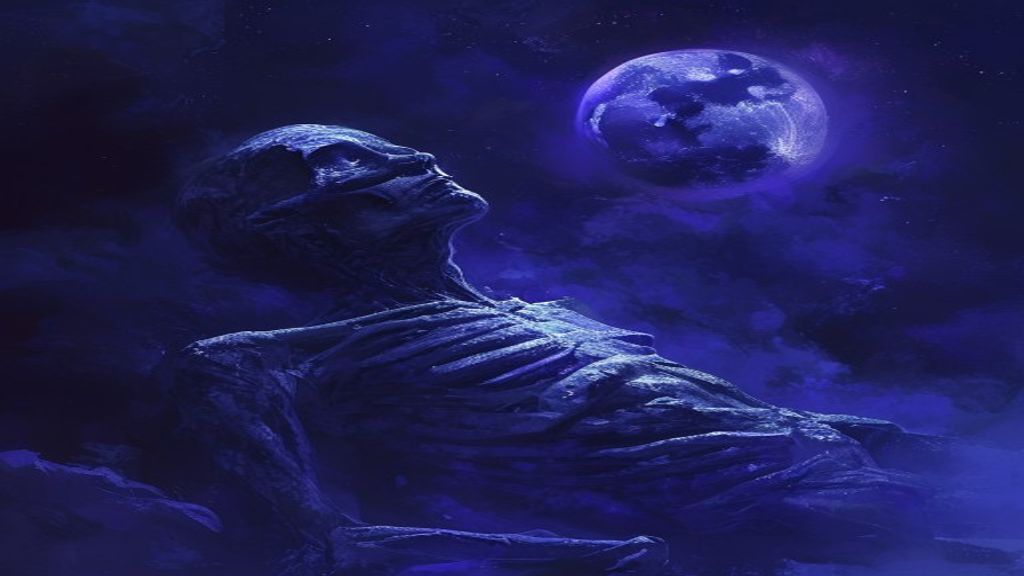
Dreaming of your own death almost never predicts anything. It tends to mark a transition: the end of one version of you and the beginning of another. The manner of death and your emotional response to it inside the dream carry more meaning than the fact of dying.
A fact that unsettles the obvious reading
Artemidorus, cataloguing dream types in the second century, wrote in the Oneirocritica that the same dream has to be read against the dreamer’s own age, status and occupation. That is a reading that asks for context rather than reaching for prophecy, with a kind of practical calm that the modern dreamer rarely manages to feel. A death dream is never one dream. It is a family of them, and the details sort them apart.
The principle still holds. How you die in the dream, and how it feels, matters as much as the death itself. Falling and not surviving. Being killed with violence. Simply ceasing, like a light switched off. Watching yourself from above. Each version carries a different emotional signature.
What the manner of dying reveals
| Tradition | How it reads the symbol |
|---|---|
| Violent death (killed, murdered) | Usually points to something in waking life that feels like an assault on your identity or autonomy. A forced change you didn’t choose. The aggressor is often symbolic of a situation, not a person. |
| Slow death or illness in the dream | More often tied to exhaustion, long-term depletion, or the slow erosion of something important. The body in the dream is doing what the waking body hasn’t yet named. |
| Sudden death, no cause | The abrupt cut. This version tends to follow major transitions: a move, a marriage, the end of a long chapter. The mind closes one file cleanly. |
| Death observed from outside or above | Watching yourself die has a detachment to it that often mirrors real-life dissociation or the perspective you take when you’re trying to think about your own life as if from a distance. |
| Peaceful, accepted death | Among the harder versions to describe but often the most meaningful. If you weren’t afraid in the dream, that’s significant. Acceptance in the dream may precede acceptance in waking life by weeks. |
| Death and then continuation | You die and the dream continues with you somehow still present. This is the clearest version of transformation rather than ending. The death was a threshold, not a termination. |
The self that’s ending
The reading I find most useful, and this part is interpretation rather than hard evidence, is that death dreams tend to mark the end of a version of you, not the you that woke up. A role you’ve been playing for years. A self-concept that’s outlived its usefulness. An identity that was formed in an earlier chapter and no longer quite fits.
The continuity hypothesis describes this less poetically: the dream reflects what’s actually present in your waking concerns, and if you’re undergoing or anticipating a major transition, the mind finds the most extreme image for ending it can access. The continuity principle doesn’t need transformation symbolism to do this work. It just shows you what’s actually happening. But I find the transformation reading useful because it points you toward the question worth asking: which version of me just died?
The emotional tone of these dreams varies enormously between dreamers. Fear is the obvious one, but acceptance and even relief appear too. The relief version, I think, is underrepresented in the dream dictionaries, because it’s the one people feel least comfortable admitting.
After the dream
Some people cry when they wake from this dream. Some lie still for a moment, running inventory, checking they’re breathing. Some, and this group may be larger than you’d expect, wake feeling oddly light.
If you dream of your death and wake feeling light, pay attention to that lightness. Don’t rush to pathologize it. Something may have actually concluded in the dream, and your nervous system is catching up.
This dream and dreaming of a different body both turn on identity in flux: in one the old self ends, in the other the physical self feels unfamiliar. If the death was abrupt and had no cause, dreaming of your own sudden death reads that version on its own. And if the dream’s emotional signature was less about ending and more about something speaking from beyond the physical, dreaming of a voice without a body is about a presence you can hear but cannot see.
That silence of no longer being needed passes when something new arrives and the frequency comes back. Whether a death dream turns up during the flat weeks is not something anyone can promise. But I suspect the mind in those weeks is doing something similar to what the dream does: standing in the silence between one version of things and the next, noticing the exact shape of the gap.
- How did I die, and how did that manner of dying feel?
- Was I afraid, or was there something closer to relief or acceptance?
- Which version of me might this dream be marking the end of?
- Did the dream continue after I died, or did it simply stop?
One symbol, two traditions
The disagreement is honest: one school sees own death as self-communication, the other as an image to be discerned against Scripture. They can inform each other, but they do not merge.
Dreaming of your own death almost never predicts anything. It tends to mark a transition: the end of one version of you and the beginning of another. The manner of death and your emotional response to it inside the dream carry…
You are reading this onePsychology often reads it that way, and the biblical tradition doesn’t dismiss that possibility. But it adds a more constructive frame: in Romans 6, dying to something is the necessary condition for new life in something else. If…
Read the biblical meaning →Quick answers
What does it mean to dream of your own death?
Most often it marks a transition: the end of a role, a relationship, a self-concept, or a chapter. The death itself is rarely literal. The manner and emotional tone inside the dream carry more information than the fact of dying.
Is dreaming of your own death a bad omen?
Across the cultures that have taken dreams seriously, from ancient Greek to Islamic tradition, the dreamer’s death almost never read as a literal prophecy. Fear during the dream may reflect real anxiety about change; a peaceful death in the dream is often read as resolution.
Why did I feel relief after dreaming I died?
That response is more common than people admit. If something genuinely needed to end, the dream may have staged it cleanly, and the relief is your nervous system registering that the ending has been acknowledged. It’s worth sitting with rather than dismissing.
Why do I keep having this dream?
Recurrence usually means the transition the dream is pointing to hasn’t been fully processed. The identity or role that’s ending hasn’t quite been grieved or released. When you acknowledge what’s actually changing, the dream tends to move on.
Sources for this reading
- Artemidorus of Daldis (2nd century CE). Oneirocritica. English edition: Harris-McCoy, D. E. (2012). Artemidorus’ Oneirocritica: Text, Translation, and Commentary. Oxford University Press.
- Nielsen, T. A., Zadra, A. L., Simard, V., Saucier, S., Stenstrom, P., Smith, C., & Kuiken, D. (2003). The typical dreams of Canadian university students. Dreaming, 13(4), 211-235.DOI
Full bibliography on Sources and method. Found a mistake? Tell us and see the corrections log.