Action Dreams
Dreaming of Rugby: Contact, Collision, and What You're Really Bracing For
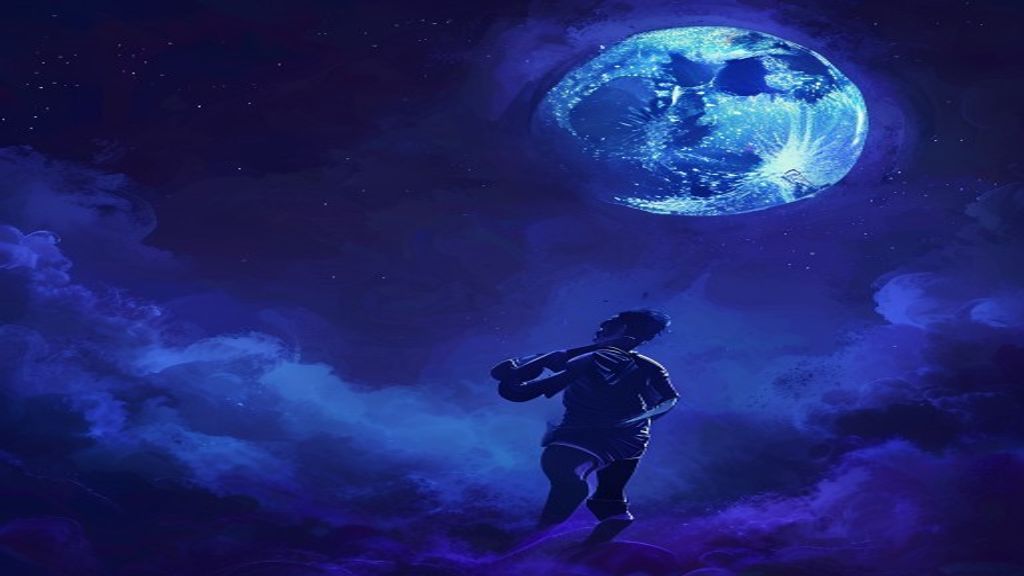
Years ago I had a desk job I hated, and for three months I dreamed repeatedly about getting tackled. I’ve never played rugby. I couldn’t have named more than two rules. But the dream was specific: the thud of it, the going down, the weight of another person landing on top of me, and then the strange moment of stillness before the play restarted. I woke every time in the stillness. Not terrified. Not hurt. Just very, very heavy.
I didn’t connect the dreams to the job until much later. Obviously I should have. The job was full of exactly that: moments of impact you couldn’t dodge, followed by a moment of enforced stillness, followed by being expected to get up and do it again. The dream had been translating it precisely, and I’d been too close to see.
Dreaming of rugby almost always involves physical force and whether you can handle it. The key questions are who’s tackling whom, whether you’re part of a team or alone on the field, and most importantly: do you get back up?
Why rugby specifically
A lot of collision sports show up in dreams, but rugby has a particular quality that makes it a precise instrument for the sleeping mind. The contact is unavoidable and legal. You’re not being fouled. Someone running straight at you is just the game. That’s actually a very specific emotional situation: an impact that you know is coming, that you’ve agreed to by being on the field, and that you have to absorb anyway.
Dreams about rugby turn up at moments when people feel that something difficult is bearing down on them and retreating isn’t an option. A reckoning. A confrontation. A deadline that won’t move. The playing field just makes it concrete.
Revonsuo’s threat-simulation theory holds that dreaming serves to rehearse threatening situations, keeping us sharp for what might hit us when we’re awake. Rugby is essentially a threat-simulation factory: it runs collision scenarios over and over until your body knows what to do. Dreams that use it are borrowing that grammar.
The team question
Rugby is a team sport in a way that most individual-event sports aren’t. You need fifteen people and they all have to function together, or nobody crosses the try line. Dreams about rugby often carry a team dimension that’s doing specific work.
Playing with people who don’t pass to you. Being the only one who shows up. Carrying the ball alone the full length of the pitch with your team watching. These are all things people actually report, and they map with uncomfortable directness onto situations where someone feels unsupported, invisible, or has taken on more than their share. The dreaming of a sports competition pattern often carries a team layer too, but rugby makes the interdependence especially stark.
What the tackle means
Being tackled is the central image. Getting back up is the central question.
There’s an almost universal version of this dream where you go down and simply can’t get up. Not because you’re hurt. Because you’re tired. Because the weight won’t lift. Because the whistle doesn’t blow. This is one of the more honest things a dream can tell you: that something in your waking life has been hitting you hard enough, and often enough, that your body doesn’t quite trust it can absorb another one.
How to read which version you had
G. William Domhoff would say this is just continuity: the dream reflects your waking preoccupations, and a life full of unavoidable impacts will produce rugby dreams the way a life full of chases produces running dreams. He’d be right, and I’d add only that the specific mechanics of the sport matter. The rucking, the binding, the holding-on. Rugby dreams aren’t about speed or glory. They’re about contact and recovery.
The mud
I want to mention the mud. Almost every rugby dream I’ve heard described involves mud: the field churned up, the difficulty of running through it, the weight of it on the boots. Mud in a dream slows everything down. It makes every step cost more. If you dreamed of playing rugby in heavy going, the terrain is telling you as much as the game.
It’s a small thing but it’s specific. A clean pitch means one kind of contest. Mud means you’re grinding through something, and grinding costs. See also dreaming of climbing for the related landscape of dreams where the terrain itself is the opponent.
My tackle dreams stopped when I left the job. I still think about the stillness sometimes, the held moment after going down. I don’t think I was being warned. I think I was being asked: how many more of these are you willing to absorb? It took me three months of dreaming to answer. I don’t recommend that timeline. Dreaming of running a marathon tends to carry a different question, about endurance over distance rather than repeated impact, which might be the version that comes after.
- Did I get back up, and how hard was it?
- Was I part of a team, or was I alone on that pitch?
- Who tackled me, and does that person represent something in my waking life?
- What am I bracing for right now that I haven’t named out loud?
Quick answers
What does dreaming of rugby mean?
Usually something about unavoidable impact: a confrontation, a difficult situation you can’t sidestep, or a period of life where you keep getting knocked down and getting back up. The team dynamics and whether you get back up are the most telling details.
What does it mean to be tackled in a dream?
Being tackled typically represents something hitting you in waking life: criticism, setbacks, a confrontation you knew was coming. The key interpretive detail is what happens next. Getting up quickly suggests resilience. Staying down suggests exhaustion or overwhelm.
Why do I dream about rugby if I’ve never played it?
The sport is borrowed as a stage, not a subject. Your brain needed an image for unavoidable physical confrontation and reached for rugby, probably from cultural exposure. You don’t need to know the rules for the dream to use the game’s structure.
What does it mean to be alone on a rugby pitch?
Almost always about feeling unsupported or abandoned in a team situation. Something you’re carrying alone that should be shared. The empty pitch around you is the point, not the game itself.