- Tradition
- Psychological readingAction dreams
- Also read in
- The BibleSame symbol, other tradition
- Draws on
- Domhoff, Revonsuo
- Reviewed
- 5 min read
Fitness, ambition, finally proving something: those are the usual boxes for a marathon dream. What the dream actually borrows is the distance. People who have never run a mile still find themselves enrolled, in humiliating detail, in an event their waking selves would never sign up for. That mismatch is the clue: the marathon is a stand-in for a long commitment, not a sport, and the dream is asking about the commitment.
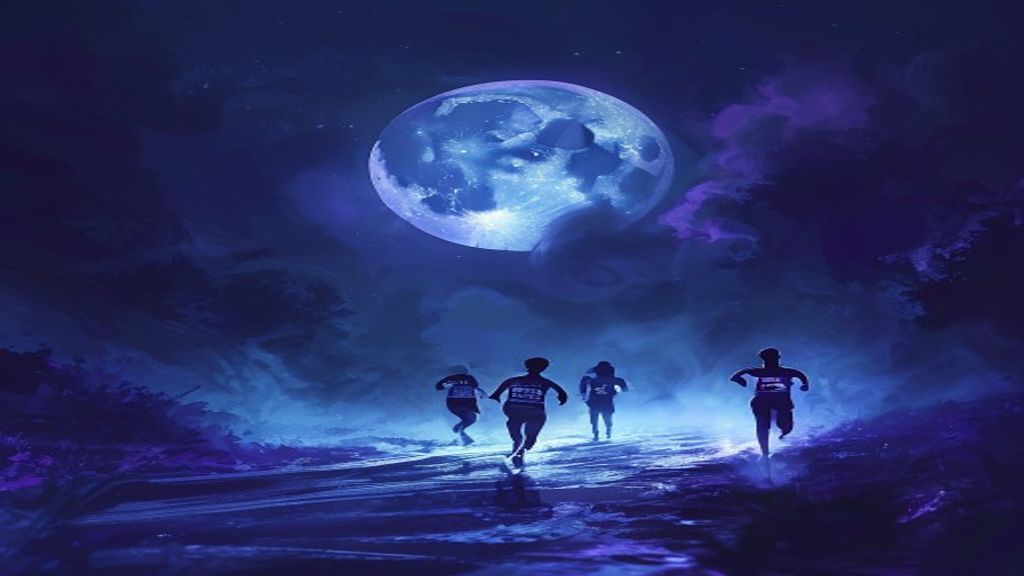
Running a marathon in a dream is rarely about running. It’s about something long, hard, and yours alone to finish. The distance is a stand-in for a sustained effort in waking life, and the dream’s question is always the same: will you make it to the end?
The water station you keep missing
One version of the dream has a water station at mile eleven. Other runners grab cups and keep moving. You reach for one and your hand goes straight through. That’s the detail that stays when you wake, more than the crowds or the ache in your legs. The thing you need is right there, and you just can’t get hold of it.
Marathon dreams are almost always about a project or commitment with real distance still ahead. Not a short sprint, not a single hard day. Something you committed to weeks or months ago that is now asking you to keep going when keeping going isn’t charming anymore. The training phase is behind you. Nobody’s impressed you’re still doing it. And the finish line, which felt conceptually real when you signed up, is a theoretical place you’ve never actually seen.
The course itself carries most of the symbolic weight. A flat, grey road through a city you don’t recognize tends to feel relentless in a way a mountain trail doesn’t. A marathon on a looping track has a particular kind of tedium built in: the same scenery cycling past, progress invisible to the eye. Dreams are precise about these variants even when the dreamer dismisses them as background noise.
Two ways the race tends to go
Running but not moving
You’re running with full effort but the finish line isn’t getting closer. Your legs do everything right. The distance refuses to close. This is the version that leaves people most rattled, and it tends to show up when a project feels bottomless, when the goal keeps receding as you approach it. It’s worth asking whether the finish line has moved since you started, or whether you’ve accepted a target that was never actually reachable.
Running strong, then cramping
You’re ahead, feeling good, and then something seizes. A knee. A side stitch. An inexplicable stop. This version isn’t really about injury. It’s about the fear of failing spectacularly when you’re closest to succeeding. People who have this dream are often further along than they think, and the cramp is anxiety wearing running shoes.
Most marathon dreamers land in one of those two camps, and it’s worth knowing which one you woke from. They’re asking different questions. The first is about the goal itself. The second is about you.
Who’s watching from the curb
Crowds in marathon dreams are worth noticing because they almost always have a specific temperature. Loud and indifferent: the dream version of being surrounded by people who don’t see your actual effort. Thin and scattered: a loneliness dream dressed in road gear. And sometimes there’s one person, standing still while everyone else blurs past. That still figure is rarely a stranger. It’s often someone who knew you before this particular race, before you became the person who runs this kind of race. Their presence tends to carry a specific freight of either encouragement or judgment, and only you know which.
Dreams about sustained physical effort fit almost too neatly into Antti Revonsuo’s threat simulation theory, which argues that dreaming rehearses responses to difficult situations. A marathon is the brain’s clean metaphor for a long-haul threat, something that won’t kill you quickly but will absolutely break you if you stop paying attention. I find this reading genuinely useful, though it does flatten the emotional texture of the dream somewhat. Not every marathon is a threat. Some are just hard things you chose.
When you actually cross it
This version is rarer, and finishing can feel almost too on-the-nose to mention. But crossing a dream finish line does carry something real, a sense of completion the waking body can’t fully fake. Domhoff’s continuity hypothesis would predict this: if you’re close to finishing something significant, the dream closes the loop. It’s not prophecy. It’s more like the mind rehearsing how relief actually feels.
A summit that keeps moving is the vertical twin of a finish line that keeps receding, and dreaming of climbing follows that thread. And if the louder note in your dream was self-doubt rather than distance, dreaming of karate looks at the tension between discipline and doubt when you have to show up for a fight.
Back to the water station
The water station is still there at mile eleven, and your hand still goes through the cup. The useful question is what resource you are reaching for, and whether you have been reaching for it at a place where it was never going to be. That might be the dream’s actual message. Some dreams are not puzzles. They’re mirrors you keep passing on your way to the next thing.
- Was the finish line getting closer, or did it keep its distance no matter how hard you ran?
- Who was watching from the curb, and how did their presence feel?
- Is there something in your waking life right now that has the texture of mile eighteen: too far in to stop, too far out to see the end?
- What resource were you reaching for that wasn’t quite in your hand?
One symbol, two traditions
Psychology keeps running a marathon inside your own story, a symbol your mind built from your days. The biblical tradition looks outward instead, and asks whether Scripture gives the image any voice at all.
Running a marathon in a dream is rarely about running. It’s about something long, hard, and yours alone to finish. The distance is a stand-in for a sustained effort in waking life, and the dream’s question is always the same…
You are reading this oneScripture doesn’t give that reading directly, and Ecclesiastes 5:7 cautions against over-interpreting dreams. But the biblical race imagery is consistently about what you’re already committed to, not about starting something new.…
Read the biblical meaning →Quick answers
What does dreaming of running a marathon mean?
It usually stands for a sustained, long-haul effort in waking life, something you committed to earlier and are now somewhere in the middle of. The dream’s tone, whether you’re moving well or struggling, maps closely onto how that real effort feels right now.
What does it mean if I can’t finish the marathon in my dream?
Not finishing is one of the most common versions. It points to doubt about whether you have what it takes to complete something important, not a prediction that you won’t, but an honest read on the anxiety that’s already there.
Why do I dream about running even though I don’t run in real life?
The marathon is a cultural shorthand for a very long, very solo challenge. Your mind borrows the image because it fits the shape of something you’re actually going through, regardless of whether you’ve ever laced up for an actual race.
What does it mean to dream of running a marathon and crossing the finish line?
Completing the race in a dream often reflects real forward movement on something important. It can arrive just as you near the end of a project or commitment, a kind of anticipatory relief the mind tries on before the thing is actually done.
Sources for this reading
- Domhoff, G. W. (2003). The Scientific Study of Dreams: Neural Networks, Cognitive Development, and Content Analysis. American Psychological Association.
- Domhoff, G. W. (1996). Finding Meaning in Dreams: A Quantitative Approach. Plenum Press.
- Revonsuo, A. (2000). The reinterpretation of dreams: An evolutionary hypothesis of the function of dreaming. Behavioral and Brain Sciences, 23(6), 877-901.DOI
Full bibliography on Sources and method. Found a mistake? Tell us and see the corrections log.