Action Dreams
Dreaming of Karate: What the Dojo Reveals About Control
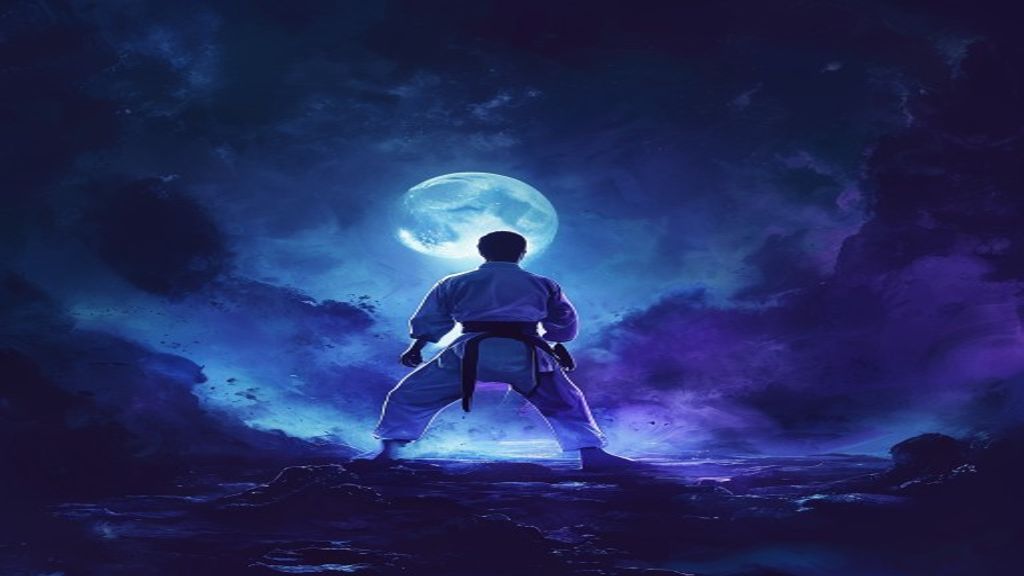
A white uniform hanging on a hook , I owned one for exactly eight months in my mid-twenties, long enough to reach the second level before I quietly stopped going. Packed it, hung it, never touched it again. It became the kind of object you move from apartment to apartment because throwing it out would feel like admitting something. That uniform is what I think of whenever someone describes dreaming of a karate class. Not the kicks or the sharp breaths or the counted repetitions. The uniform on the hook, waiting.
Dreaming of karate usually reflects an ongoing tension between self-discipline and self-doubt. You’re either rehearsing your readiness to face something, or the dream is asking whether you’d actually show up to the fight. The feeling in the dojo , confident, clumsy, frozen , is the core of the message.
What you’re doing in the dojo matters more than the kicks
Most people who tell me about this dream aren’t martial artists. The dojo is a symbol they’ve absorbed from film and television: a place where effort translates directly into mastery, where your competence is visible, legible, ranked by the color around your waist. That’s exactly why the mind reaches for it. Because a lot of adult life doesn’t work that way. You put in the hours and nothing changes color.
So pay attention to what you’re doing. Practicing alone, drilling the same sequence over and over, usually points to a kind of private preparation , you’re rehearsing something in waking life before you feel ready to attempt it. Competing in front of others pulls in the performance-anxiety register. Being taught by someone suggests you’re navigating a power dynamic in real life, a mentor, a manager, a relationship with an authority you haven’t quite figured out.
And if you’re watching but not participating , standing at the edge of the mat in street clothes , that’s the one I find most interesting. The dream put you in the building but kept you out of the practice. Whatever threshold it represents, you haven’t crossed it yet.
Rehearsing something private. You’re preparing for a confrontation or challenge that hasn’t happened yet , and part of you knows you’re not quite ready.
Performance anxiety, or a desire to have your efforts recognized. Someone’s watching, and their opinion matters more than you’d like it to.
Self-doubt breaking the surface. The dream is surfacing fear that your competence will fail you exactly when it needs to hold.
You’re present but not committed. Something about this arena , a goal, a relationship, a skill , hasn’t pulled you fully in yet.
You’ve internalized something and the dream is registering it. This version tends to arrive when you’ve genuinely grown without quite noticing.
The belt you don’t have
Belts in these dreams are doing specific work. Dreaming that you’re stuck at the wrong rank, that your belt slips off, that you show up wearing the wrong color , these feel embarrassing in the dream and they’re supposed to. They’re a fairly clean symbol of impostor feelings: the gap between how you present yourself and how capable you actually feel underneath.
On the other hand, dreaming of being promoted, of tying on a new belt, arrives in waves of real-life momentum. It’s not prediction. It’s recognition , the dream catching up to something you’ve already earned but haven’t let yourself celebrate.
Discipline as a private fight
Karate dreams, unlike boxing dreams, tend to be solo at their core. Even in a full dojo, there’s something solitary happening. And I think that’s because the real theme isn’t combat. It’s self-regulation. The kata , the practiced sequence you perform alone , is the central image of karate as a discipline. You’re not fighting an opponent. You’re fighting distraction, laziness, the voice that says you’ve done enough.
Anita Revonsuo’s threat simulation theory frames nighttime rehearsal dreams as the mind stress-testing responses before they’re needed. I find that compelling for physical challenges, but for karate dreams the threat is usually internal. It isn’t a predator you’re rehearsing against. It’s the version of you that would quit. Dreams like these often pick up in frequency when we’re in a period of genuine self-testing , a new job, an endurance project, something where we’re not sure we have what it takes. If you’ve been dreaming of running a marathon in the same stretch, the territory is the same: personal limits and whether you trust yourself to stay past the point of discomfort.
When the opponent is yourself
Domhoff’s continuity hypothesis would predict, unsurprisingly, that people who practice martial arts dream about them during high-stakes periods in their training. But the more telling version is the one that visits people who have no martial arts background at all. The dream isn’t drawing on memory. It’s reaching for a symbol of disciplined self-confrontation that culture has given us, and it’s using it to say: you know what you need to do. The question is whether you’ll do it with both hands or keep leaving the uniform on the hook.
If you’ve also been dreaming of football or team-based competition recently, it’s worth noticing what’s different. Team sports in dreams often carry the weight of belonging and collective pressure. Karate is almost always about what you carry alone.
The uniform on the hook
I never went back to the dojo. I don’t feel especially bad about it , eight months taught me something about what I can focus on and what slides off me, which is itself useful knowledge. But I still dream of the uniform occasionally. Not always a karate dream, technically. Just the white fabric hanging there, this object that represents effort I started and stopped. In the dream I’m always about to take it down and put it on. I haven’t, yet. The hooks stays full.
- Was I practicing, competing, watching, or frozen? The specific mode is the message.
- What’s the thing in my waking life I’m rehearsing for privately , or have been avoiding rehearsing for?
- Did I feel competent or exposed? That feeling is measuring something real.
- Is there a discipline I’ve started and stopped that this dream might be circling back to?
Quick answers
What does dreaming of karate mean?
It usually reflects a tension between your actual readiness and what you feel you’re being asked to perform. The dojo is the mind’s shorthand for disciplined self-confrontation , and the dream is almost always asking whether you’d actually show up to the practice, not just the fight.
Why do I dream of forgetting my karate moves?
Forgetting a form or freezing mid-sequence is a classic anxiety dream. It tends to surface when you feel like your competence might crack under observation , a presentation, a test, a situation where you can’t afford to look uncertain.
Is dreaming of a karate belt significant?
Yes. Belts are legible rank, so dreaming of the wrong one or losing yours maps cleanly onto impostor feelings: you’re wearing confidence you’re not sure you’ve earned. Dreaming of promotion usually arrives when real-life momentum is building, even if you haven’t acknowledged it yet.
What if I’ve never done martial arts but keep dreaming of karate?
That’s actually the more common version. The dojo is a cultural symbol of earned discipline and solitary effort. Your mind is borrowing the image to think about something in your life that requires the same thing: showing up, repeating the hard part, trusting the process even when no one is watching.