- Tradition
- Psychological readingBody dreams
- Draws on
- Domhoff, Artemidorus
- Reviewed
- 6 min read
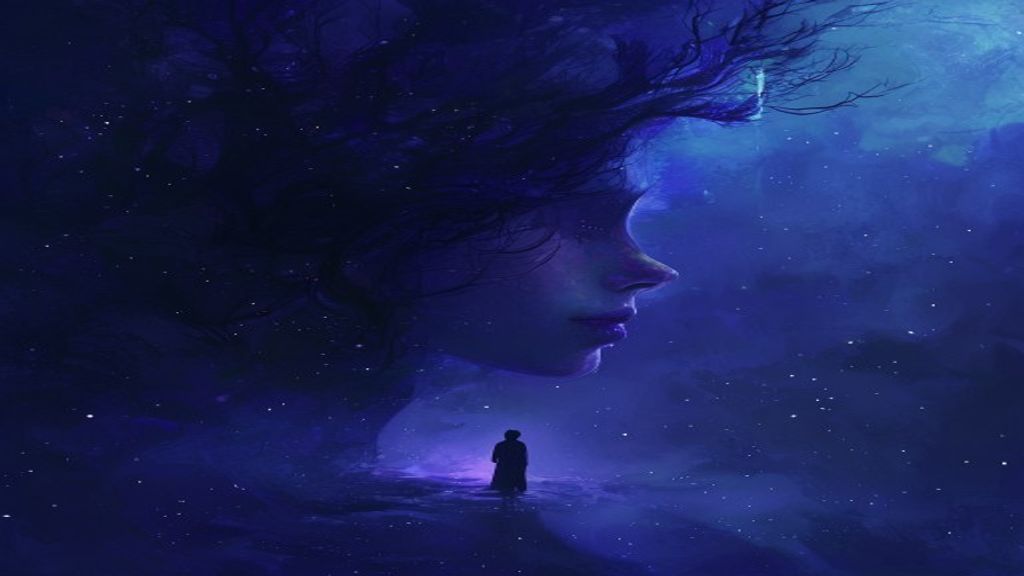
A death in a dream sets off alarm first: something is about to be lost, or worse. A rebirth dream undoes that alarm, because the dream does not end at the death. You die, and then you keep going, through a dark passage or into a different body or a different life. The rebirth dream lands differently from other intense dreams. It doesn’t leave you frightened. It leaves you slightly recalibrated, like a compass needle that’s just found north after a while of wobbling.
Dreaming of being reborn, dying and finding yourself continuing, emerging from a dark passage, waking in the dream into a different body or a different life, is one of the most legible things the dreaming mind does, once you know how to read it. It’s not literal. It’s not prophecy. It’s the psyche doing what it does best: processing change through the most extreme available image.
Dreaming of being reborn usually marks a real ending and beginning in your waking life that you haven’t fully processed yet. The death in the dream is rarely about death. It’s about what’s over. And what you find on the other side tells you how your mind is reading what comes next.
What’s actually dying in the dream
The first question worth asking isn’t what being reborn means. It’s what ended. Because the rebirth structure is always two-part: something closes, something opens. And the closing is doing as much work as the opening, even if the opening is what you remember.
A self-image can die in this dream. A chapter of your life, so complete that your mind is filing it under a category separate from the present. A relationship that’s changed enough to be its own kind of finished even if both people are still here. A belief you held for so long it had become structural, and now it’s not, and the absence is big enough that the dream needed a whole death sequence to mark it.
This is where Artemidorus was genuinely ahead of his time. His principle that the same dream means different things for different dreamers, depending on age, status and occupation, makes a dream of dying a question about the dreamer’s circumstances rather than a literal threat. He was right not about the metaphysics but about the structure.
How to read what follows the death
- Notice the landscape you wake intoIn the dream, after the dying or the passage, what’s the first thing you see? Dark and featureless means your mind hasn’t yet built a picture of what’s on the other side, the transition is real but the destination is still forming. Light and open means you have more trust in what’s coming than you might admit while awake. Strange or foreign means the new chapter is genuinely unknown, and you know it.
- Check the body you’re inSome rebirth dreams give you the same body. Some give you a different one, younger or changed in a way you can’t quite name. A changed body usually points to a changed sense of self, not who you’ll physically become, but how you’re starting to inhabit yourself differently. If you came back into the same body, the change is in direction, not identity.
- Mark the feeling of the transitionThe passage itself, the dying, the darkness, the crossing, carries a quality. Was it effortful or easy? Was there grief in it? Was there something oddly businesslike about the whole thing? The emotional tone of the transition usually maps to how your waking self is actually handling whatever’s ending. Ease in the dream tends to mean you’re more ready than you think. Struggle tends to mean you’re grieving something you haven’t named yet.
- Look at who, if anyone, was waitingA rebirth dream that ends with someone there, waiting, welcoming, familiar, often carries something relational. A part of yourself you’re growing toward. A relationship that has room for who you’re becoming. An absence on the other side is worth sitting with too; it might mean the new version of your life is yours alone to build, which can feel lonely and also, quietly, like freedom.
The cultural weight this dream carries
People have been asking whether a strange dream is a threat or a promise for a very long time. The Chester Beatty papyrus, a dream book dated to around 1200 BC, sorts dreams into good and bad omens. Dream incubation at the temples of Asclepius had visitors sleep in the temple hoping for a dream of healing, and leave changed by it, which one could fairly call symbolically reborn through the god’s attention.
Some spiritual traditions read a death in a dream as a reset: the old configuration can’t hold the new one, so something has to close. Classical Islamic dream interpretation pays close attention to the context and the emotional quality of the death before assigning any meaning.
What I find notable is the shape these readings share. They diverge on mechanics and cosmology, but the ones above agree on the basic point that this dream is about significant change, not threat.
The dream that arrives with grief
Not always, but sometimes, this dream comes during bereavement. Someone you loved has died, and you dream of being reborn yourself. That version is its own thing, not a confusion of identities, but a processing of continuity. You’re still here. That’s not a simple fact when someone you expected to always be there isn’t.
Dying is the first half of the structure, and dreaming of death reads that half on its own, the ending without the return. And if in your rebirth dream you came back in a different gender’s body, dreaming of being a woman for a man covers one such case, where the new body stands for qualities waking life calls ‘soft’ and the dream treats as indispensable.
Why the dream tends to feel like relief
The researcher Domhoff would account for the relief entirely through continuity: if you’ve been carrying something that’s genuinely ending, and the dream gives it a ceremony, then the relief is just the weight lifting. I think he’s right about the mechanism. I’m less sure he accounts for why the ceremony itself matters, why the dream needs the full death-and-return rather than just a scene of arrival.
My own best guess is that the rebirth dream is the mind insisting on ritual when waking life offers none. Modern life doesn’t have many real rites of passage. Things end without endings. Chapters close while you’re in the middle of something else and you miss the moment. The dream manufactures the ceremony you didn’t get. The darkness and the passage and the opening are the ritual your waking life skipped.
If there was a voice in the dream, something that narrates or calls you through the passage without a body, that is a separate image with its own reading in dreaming of a voice without a body.
Take someone who wakes up lighter from a rebirth dream and isn’t sure why, in the middle of a career change that has been building for three years. They may only see the connection in retrospect, and they may not need to. Some dreams do their work without asking for your interpretation.
- What is actually ending in my life right now, even quietly, even if I haven’t called it an ending yet?
- What was the quality of the passage, was there grief in it, or did it feel strangely easy?
- What did I find on the other side, and what does that tell me about how I actually feel about what’s coming?
- Is there something in my waking life that needed a ceremony, and didn’t get one?
Quick answers
What does it mean to dream of being reborn?
It usually marks a real ending and beginning in your waking life that hasn’t been fully processed yet. The death in the dream represents something closing, a self-image, a relationship, a chapter, and the rebirth is your mind’s way of giving that transition a ceremony.
Is a rebirth dream a good sign?
The emotional quality of the dream usually confirms this: most people wake from rebirth dreams feeling lighter, not frightened.
Why do rebirth dreams feel so real and intense?
Because the image is drawn from the most extreme register available to the dreaming mind. If something genuinely significant is ending in your life, your mind reaches for the most significant symbol it has. The intensity matches the weight of the real transition, not a literal event.
What if I died in the dream but didn’t come back?
That version, dying without a clear rebirth, tends to sit heavier, and it’s worth sitting with what it might be pointing to. It could mean the transition is further along than the new arrival: you’ve left something but haven’t yet found the other side. Recurring versions of this dream often mean the ending hasn’t been acknowledged yet.
Sources for this reading
- Domhoff, G. W. (2003). The Scientific Study of Dreams: Neural Networks, Cognitive Development, and Content Analysis. American Psychological Association.
- Domhoff, G. W. (1996). Finding Meaning in Dreams: A Quantitative Approach. Plenum Press.
- Artemidorus of Daldis (2nd century CE). Oneirocritica. English edition: Harris-McCoy, D. E. (2012). Artemidorus’ Oneirocritica: Text, Translation, and Commentary. Oxford University Press.
Full bibliography on Sources and method. Found a mistake? Tell us and see the corrections log.