- Tradition
- Psychological readingAnimal dreams
- Also read in
- The BibleSame symbol, other tradition
- Draws on
- Domhoff, Revonsuo, Jung
- Reviewed
- 5 min read
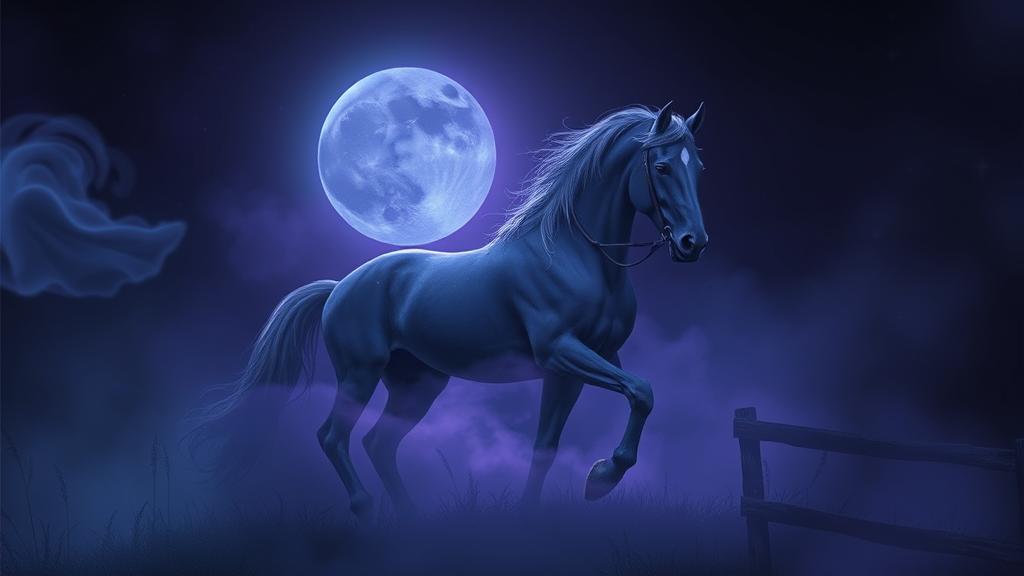
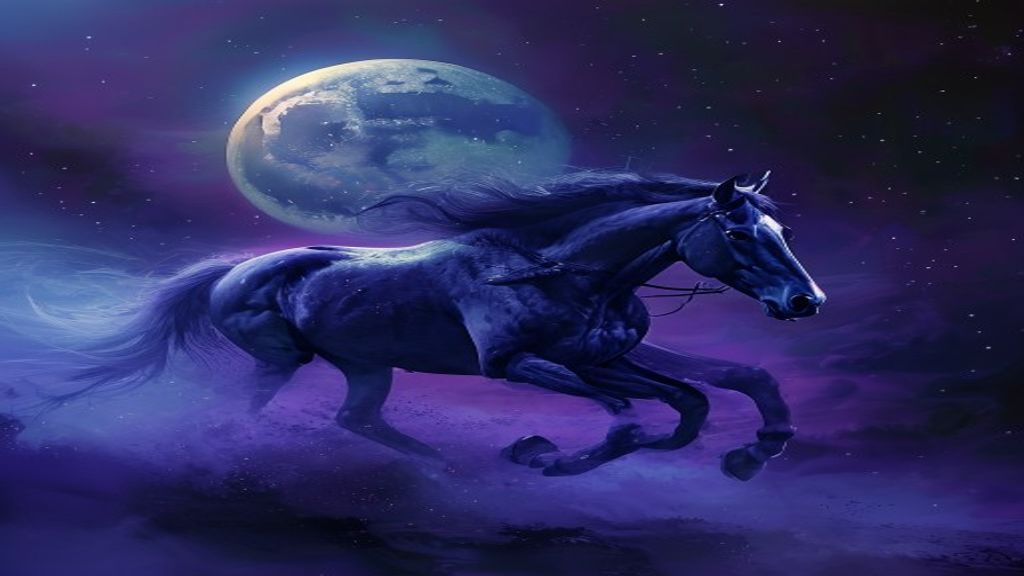
Galloping horse dreams are remembered for one quality above all: irreversibility. The animal doesn’t negotiate and doesn’t slow. It is already past before you have finished reacting, and what stays with you afterwards is less fear than finality, the sense that something started moving before you were asked.
These dreams aren’t slow or ambiguous. Something is in motion, at full force, and the dreamer’s experience of it varies enormously: exhilaration, terror, helplessness, the specific joy of riding something faster than you could ever be on your own. That variation is almost the whole interpretation.
A galloping horse in a dream is a symbol of momentum, drive, and raw energy in motion. Whether you’re riding it, watching it pass, or being run toward by it changes the meaning entirely. The key question is whether the power in the dream feels like yours to use or something happening to you.
Old readings and new research
- Ancient Egypt, ~1200 BC
The Chester Beatty papyrus dream book sorts dreams into good and bad omens. Horse power in a dream would sit comfortably on either side of that line: energy that could serve you or overwhelm you.
- 2nd century, Artemidorus
In the Oneirocritica, Artemidorus held that the same dream means different things for different dreamers, depending on age, status and occupation. For a horse, that makes the condition of the ride the whole question. A well-controlled horse is personal power in good order. A bolting or runaway horse points to drives or passions that have gotten beyond the dreamer’s command.
- 20th century, Jung
A Jungian reading takes the horse as a symbol of the instinctual energies of the unconscious, something powerful and vital that operates at a level below rational control. The interest is in what happens when the dreamer manages to ride it versus when they’re thrown.
- Contemporary dream research
Domhoff’s continuity hypothesis would predict that galloping horse dreams cluster around periods of high momentum in waking life: major projects in motion, life changes already underway, situations where events are moving faster than you can plan for them.
Who has the reins
This is the question that almost every interpretation of this dream comes back to. If you’re riding well, comfortable, at speed without panic, your mind is telling you something about your relationship to the energy driving your life right now. You’re not being carried away. You’re going somewhere. That version tends to arrive when someone is genuinely in flow, and it feels like what it is.
If the horse is galloping and you’re holding on rather than directing, that’s a different conversation. The momentum is real. The control is less certain. This version usually belongs to a situation where things are moving faster than you can consciously manage: a relationship accelerating, a career shift that couldn’t be slowed, a project that had taken on its own life. The horse isn’t wrong to run. The question is whether you’re a rider or a passenger.
The horse running without you, whether it fled or was never yours to ride, is a loss-of-momentum dream. Something that had been moving under your direction has gone its own way. A Jungian reading takes this as the instinctual life asserting independence from the ego’s management. There is something ungovernable in that image, even if it’s uncertain exactly what it represents.
The horse as force you didn’t start
Revonsuo’s threat simulation theory (2000) gives us one lens here: the galloping horse heading toward you is a scenario the dreaming brain might rehearse as a genuine physical threat, testing the response. But that framing covers only a fraction of galloping horse dreams. More often the horse isn’t threatening. It’s just faster than everything else in the dream, and you’re somewhere in relation to it, in front, behind, alongside, or on top.
That quality of being outpaced is worth paying attention to. If in your dream you’re watching a horse gallop away from you or past you, the feeling that follows it is the subject. Longing, envy, relief, awe: each points somewhere different. A horse galloping away while you feel left behind is a very different dream than one galloping past while you feel awe.
Related images set the horse’s speed against other paces. A cheetah is speed with no rider and no hand on it, the gap between your own pace and what’s possible. A snail is the opposite pace, the crawl, and a mind that dreams both may be trying to work out which pace is actually yours.
If it’s a herd
One note on a specific variant: if the galloping horse becomes a herd, multiple horses at full speed, the dream has shifted from personal momentum to collective force. Dreaming of a herd follows that shift further. The single horse is about your own drive; the herd is about forces larger than you that are also moving.
A horse crossing a road is a complete image: the fence rails still swinging, the animal already vanishing into a field on the other side. Nothing right or wrong happens in it. You brake, you watch, it’s over. Some of our galloping horse dreams are like that. They’re not asking us to respond. They’re just showing us something that’s already in motion.
- Was I riding, watching, or in the horse’s path? That position is my position in whatever’s moving right now.
- Did the speed feel like mine to use, or like something happening to me?
- Where was the horse going? Away from me, toward me, or was I on it heading somewhere?
- Is there something in my waking life running at full speed right now that I haven’t fully acknowledged?
One symbol, two traditions
Read side by side, the two traditions pull in different directions: galloping horse as a signal from your own mind, or galloping horse as an image to test against the text. Knowing which question you are asking is half the interpretation.
A galloping horse in a dream is a symbol of momentum, drive, and raw energy in motion. Whether you’re riding it, watching it pass, or being run toward by it changes the meaning entirely. The key question is whether the power in…
You are reading this oneNo ordinary sleep-dream in Scripture features a galloping horse. What the tradition offers instead is an extraordinary theology of the horse as symbol of power, speed, and the forces that operate beyond human control. Zechariah’s…
Read the biblical meaning →Quick answers
What does dreaming of a galloping horse mean?
A galloping horse in a dream usually represents energy, momentum, or drive in motion. The key detail is your relationship to the horse: riding it with confidence points to personal power in good order; barely hanging on suggests something moving faster than you can consciously manage; watching it run away tends to point to momentum you’ve lost or missed.
Is a galloping horse dream a good sign?
It can be, particularly if you’re riding comfortably or watching with awe. The version where you’re holding on rather than directing is more neutral, it’s about high momentum, which isn’t good or bad in itself. Only the version where you’re threatened or the horse is uncontrollable leans more anxious.
What does it mean if a horse gallops away from me in a dream?
That version tends to carry a feeling of being left behind, or of momentum you once had that has gone its own way. It can reflect a project, a relationship, or a period of life that was moving and now isn’t, or is moving without you. The emotional response in the dream is worth examining: longing points somewhere different than relief.
Why do I keep dreaming of a galloping horse?
Recurring galloping horse dreams usually mean there’s a question about momentum or control in your waking life that hasn’t been settled. Something is moving at full speed, and you haven’t decided yet whether you’re a rider or a passenger. These dreams tend to stop when that question gets an honest answer.
Sources for this reading
- Domhoff, G. W. (2003). The Scientific Study of Dreams: Neural Networks, Cognitive Development, and Content Analysis. American Psychological Association.
- Domhoff, G. W. (1996). Finding Meaning in Dreams: A Quantitative Approach. Plenum Press.
- Revonsuo, A. (2000). The reinterpretation of dreams: An evolutionary hypothesis of the function of dreaming. Behavioral and Brain Sciences, 23(6), 877-901.DOI
- Jung, C. G. (Ed.). (1964). Man and His Symbols. Doubleday.
- Artemidorus of Daldis (2nd century CE). Oneirocritica. English edition: Harris-McCoy, D. E. (2012). Artemidorus’ Oneirocritica: Text, Translation, and Commentary. Oxford University Press.
Full bibliography on Sources and method. Found a mistake? Tell us and see the corrections log.