- Tradition
- Biblical reading
- Also read as
- PsychologySame symbol, other tradition
- Scripture
- Peter, Proverbs, Amos, Revelation
- Reviewed
- 4 min read
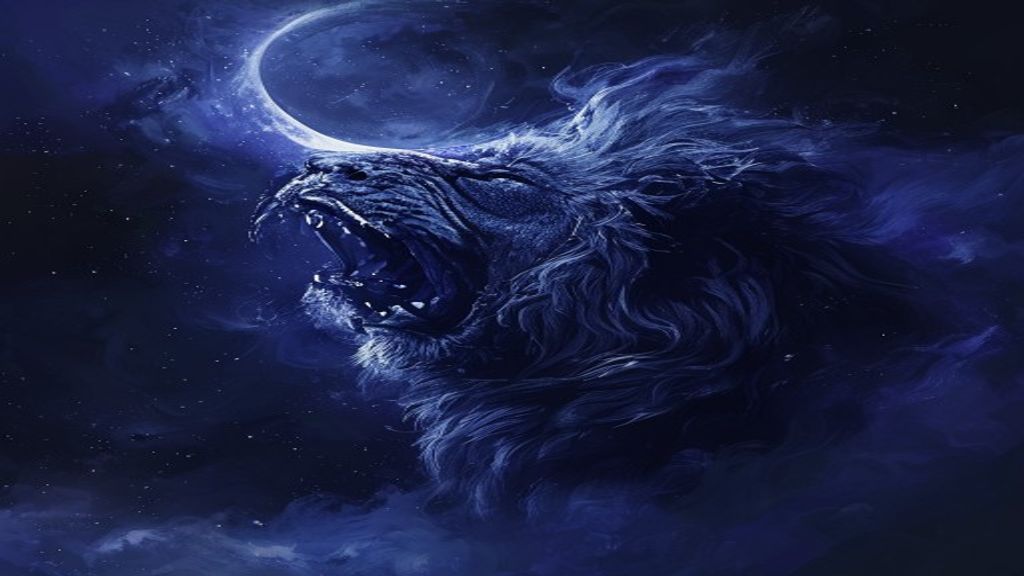
You hear the roar before you see anything, low enough to feel in your chest. Nobody has to tell you what it is. The body goes still for a few seconds, before the mind can catch up, and you do not move. That involuntary stillness is probably the most honest entry point into what a roaring lion in a dream might be touching.
The biblical tradition gives you more direct material on a roaring lion than almost any other dream image. The problem, which is also the richness, is that Scripture uses this exact phrase for two completely opposite figures. Understanding which one showed up in your dream is worth real attention. For the psychological reading of this dream’s shape, see the secular roaring lion dream reading.
What the Bible actually says about a roaring lion
The lion as predatory enemy
First Peter 5:8 is direct: ‘Be sober, be vigilant; because your adversary the devil, as a roaring lion, walketh about, seeking whom he may devour.’ The roar here belongs to a hunter, and Peter’s use of this image tells the reader not to be paralyzed but vigilant. Proverbs 28:1 also compares the wicked to ‘a roaring lion, and a ranging bear.’ Amos 3:4-8 asks ‘will a lion roar in the forest, when he hath no prey?’ and then ‘the LORD God hath spoken, who can but prophesy?’ The Amos passage uses the lion’s roar as an image of unavoidable divine speech, not always threatening, just impossible to ignore.
The lion as royal and divine authority
Revelation 5:5 names Christ ‘the Lion of the tribe of Judah, the Root of David.’ Genesis 49:9 gives Jacob’s prophecy over Judah using the lion’s strength and sovereignty as the image. Psalm 104:21 describes lions roaring as they seek their food from God, folded into the portrait of a creation that praises. The roar of divine authority in these passages is something to stand before, not flee from. The question is always about the direction the roar is pointed.
The question the dream is asking
These two biblical lion images don’t cancel each other; they generate a real discernment question. When you dreamed of a roaring lion, did it feel like something hunting you, or something whose sound demanded your attention without being aimed at your destruction? The difference between Peter’s lion and Revelation’s lion isn’t size or sound. It’s direction and intent.
Peter’s specific instruction is ‘resist stedfast in the faith’ (1 Peter 5:9). The lion roars and the correct response is not to run but to stand firm. Amos’s lion speaks and the correct response is to prophesy. Revelation’s lion opens scrolls. None of these responses is panic. The biblical tradition treats a roaring lion as something that demands an answer, not as an image of inevitable defeat.
Within the tradition, most commentators are honest that the lion image in Scripture holds both its readings in tension. C.S. Lewis drew on exactly this tension in the Narnia books; Aslan is explicitly described as ‘not a tame lion.’ I mention that only because it’s a useful illustration of how the biblical instinct works: the lion that is on your side is still not safe in the sense of being controllable. Power and goodness aren’t the same as harmlessness. A dreamer who woke from a roaring lion dream feeling shaken even though the lion wasn’t attacking them might be experiencing that exact quality.
Ecclesiastes 5:7 cautions: ‘in the multitude of dreams and many words there are also divers vanities.’ That verse is always part of the honest picture. So is Joel 2:28, which promises that God speaks in dreams. The two don’t cancel each other; they require discernment. If the lion in your dream felt like the adversary of 1 Peter 5:8, the biblical meaning of the devil in dreams takes up that side of the image. If it felt closer to Judah’s lion, the biblical meaning of a lion in dreams gives the fuller picture of the animal, roar or no roar.
The detail worth noticing in 1 Peter 5 is the word ‘walketh.’ The predatory lion doesn’t arrive in a rush. It’s patient, circling. That pattern, something gradually encircling that you haven’t named yet, might be the most useful question to take to prayer from this dream, regardless of which lion was doing the roaring.
- In the dream, was the lion roaring at you specifically, or just roaring? Was it close or at a distance? Those are different experiences in the texts too.
- When you woke up, did the roar feel like a warning, a summons, or pure threat? Your instinctive reading is data worth writing down.
- Peter’s instruction is to be vigilant and resist. Is there something in your waking life you’ve been watching grow gradually, something that’s been circling rather than striking?
- If the roaring lion was the Lion of Judah rather than the adversary, what would it be demanding your attention toward?
One symbol, two traditions
Read side by side, the two traditions pull in different directions: roaring lion as a signal from your own mind, or roaring lion as an image to test against the text. Knowing which question you are asking is half the interpretation.
A roaring lion in a dream is usually an encounter with concentrated force, whether your own unused power, someone else’s authority over you, or a situation demanding a response you’ve been putting off. The freeze you feel in the…
Read the psychological meaning →Scripture uses the roaring lion for both the adversary (1 Peter 5:8, where the devil ‘as a roaring lion’ seeks to devour) and for divine authority (Revelation 5:5, Amos 3:8, Genesis 49:9). Proverbs 28:1 also uses it as an image…
You are reading this oneQuick answers
What does a roaring lion represent in the Bible?
Scripture uses the roaring lion for both the adversary (1 Peter 5:8, where the devil ‘as a roaring lion’ seeks to devour) and for divine authority (Revelation 5:5, Amos 3:8, Genesis 49:9). Proverbs 28:1 also uses it as an image of dangerous power. The roar itself in Amos is compared to unavoidable divine speech. The animal holds both threatening and authoritative meanings depending on context.
Is dreaming of a roaring lion a spiritual warning?
It might be, given 1 Peter 5:8’s explicit use of the image for spiritual threat. Joel 2:28 affirms God’s ability to speak through dreams. Ecclesiastes 5:7 and Jeremiah 23:25-28 together counsel against treating any dream as automatically prophetic without careful discernment. A roaring lion dream that carries a strong warning quality is worth taking seriously in prayer, not as a prediction but as an invitation to vigilance.
Does the roaring lion in a dream mean the devil?
First Peter 5:8 is the clearest biblical text connecting a roaring lion specifically to adversarial spiritual power. But Revelation 5:5 uses the lion for Christ, and Amos uses the roar for divine speech generally. The feeling of the dream, whether it felt like something hunting you or something demanding your attention, is part of the honest discernment question.
What should I do after a roaring lion dream?
The biblical responses in the relevant texts are practical: be sober and vigilant (1 Peter 5:9), resist steadfast in faith, and know that the experience of such opposition is shared broadly across the community of faith. Writing down the dream, bringing it to prayer, and discussing it with a trusted pastor or spiritual director are the steps the tradition recommends, over and above any symbolic interpretation.
Sources for this reading
- The Holy Bible, King James Version (1611). Public domain. Scripture quotations on this site are from the KJV.
Full bibliography on Sources and method. Found a mistake? Tell us and see the corrections log.