- Tradition
- Psychological readingBody dreams
- Draws on
- Domhoff, Artemidorus
- Reviewed
- 5 min read
Your hands look wrong. That’s usually how it starts, in the dream and in the way it gets described afterward. Not monstrous, just wrong: fingers too long, or curving back the wrong way, or covered in something. Then you realize the wrongness extends to your whole body and you’re not alarmed. That’s the part people struggle to explain. The transformation doesn’t feel like an attack. It feels like a relief.
Transforming into an animal in a dream is your mind trying on a body that carries what you’re feeling more honestly than your human one does right now. The animal’s qualities (predator, prey, wild, bound) tell you what’s being borrowed. The feeling of the transformation tells you whether you needed the loan or feared it.
The feeling in the hands
This particular detail is worth staying with: hands. In a dream where you transform into something quadrupedal, the hands are often the first thing you notice, watching them change before the rest follows. And I think the dream chooses hands on purpose. Hands are how we work, how we reach, how we signal control over our environment. When they shift into paws or talons or hooves, something about agency is on the table. The transformation itself, the in-between moment, is almost never the unsettling part. What people find unsettling, if anything, is waking up and realizing they weren’t unsettled. That they liked it. That for a moment they moved differently and that felt better. That’s worth sitting with longer than any dictionary entry.
What the animal is lending you
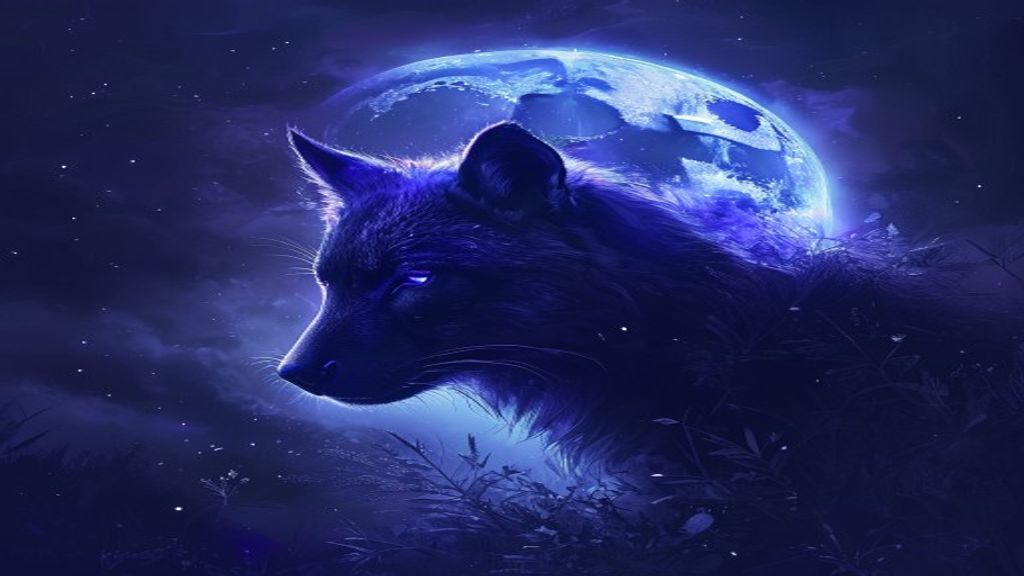
The animal isn’t random, even when it surprises you. Dreams that land here tend to be borrowing something specific from the creature’s symbolic vocabulary: speed, stealth, endurance, ferocity, solitude, a kind of watchfulness we associate with animals that have to stay alive in the open. I think of it as the dream finding a better costume. You’re already carrying the quality. The dream just puts it in a body that can move the way the feeling moves. A person who’s been suppressing their own aggression for months doesn’t dream of a wolf because wolves are dangerous. They dream of a wolf because the wolf can carry what they’ve been holding back without apologizing for it. The animal isn’t a verdict on your character. It’s a pressure valve.
Usually about suppressed drive, protectiveness, or the part of you that’s been asked to be smaller than it wants to be. The transformation is often welcome in the dream itself.
This one crosses over with dreams of flying. The transformation is about perspective and escape in equal measure. Whether you can actually fly, or just have wings, matters a lot.
Underestimated. These dreams sometimes speak to exhaustion from always being alert, from living in a state of low-grade vigilance. The animal isn’t weakness. It’s the body you’ve been running in.
Loyalty, service, and the question of who you’re doing it for. Dreams of becoming a domestic animal often sit alongside questions about whose needs have been leading.
Disorientation with scale. Feeling overwhelmed, overlooked, or paradoxically freed by smallness. The dream’s emotional tone is the whole reading here.
Your mind assembling a creature that doesn’t exist because no real animal fits. Pay attention to which parts it borrowed. Each piece is a different quality you’re trying to hold at once.
What’s wild and what’s just continuity
Here’s where I’ll bring in the research and then complicate it. Domhoff’s continuity hypothesis, which holds that dreams reflect whatever’s actually happening in waking life, handles most of these transformations pretty well. The overworked person who becomes a burdened animal, the lonely person who becomes something solitary, the person just discovering their anger who becomes a predator: these all behave the way continuity would predict. The dream isn’t symbolic in some mystical sense. It’s just wearing the emotion in a more visible shape. But the cross-cultural record is harder to dismiss than that. Artemidorus, writing in the second century, held that the same dream means different things for different dreamers, which is already a caution against any one-to-one symbol dictionary. The oldest recorded traditions across cultures assign specific meaning to specific creatures, and while the assignments vary, the seriousness with which the dreamer is expected to take the experience doesn’t. I’m not sure continuity alone explains why certain animal images land with the same specific weight in cultures that never touched each other. Maybe it does. I hold that question loosely.
When it comes back
Recurring transformation dreams are almost always signaling something unaddressed. The animal your mind keeps choosing is offering you something you haven’t taken yet. Not a solution. More like a permission slip. Take someone who keeps dreaming of becoming a large, very slow tortoise, and finds it embarrassing to mention. They’ve spent the previous year sprinting through a recovery that they never really let themselves slow down for. The tortoise isn’t an insult. It’s an invitation. If the animal had wings, dreaming of having wings tells you something specific: you’re not just borrowing the animal’s instincts, you’re reaching for something about freedom of movement. And if the transformation felt like it was happening to you rather than coming from you, dreaming of a different body is about the gap between how you experience yourself from the inside and what your life is asking you to be, the skin that doesn’t fit.
The hands again
I said the hands come back. Here’s how. The person who notices their hands changing and feels relief may be someone whose hands have been doing work that doesn’t belong to them. Work that requires a kind of fine motor precision that isn’t natural to them. The transformation offers hands that are built differently, that grip instead of type, that dig instead of fill out forms. I’m not sure if the dream is saying you’ve been doing the wrong work, or just that your body knows you’ve been tired. Maybe those are the same thing. If the relief felt like rest, dreaming of healing is the nearest relative: the transformation may be less a conclusion than the beginning of something the dream is working through.
- Which part of the transformation happened first, and did it feel like attack or release?
- What quality does that animal carry that you haven’t let yourself carry lately?
- In the dream, were you still yourself inside the animal’s body, or had that changed too?
- Did you want to go back to your human form, or did waking do that for you?
Quick answers
What does it mean to transform into an animal in a dream?
It usually means your mind is borrowing a body that fits what you’re carrying emotionally. The animal’s qualities (predator, prey, solitary, domestic) are the qualities your psyche is currently working with. The feeling of the transformation, welcomed or feared, tells you most of the rest.
Is dreaming of transforming into an animal a bad sign?
Rarely. Most people describe these dreams as neutral to positive, which surprises them. The discomfort usually comes afterward, on waking, from realizing they weren’t scared. These dreams tend to be your mind doing something useful, not something alarming.
Why do I keep having the same animal transformation dream?
Recurrence usually means the quality the animal represents hasn’t been acknowledged or acted on yet. The dream stops when you either express that quality in waking life or consciously understand what you’ve been suppressing.
Does the specific animal matter?
Yes, quite a lot. Predators speak to power and drive. Prey animals often speak to exhaustion or vigilance. Domestic animals raise questions of loyalty and service. Hybrid or invented creatures suggest you’re holding qualities your mind can’t find in a single real animal.
Sources for this reading
- Domhoff, G. W. (2003). The Scientific Study of Dreams: Neural Networks, Cognitive Development, and Content Analysis. American Psychological Association.
- Domhoff, G. W. (1996). Finding Meaning in Dreams: A Quantitative Approach. Plenum Press.
- Artemidorus of Daldis (2nd century CE). Oneirocritica. English edition: Harris-McCoy, D. E. (2012). Artemidorus’ Oneirocritica: Text, Translation, and Commentary. Oxford University Press.
Full bibliography on Sources and method. Found a mistake? Tell us and see the corrections log.