Nature Dreams
Dreaming of the Ocean: depth, scale, and what you're standing over
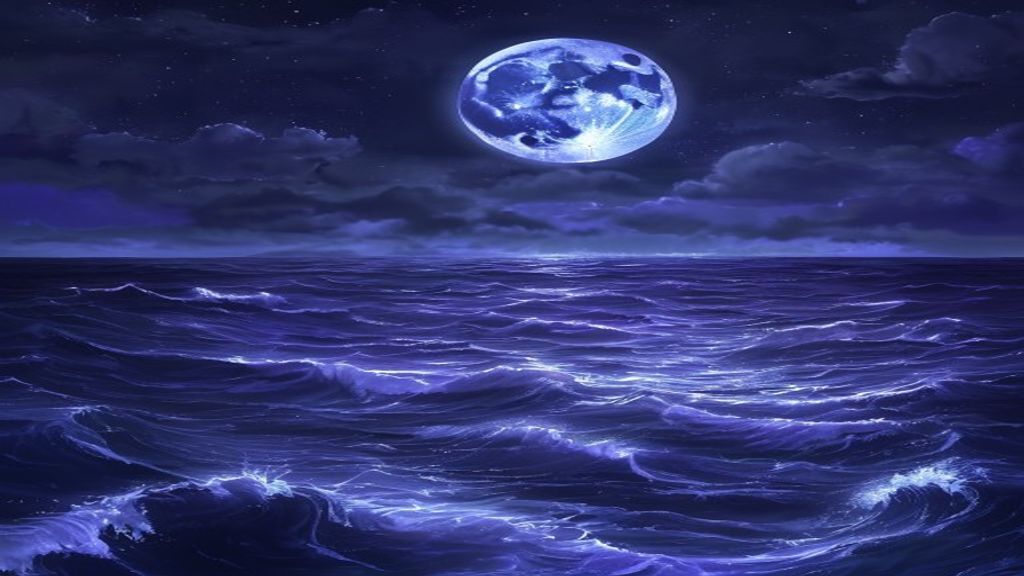
You’re at the edge. The water stretches out past where your eyes can usefully go, and at some point the ocean floor drops away beneath you, deeper than you can see, deeper than you want to think about. You’re not in the water yet. You’re not swimming toward anything or fleeing anything. You’re just standing at the place where solid ground stops, and the scale of what’s in front of you has done something to your chest.
That moment at the waterline is where most ocean dreams are really happening. Not the water itself. The standing-at-the-edge of it.
Dreaming of the ocean most often signals a confrontation with something vast: emotion, the unconscious, a situation too large to manage by thinking harder. The critical detail isn’t the water but your position relative to it and what the depth feels like under you. Awe and dread are often the same ocean.
The morning I stood on a fire escape
I lived for a year in an apartment on the fourth floor, and the fire escape faced east. Some mornings I’d open the window and step out just to have somewhere to stand that wasn’t indoors. The city was below. The sky was above and uninterrupted. On a clear morning there was a moment, before any of the noise got organized, when the sheer openness of the sky did something to my sense of scale. A mild vertigo that wasn’t about height. Something about extent.
Ocean dreams produce exactly that in people who describe them to me: not fear necessarily, but a rearrangement of your own scale. You thought you were bigger than this. Then the water started.
And the depth beneath the surface is the part that lingers after waking. You can’t see the bottom. That matters enormously.
What you’re doing at the water decides the reading
What’s underneath
Jung’s assignment of vast water to the unconscious is so standard at this point that it almost feels redundant to mention, but with ocean dreams it lands differently than with rivers. A river’s unconscious content is moving through you. The ocean’s unconscious content is down there, layered, neither moving nor threatening to move until it does. It’s the stored version.
What I find more interesting is the particular fear of what’s below the surface. Not the ocean as landscape but the ocean as container. People who dream of clear tropical water and a sandy bottom visible the whole way down report a completely different emotional texture than people who dream of murky water with no visible floor. Same ocean, different relationship to what’s hidden.
Artemidorus recorded ocean dreams with a sailor’s practicality. Rough water meant difficulty. Calm water meant smooth passage. He’d find our current psychological readings overwrought, probably, but he’d recognize the instinct: what the water’s doing is telling you something about what’s coming.
I’m less interested in prediction and more interested in what the dreamer already knows. Dreams about a red sunset over water carry a similar quality of knowing something’s changing; the sky is already telling you. And if the dream pairs the ocean with isolation, the piece on dreaming of a desert covers the emotional texture of standing alone inside something vast.
The ocean as a thing that doesn’t care
This might be the most useful framing I have for ocean dreams and it’s not a comforting one: the ocean in dreams carries the quality of something genuinely indifferent to whether you’re in it or not. It existed before you arrived. It’ll be here after you leave. That’s different from the threatening antagonist of a nightmare. There’s no malice in it.
And that indifference, strangely, is often what makes ocean dreams transformative rather than just frightening. You meet something larger than your problems and your problems momentarily look their actual size. Domhoff would note that this tracks with what’s actually happening in the dreamer’s life, and he’d be right. People having ocean dreams are usually not having a quiet week.
Some ocean dreams also carry creatures: things glimpsed beneath the surface, sometimes clearly, sometimes as a shadow. I have a suspicion, not a theory, that the creature you see reflects the nature of what you’ve put down there. Something you ignored long enough that it developed its own shape. The ocean is patient in a way your waking life isn’t.
If you’ve been in a relationship with ocean dreams, they tend to shift when your relationship to what’s overwhelming shifts. They don’t need to stop. Some of the most settled people I know still dream of the ocean. But the feeling at the waterline changes. You find yourself wading in without the vertigo.
Back to that fire escape. I stopped stepping out there eventually, not because the view got less impressive but because I’d made some kind of peace with the extent of it. I don’t know exactly when. It happened the way ocean dreams often resolve: without announcement, just one morning you’re not gripping the railing anymore.
- Where were you in relation to the water: edge, swimming, submerged, distant? That position is your current stance toward whatever feels overwhelming.
- Could you see the bottom? The visibility of the depth is information about what you’re comfortable not knowing.
- Was the water threatening you or just existing? Indifferent vastness and active threat are different dreams.
- What did you want to do: get in, get out, stay at the edge, or watch from safety?
One symbol, two traditions
The two schools are not reading the same book: psychology asks what ocean is doing in your waking life, while the biblical tradition tests the image against Scripture and leaves the meaning with God.
Ocean dreams are about scale and what lives below it. How you feel at the edge tells you almost everything about what the dream is trying to say.
You are reading this oneWhat Scripture actually says about the ocean, from creation's deep to the sea that will be no more, and what it means when the ocean fills your dream.
Read the full biblical meaning →Quick answers
What does it mean to dream of the ocean?
Usually a confrontation with something too large to manage through reason alone: a big emotion, an overwhelming situation, or the part of yourself you haven’t fully explored. The ocean in dreams is scale made visible, and your position relative to it is the interpretation.
Is dreaming of the ocean a spiritual sign?
Cultures across history have read vast water as a threshold between the known and unknown. Whether that’s spiritual or psychological depends on your framework. What nearly all readings share is the sense of something larger than ordinary life waiting at the water’s edge.
What does it mean to dream of swimming in the ocean?
If you’re swimming freely, it’s usually a sign that you’ve entered something large and aren’t being destroyed by it. If you’re swimming and afraid of what’s below, the fear tends to reflect anxiety about what’s hidden in a waking situation, something you know is there but can’t see clearly.
Why do I keep dreaming about a dark or deep ocean?
Depth without visibility in dreams usually points to content you haven’t looked at directly: feelings you’ve stored rather than processed, or a situation whose full dimensions you’re avoiding. Recurrence tends to mean the depth hasn’t been acknowledged in waking life yet.