Color Dreams
Dreaming of Black: the color that asks you to stay a little longer
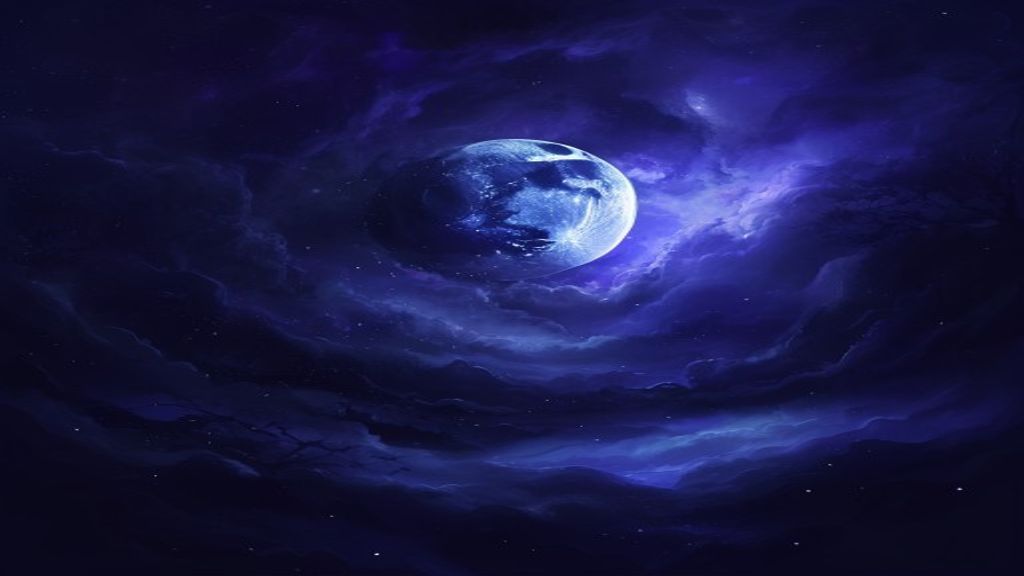
I used to be afraid of black dreams. Not the nightmares with things in them, but the ones that were just black: complete, soft, total. I’d wake up convinced I’d missed something, that the dream had happened and I’d somehow slept through it. It took me an embarrassingly long time to realize that the black was the dream. The darkness wasn’t the absence of content. It was the content.
And once I understood that, I started hearing it differently from the people who’d written to me. The ones who said the dream was just dark, nothing else, and then trailed off. As if they expected me to say that doesn’t count. It counts more than they knew.
What blackness actually signals in a dream
Black in a dream isn’t automatically ominous. I want to say that clearly and early, because almost everyone who brings up a black dream assumes it is. The color has a formidable cultural reputation for grief and danger, and the dreaming mind isn’t immune to the culture it grew inside. But black also carries gestation, rest, depth, and the specific quality of not-yet that comes before something new. Seeds in dark soil. Film before it’s developed. The moment before a screen turns on.
What you’re looking for, when you try to read a black dream, is whether the darkness felt containing or consuming. Containing darkness has weight but not threat. You’re inside something, and it’s holding you. Consuming darkness moves toward you or swallows things you care about, and that version does deserve attention. These two feel completely different in the body, and you already know which one you had.
The long history of this color in dream traditions
- Around 1200 BC
The Chester Beatty papyrus, one of the oldest known dream texts, treats deep darkness in dreams as ambiguous: it can signal the underworld or the protected sleep of the gods. The darkness wasn’t uniformly feared; it depended entirely on what else moved within it.
- 2nd century
Artemidorus, writing in the Oneirocritica, distinguishes between dreams of black objects and dreams of black space. His readings are practical rather than theological: black clothing on a living person in a dream is generally inauspicious, but a black sky before dawn is simply a sky before dawn.
- Medieval Islamic tradition
In the Ibn Sirin tradition, black in dreams operates through extreme context-sensitivity. Black hair can mean long life; a black river can mean wealth; black smoke means anxiety. The color alone means almost nothing. What it touches determines everything.
- 1900
Freud’s Interpretation of Dreams, for all its limitations, established that dark, enclosed dream spaces aren’t simply threatening: they’re often the dreaming mind’s representation of contained or protected interior states. He was probably working too hard to make it all mean one thing, but the core intuition about containment holds.
- 1964
Jung, in Man and His Symbols, gives black its most useful modern framing: the Shadow, the parts of the self that haven’t been integrated, often arrives in dark tones. This isn’t the same as saying black means evil. The Shadow is what you haven’t looked at yet, not what you are. There’s a meaningful difference.
- Contemporary research
Dream researchers including Domhoff have noted that color in dreams generally reflects emotional tone rather than encoding fixed symbols. Black dreams in his database cluster around periods of strong emotion, particularly where that emotion hasn’t been named or processed. The black isn’t the message; it’s the flag.
Jung’s shadow, less dramatically than usual
The Jungian Shadow tends to get described in terms that make it sound like a villain in your own psyche: the dark side, the repressed, the dangerous. I think this framing does more harm than good, because it makes people afraid of their own black dreams when they should be curious.
A black figure, a dark room, a shadow that follows you in a dream: these are the mind’s way of pointing at something unexamined, not something terrible. The things we haven’t looked at aren’t necessarily the worst things about us. Sometimes they’re our anger we were taught to suppress. Sometimes they’re our ambition we were taught to be ashamed of. Sometimes they’re just exhaustion we haven’t admitted. Jung’s framework, handled carefully, is genuinely useful here. I’m not usually an enthusiast of dream symbolism that requires a complete theoretical apparatus, but on black and the Shadow specifically, the observation is accurate enough to be worth holding.
What Domhoff would add, and I think he’s right to, is that you don’t need the apparatus to understand your black dream. Ask what was going on in your life in the weeks before it arrived. Not what the color means in theory, but what you were carrying that you hadn’t yet set down. Black dreams are more reliably triggered by that kind of context than by anything inherent in the symbol.
The quality of the dark
There’s a specific kind of black dream that I think of as the velvet kind. Soft, total, warm in its own way. You’re not in danger in it. You’re just in darkness, and it’s somehow fine, maybe even right. People who have these dreams often struggle to articulate why they don’t feel frightening. They say things like: it felt protective. Or: like being under a heavy blanket. Or simply: I didn’t want to leave.
These are the dreams that arrive during exhaustion, illness, after long emotional labor, and at the end of years that asked too much. The dreaming mind is doing something very direct: giving you the rest your waking life wouldn’t allow. There’s no symbology to decode. The message is the darkness itself.
Then there’s the black that moves. The darkness that approaches, or deepens, or has something inside it you can feel but not see. That version is different in kind. It’s your mind pointing at something you’ve been keeping at the edge of your attention and indicating, in the most unambiguous visual terms available, that the edges are closing. Not a threat. A prompt.
What I think I was actually afraid of
Black rarely travels alone in the dream landscape. It frequently shares emotional territory with dreaming of deep blue, which has some of the same depth and containment but with more of a melancholic quality, and with dreaming of purple, which touches similar themes of the numinous and the threshold. If your black dream included any light at all, even a point of it, then dreaming of blinding light handles the specific meaning of light-within-darkness, which is its own distinct dream type.
Back to those early black dreams I mentioned, the ones I thought I was sleeping through. When I eventually paid attention to when they were arriving, there was a pattern. They came during periods of genuine transition: not crisis, exactly, but the particular suspension of being between one version of myself and the next. The times when I didn’t know yet who I was going to be on the other side of something.
The dark wasn’t absence. It was gestation. I wasn’t afraid of the dreams. I was afraid of the transition. And the dream was just honest enough to name its own color accurately.
I still dream black sometimes. I’ve stopped trying to find the content in it. I just let it hold me until morning. I’m not certain that’s the right approach. But it’s the one that stopped making me wake up exhausted.
- Did the darkness feel containing or consuming? Your body already has the answer, and it’s the most important distinction in reading this dream.
- Was anything inside the black, or was the black total? A presence in the dark is your Shadow in the Jungian sense: something unexamined, not something threatening.
- When did this dream arrive? What were you carrying in the weeks before it, and had you named it out loud yet?
- Did you want to leave the dark, or were you comfortable in it? The velvet version and the moving version ask completely different questions.
One symbol, two traditions
Read side by side, the two traditions pull in different directions: black as a signal from your own mind, or black as an image to test against the text. Knowing which question you are asking is half the interpretation.
Black in a dream is rarely what you fear it is. Nora Vance on the long history of this color, and what the dreaming mind does with darkness.
You are reading this oneWhat does black mean in a dream biblically? Scripture's theology of darkness, mourning, and judgment offers a richer picture than 'black equals evil.'
Read the full biblical meaning →Quick answers
What does it mean to dream of total darkness?
Total darkness in a dream can mean rest, gestation, or something unexamined waiting to be seen. The quality of the dark matters more than the fact of it: containing darkness, soft and still, often reflects a mind giving itself permission to rest or process. Moving, consuming darkness points at something you’ve been keeping at the edge of your attention.
Is a black dream a bad omen?
Not by itself. Across traditions from the Chester Beatty papyrus to the Ibn Sirin lineage, darkness in dreams is context-dependent, not automatically negative. Psychologically, black dreams cluster around periods of strong unprocessed emotion and major transitions, neither of which are inherently bad. The feeling in the dream is a more reliable guide than the color.
What does a dark figure or shadow in a dream mean?
In the Jungian framework, a dark figure usually represents the Shadow: the parts of yourself you haven’t fully examined or integrated. That’s not the same as the worst parts of you. It can be suppressed anger, unacknowledged ambition, or simply exhaustion you haven’t admitted. Shadow figures in dreams tend to become less threatening the more directly you’re willing to look at what they represent.
Why do I keep dreaming of blackness with nothing in it?
Recurring total-black dreams often arrive during extended transitions, when you’re between one version of yourself and the next. They can also track sustained fatigue or a period when something significant is being processed below the surface. If the black feels soft, you’re probably incubating something. If it feels suffocating, it’s worth asking what you’ve been refusing to name.