- Tradition
- Psychological readingAction dreams
- Also read in
- The BibleSame symbol, other tradition
- Draws on
- Domhoff, Cartwright
- Reviewed
- 5 min read
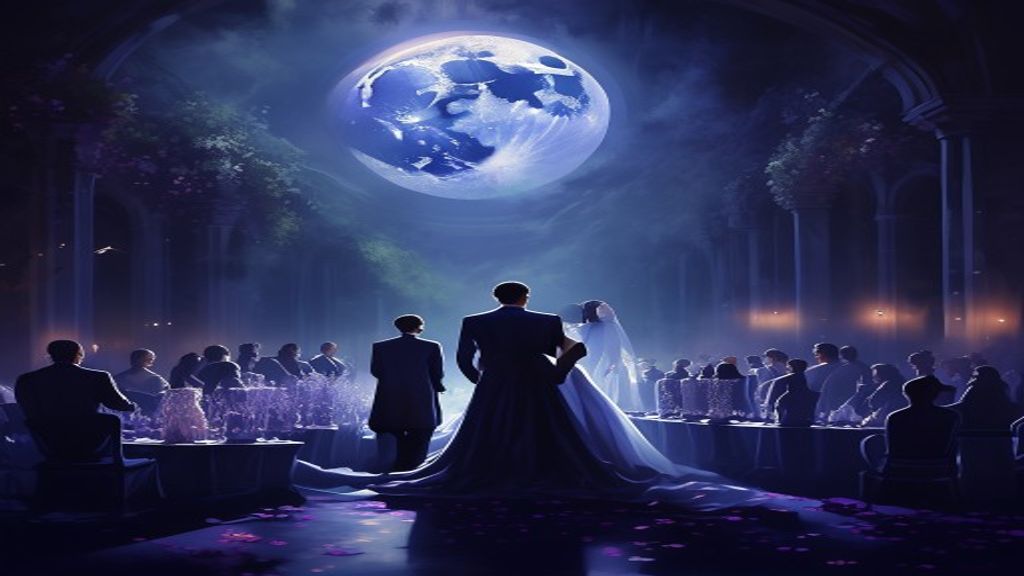
A white dress laid out flat on a hotel bed, still in its garment bag, waiting. That image holds the feeling of a wedding dream exactly: something prepared, something momentous, and the stalled, slightly sick-making moment before you put it on. Wedding ceremony dreams almost always live in that in-between space. Not at the altar. On the way.
Very few wedding dreams seem to reach a clean conclusion. The ceremony keeps getting delayed. The vows won’t come out right. The officiant is someone wrong. The aisle stretches. The dress is missing or it’s the wrong one. The dream is interested in the threshold, not the arrival.
A wedding ceremony in a dream is almost never a literal prediction. It’s your mind staging a commitment question: something in your waking life requires you to say yes or no in a more permanent way, and you haven’t fully done it yet. The ceremony’s emotional tone, whether it feels right, forced, joyful, or like an escape, is the actual message.
Reading the dream from the threshold inward
The wedding ceremony is one of those dream symbols that looks specific but opens outward quickly. It’s not usually about marriage even if you’re married, even if you’re planning a wedding, even if you’ve just been to one. It’s about commitment as an experience: the moment of publicly, irrevocably saying yes to something, with witnesses.
That’s why the role you play in the dream matters enormously. The person in the dress or suit has a different emotional weight than the best friend standing to one side, or the guest in the back row who can’t quite see, or the figure who’s supposed to be there and isn’t. Each position tells you something about how you currently relate to the commitment the dream is staging.
How to follow the dream’s logic step by step
- Identify your roleWere you the one getting married, a witness, a guest, or someone conspicuously absent? Your position in the ceremony maps onto your waking relationship to whatever commitment this dream is really about.
- Notice the feeling, not the settingA cathedral and a courthouse can produce identical emotional textures in a dream. The location matters far less than whether the ceremony felt right, forced, or like something you were doing for someone else’s benefit.
- Ask who the other person isIf there’s a partner in the dream, they might not represent a romantic partner at all. A stranger at the altar often represents an unknown future version of yourself, or a new role you’re about to step into. A known person usually brings their relational weight with them.
- Find where the ceremony stalledThe delay, the wrong dress, the vows that won’t come: whatever interrupted the forward motion is usually the heart of the message. The dream stalls at the exact point where your waking hesitation lives.
- Check the audienceWho’s watching you make this commitment? Feeling scrutinized by the wrong people, or longing for someone who isn’t there, tells you whose approval you’re currently tangled up with.
When it’s someone else’s wedding
Dreaming of attending someone else’s ceremony is often gentler than being the central figure, but it’s not off the hook. You’re watching someone commit. How do you feel in the audience? If there’s warmth and celebration, the dream might be processing genuine happiness for a person or relationship in your life. If you feel left behind, or oddly hollow, or like you’re watching something that should have involved you more, that’s worth sitting with.
Cartwright’s work on how dreams process emotional experience is useful here. She’d recognize this kind of dream as the mind rehearsing a feeling it hasn’t fully resolved in waking hours. Watching a wedding from the pews and feeling wrong about it isn’t jealousy necessarily. It might be your own commitment anxiety projected onto a safer stage, or a relationship in your waking life that’s quietly changing shape while you watch.
The vows that wouldn’t come
This variant deserves more than a line. It’s probably the most common wedding dream detail after the dress: you’re at the altar, it’s your moment, and the words won’t arrive. You open your mouth and nothing, or the wrong thing, or someone else’s words that don’t fit.
That failure at the crucial verbal moment isn’t about public speaking. It’s about articulation in the deeper sense. There’s something you’re being asked to declare, to yourself or to someone else in your waking life, and you haven’t found the language for it. The dream gets you to the altar and then honestly reports that you don’t know what you’d actually say. That’s useful information, even if it’s uncomfortable to wake up with.
G. William Domhoff would point out, and he’d be right, that we dream about what’s genuinely active in our lives. If you’re currently facing a commitment decision, even one that has nothing to do with marriage, a wedding ceremony is a perfectly logical dream frame for it. The mind borrows whatever cultural ritual best captures the emotional weight of what you’re navigating.
The dress, the suit, the detail that got too specific
If one object in the dream was vivid, wrong, or weirdly specific, it’s worth isolating it. A wedding dream that lingers on a ruined dress or a missing ring or an officiant who won’t stop talking is a dream with a very pointed finger. The ceremony is backdrop. That object is the message.
Wedding ceremony dreams often come with some small detail that didn’t belong, noticed in the same breath as the main image. A birthday cake on the wedding table. Funeral flowers in the bouquet. Something that seemed fine in the dream and only registers as strange in the telling. These incongruities are the dream being honest: this isn’t purely a celebration. It’s also something else. For readings of related festive dream territory, dreaming of a concert holds some of the same performance-and-audience energy, and dreaming of a family meal explores what shared ceremony means when the family is the room.
The garment bag from the opening image, the dress still zipped inside it, waiting. It earns its place because the most honest thing about wedding dreams is that they don’t resolve. They leave you in the hotel room, hand on the zipper, knowing something significant is about to happen and not quite sure you’ve said the right yes.
- What role did you play: central figure, witness, or observer from the back row?
- Did the ceremony feel chosen, or like something happening to you?
- What, if anything, went wrong, and at which exact moment did the dream stall?
- Is there a commitment in your waking life you haven’t fully said yes or no to yet?
One symbol, two traditions
The disagreement is honest: one school sees wedding ceremony as self-communication, the other as an image to be discerned against Scripture. They can inform each other, but they do not merge.
A wedding ceremony in a dream is almost never a literal prediction. It’s your mind staging a commitment question: something in your waking life requires you to say yes or no in a more permanent way, and you haven’t fully done it…
You are reading this oneScripture doesn’t give a specific reading for this scenario, and caution about over-interpretation applies (Ecclesiastes 5:7). The wedding imagery in the Bible tends to be about covenant and readiness rather than prediction of a…
Read the biblical meaning →Quick answers
What does dreaming of a wedding ceremony mean?
It’s usually about commitment, not marriage specifically. The dream stages the emotional experience of publicly, irrevocably saying yes to something, with witnesses. Whatever commitment question is active in your waking life, a new job, a relationship shift, a personal vow, tends to find this ceremony as its natural frame.
What does it mean if the wedding goes wrong in your dream?
Disruption is the norm, not the exception, in wedding dreams. A ceremony that stalls, a dress that’s wrong, vows that won’t come: the dream tends to pause at the exact point where your waking hesitation lives. It’s not a bad omen; it’s an honest map of where you’re not yet sure.
What does it mean to dream about someone else’s wedding?
You’re watching someone make a commitment and registering how that makes you feel. Warmth usually points to genuine connection or solidarity. Feeling hollow or left behind more often reflects your own unresolved relationship to a similar commitment, viewed at a safe remove.
Why do I dream about getting married when I have no plans to?
Because the wedding ceremony is one of the mind’s most culturally loaded images for commitment, public declaration, and threshold-crossing. It doesn’t require a literal plan. If you’re facing any significant yes-or-no moment, the ceremony is the dream’s most dramatic available staging.
Sources for this reading
- Domhoff, G. W. (2003). The Scientific Study of Dreams: Neural Networks, Cognitive Development, and Content Analysis. American Psychological Association.
- Domhoff, G. W. (1996). Finding Meaning in Dreams: A Quantitative Approach. Plenum Press.
- Cartwright, R. D. (2010). The Twenty-four Hour Mind: The Role of Sleep and Dreaming in Our Emotional Lives. Oxford University Press.
Full bibliography on Sources and method. Found a mistake? Tell us and see the corrections log.