- Tradition
- Psychological readingAnimal dreams
- Also read in
- The BibleSame symbol, other tradition
- Draws on
- Revonsuo, Cartwright, Artemidorus
- Reviewed
- 5 min read
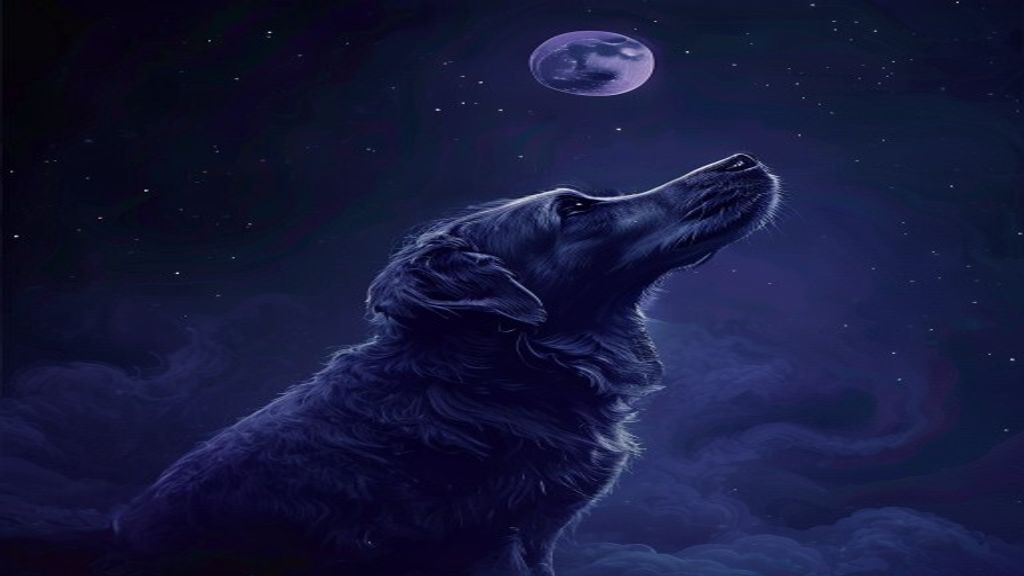
The talking dog dream carries a specific kind of grief, and it isn’t soft. The dog is often one that has been lost, with the particular look it always had, now with words, and something catches in the throat. It’s the kind of grief that comes with guilt.
Because the talking dog almost never just delivers comfort. It delivers something you owe. Something about loyalty, about absence, about the fact that the dog kept showing up and you were sometimes too busy to notice. That’s what the dream reaches for, and it reaches hard.
A talking dog in a dream usually represents a faithful, loyal part of your life asking to be heard: a relationship, a value, a person who’s shown up for you without conditions. The talking is the dream’s way of making the wordless unmissable.
What dogs do when they want to tell you something
Dogs in waking life use every register they have. The eyes, the weight of a body against your leg, the timing of when they appear at a door. We read them constantly and we know we’re reading them. So when a dog in a dream bypasses all of that and just speaks, it carries a charge: the dream has stopped trusting subtlety. This is past the look on the stairs. This is past the waiting by the door. The dog is talking because everything else you were supposed to understand, you didn’t.
In Jungian terms a dog is one of the instinctual currents of the unconscious, less shadow than companion: the faithful part of you that never deceived you, that tracked what was actually true. When that part starts using language, it’s usually because you’ve been overriding your instincts with your reasoning mind for long enough that something had to escalate.
If the dog was your actual dog, especially one who has died, the dream belongs to grief more than to symbol. Rosalind Cartwright’s work on dreaming and mood regulation, studied in people going through divorce, points toward dreams as a way of working through emotionally heavy events, and a lost dog is one. You’re not haunted. You’re healing. The dog showing up, speaking, looking at you directly: that’s not a ghost. That’s your mind doing the work.
How cultures read the speaking dog
| Tradition | How it reads the symbol |
|---|---|
| Ancient Greece | Dogs were associated with Hecate and the underworld, but also with healing: they attended Asclepius’s temples. A dog speaking in a dream might be a message from the threshold, something between worlds wanting acknowledgment. |
| Medieval Islamic tradition | Ibn Sirin’s tradition regarded dogs in dreams with ambivalence: a guard dog could mean protection, but a strange dog speaking was often read as an enemy making their intentions known, or a warning about hidden hostility. |
| Artemidorus (2nd century) | He treated speaking animals as a category requiring careful context-reading. For Artemidorus, a dog that spoke to you was significant in proportion to how loyal the dog seemed, and the message almost always concerned a faithful person in the dreamer’s life. |
| Jungian psychology | The dog is the faithful instinct: what you know before you reason. When it speaks, the unconscious has decided that instinct alone hasn’t been enough. The voice is a promotion, not a transformation. |
When the dog is someone you know
Dreams sometimes cast a person you love in the form of a dog: their loyalty made literal, their manner made animal. If you knew while dreaming that the dog was somehow also a specific person in your life, sit with that honestly. The substitution isn’t random. The dreaming mind chose it because a quality in that person, their faithfulness, their constancy, their wordless availability, needed to become the whole image.
What they said, or tried to say, is probably something you already know they want from you. Not necessarily a big thing. Sometimes it’s just: notice me. I’m still here.
If the dog in the dream reminded you of a black snake in some way, an energy both familiar and faintly threatening, you’re in a different dream. That’s instinct with edge to it, something that can also harm. A dog that simply speaks is rarely hostile. It wants contact.
The version where it says goodbye
This one is common enough that I want to address it directly. The dog who speaks a farewell, sometimes an actual goodbye, sometimes just a look and a phrase that amounts to it, tends to arrive in two circumstances: when a relationship is actually ending, and when you’re ending it without admitting you are. The dreaming brain is not subtle about this. It puts it in a mouth you love, attached to a loyalty you’ve relied on, and it makes you hear it.
Revonsuo’s threat simulation theory would read this as preparation: the brain rehearsing a feared event before it happens. The talking dog isn’t predicting anything. It’s helping you practice grief so you’re less blindsided when it arrives.
It’s worth noticing how rarely a talking dog dream gets written about. The hesitation is understandable, as if it were embarrassing to be moved by something that was, technically, a dog talking. It shouldn’t be. Some dreams arrive small and stay big, and this is one of them. The same dream with a different animal changes the register: dreaming of a talking cat is speech out of choice rather than loyalty, and dreaming of a talking bird is speech that lands completely. And if spiders appeared on the same night, dreaming of spiders is the other half: the spider brings the caught thing, the dog names it.
If the message was something you couldn’t bear
Waking up from this dream upset isn’t a sign the dream was wrong. It might be a sign it was right. Give it a few hours before you decide what it was saying.
- Was the dog someone you knew, or a stranger?
- What was the feeling underneath the words: love, accusation, farewell, or something without a name?
- Is there a person or value in your life that’s been as loyal as a dog and as ignored?
- What would you have said back, if you’d had the chance?
One symbol, two traditions
Read side by side, the two traditions pull in different directions: talking dog as a signal from your own mind, or talking dog as an image to test against the text. Knowing which question you are asking is half the interpretation.
A talking dog in a dream usually represents a faithful, loyal part of your life asking to be heard: a relationship, a value, a person who’s shown up for you without conditions. The talking is the dream’s way of making the…
You are reading this oneScripture doesn’t address dogs in dreams at all. Its waking-world references to dogs are mostly negative, scavenging, foolishness, exclusion, but those associations weren’t developed with dream imagery in mind. Any specific…
Read the biblical meaning →Quick answers
What does it mean to dream of a talking dog?
Usually it represents something loyal and faithful in your life that needs acknowledgment. The dog talks because the usual wordless signals weren’t enough. It might stand for a real person, a relationship, a value you’ve been overriding, or in grief dreams, the animal you’ve lost.
What if the talking dog was my actual dog who died?
Dreams of deceased pets, especially ones who speak, are extremely common in grief. Cartwright’s work on how the dreaming brain processes loss suggests these dreams serve a real emotional function. The dog showing up isn’t haunting. It’s the mind finishing unfinished business.
Is a talking dog in a dream a good omen?
Dream omens are tricky. The talking dog isn’t good or bad so much as urgent. If the tone felt loving, it likely points to something valuable that deserves more attention. If the tone felt like an accusation, it might be pointing to a loyalty you’ve let slip.
Why did the dog speak in my dream but I couldn’t understand it?
Similar to talking cat dreams, the near-miss is common and meaningful on its own. The fact of speech, even unintelligible, signals that your instincts are trying to reach your reasoning mind. What you couldn’t hear clearly, you probably already know quietly.
Sources for this reading
- Revonsuo, A. (2000). The reinterpretation of dreams: An evolutionary hypothesis of the function of dreaming. Behavioral and Brain Sciences, 23(6), 877-901.DOI
- Cartwright, R. D. (2010). The Twenty-four Hour Mind: The Role of Sleep and Dreaming in Our Emotional Lives. Oxford University Press.
- Artemidorus of Daldis (2nd century CE). Oneirocritica. English edition: Harris-McCoy, D. E. (2012). Artemidorus’ Oneirocritica: Text, Translation, and Commentary. Oxford University Press.
Full bibliography on Sources and method. Found a mistake? Tell us and see the corrections log.