- Tradition
- Psychological readingAnimal dreams
- Also read in
- The BibleSame symbol, other tradition
- Draws on
- Revonsuo, Jung, Artemidorus
- Reviewed
- 5 min read
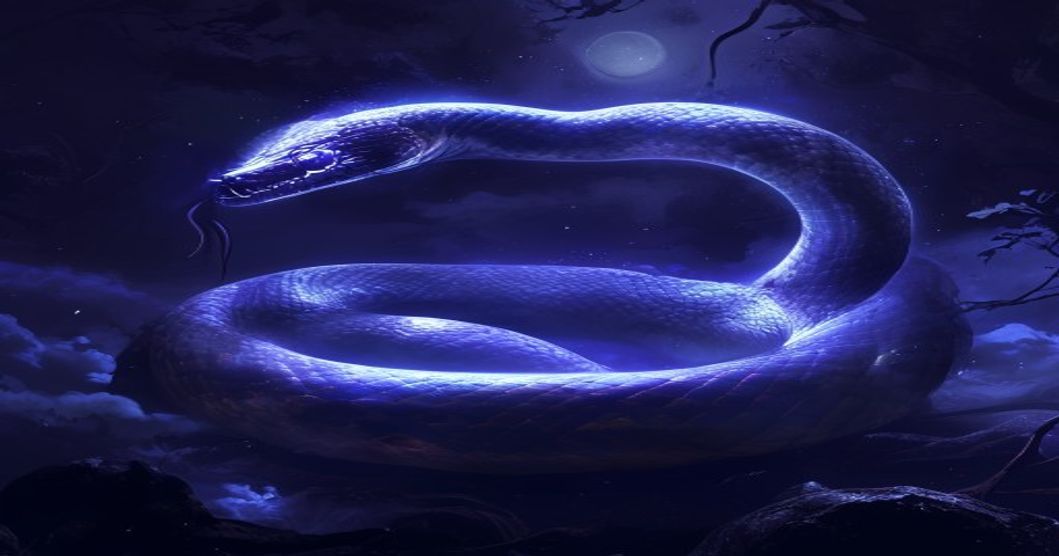
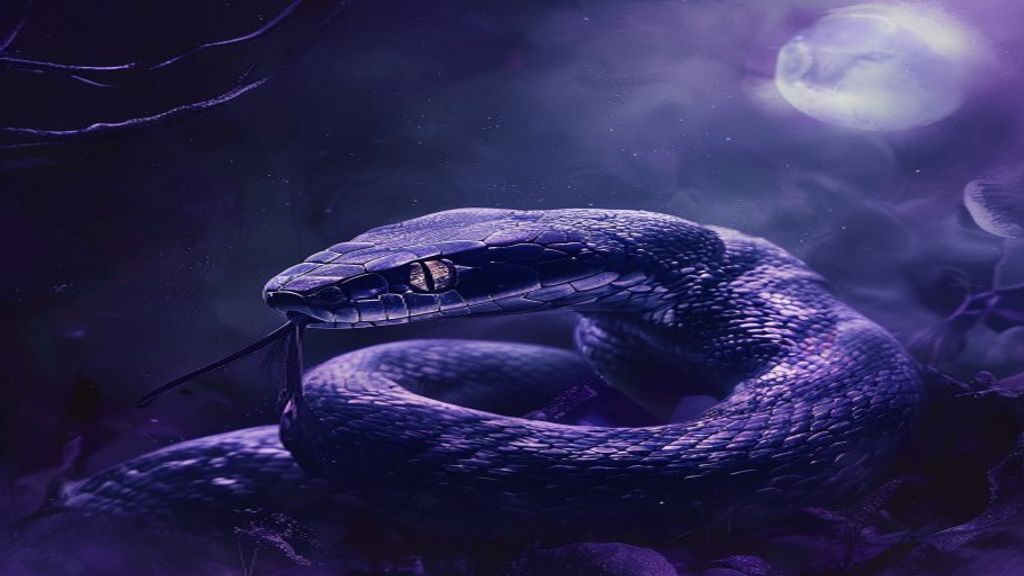
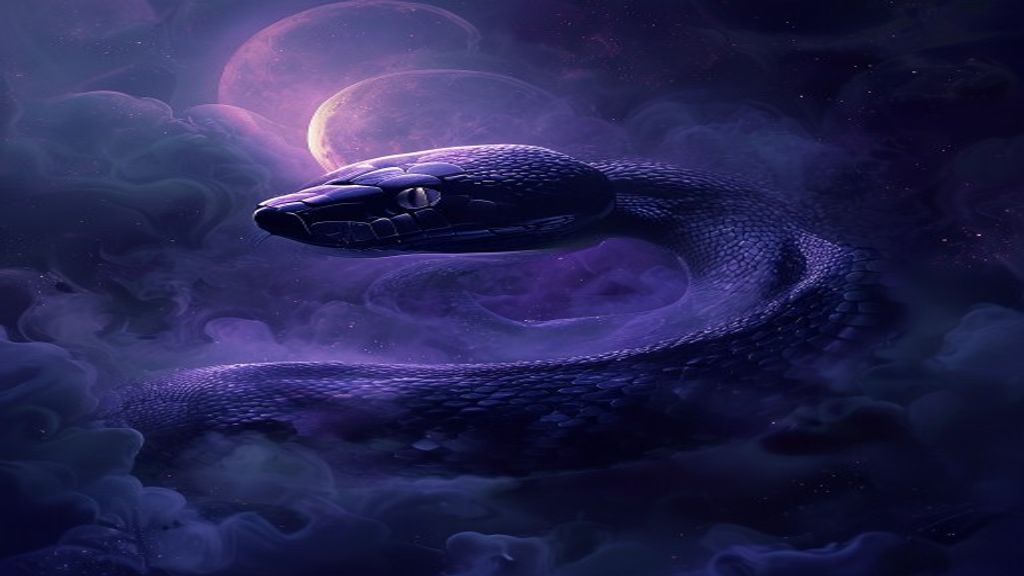
Most dream dictionaries file a black snake under danger: evil, betrayal, bad news on the way. The Jungian tradition reads the same animal almost the opposite way, as a shadow figure, not your worst self but your least-examined one. The color doesn’t announce a verdict. It marks concealment. A red snake is visible. A white snake is luminous. A black snake moves along the edge of what you can see, against dark ground, and you almost don’t notice it until it’s very close.
That quality of almost-missed, almost-missed-but-not is the whole text of this dream. It’s telling you that something has been very quiet and very present at the same time.
A black snake in a dream is most often a symbol of something in your unconscious that’s been there longer than you’ve been aware of it: a fear that moved in quietly, a transformation underway without announcement, or an old instinct you’ve been stepping around. The color isn’t a verdict. It’s a texture.
Before you look up the meaning
Ask what you did in the dream. Not what the snake did. What you did. Did you freeze? Back away slowly? Reach toward it? Pick it up? Run? Because the black snake dream tends to mirror your relationship with whatever it’s representing, and your behavior in the dream is often more revealing than the snake itself.
Someone who froze is in a different place than someone who walked past it carefully. Someone who picked it up, which happens more than you’d think, is in a different place again. The snake stays constant. Your response to it doesn’t.
What the black actually means
Color in dreams isn’t decorative. It’s functional. Black in particular carries a specific set of associations that aren’t primarily about darkness as evil, despite what most dream dictionaries will tell you. Black is concealment, depth, the unknown interior of things. It’s the color of rich soil. Of night that’s quiet rather than threatening. Of ink.
Jung’s framework here is useful if you don’t take it too literally. A Jungian reading identifies a black snake as a shadow figure: the parts of your personality you’ve either denied or never examined. Not the evil parts, necessarily. The hidden parts. The ones that exist whether you acknowledge them or not. A black snake as shadow isn’t accusing you of anything. It’s just showing up where the light doesn’t usually reach.
Artemidorus, writing in the second century, held that the same dream means different things for different dreamers, a useful brake on any fixed meaning for a black snake. The color marks the image as unusual. Who is dreaming, and what they are carrying, decides what it points to.
The transformation reading
Here’s the reading I find most convincing: the black snake is a transformation that hasn’t announced itself yet. It’s already underway. The snake doesn’t need your permission to shed its skin; it just does it. And in dreams it tends to appear at thresholds: the start of a significant change, the end of something, the period just before a decision gets made whether you make it or not.
This is why the black snake can feel both ominous and oddly okay at the same time. The ominous part is the unknown. The okay part is that the snake isn’t there to destroy something. It’s there because something is moving.
A giant spider, patient at the center of its own web, shares the snake’s way of working: out of sight, on its own schedule. If both turn up in the same stretch of dreams, they probably belong to one quiet preoccupation. Your dreaming mind assembles these images around it without telling you directly what it is.
When it’s a warning
Revonsuo’s threat simulation theory suggests the sleeping brain uses ancient threat stimuli to rehearse responses. Snakes are a classic ancestral threat for good evolutionary reasons, and a black snake, camouflaged and ambush-shaped, is the threat stimulus in its most primal form. If in the dream it’s coiled to strike or pursuing you through dark water, this version is probably fear rehearsal. Something in your waking life has your nervous system running threat scenarios at night.
A useful boundary: if the snake is moving toward you with intent, the dream is about something external. If it’s simply present, or moving past, or watching, the dream is about something internal. Both are worth attending to, but in different ways.
How to work with it
- Write what you didYour behavior in the dream is the first data point. Write it down before you interpret anything. Did you freeze, approach, avoid, speak to it, handle it? That’s your current relationship to what the snake represents.
- Locate the sceneWhere were you in the dream? A black snake in your childhood home is different from one in a workplace or a forest. The setting tells you which area of your life the image is attached to.
- Ask what’s been quietBlack snakes tend to represent what’s been operating below your conscious attention. What have you not been looking at? A fear, a desire, a change that’s happening without fanfare. Spend time with that question before you reach for a dictionary.
- Notice if it recursA single black snake dream is a visitor. A recurring one is a resident. If it keeps coming back with the same scene or feeling, it’s pointing at something specific that hasn’t been named yet. Name it, even tentatively.
Many black snake dreams carry a kind of reluctant respect. Not fear exactly. More like: I know you’ve been here. I just wasn’t ready to look. That relationship, wary coexistence with something you’ve been carefully not-seeing, is the texture this dream captures better than almost anything else.
And if you dreamed of a snake biting your hand, notice that the bite was the moment you could no longer not-look. That’s not the worst version of this dream. It might be the necessary one. Same animal, different ask. The black snake that doesn’t bite might be offering you the chance to choose attention before it’s forced.
One question I can’t settle is whether the stillness of a black snake dream is ever just stillness. A dream from the calmest period of someone’s life might hold no particular shadow or transformation. It could just be a snake. Maybe sometimes the unconscious runs the image without an agenda. I can’t prove otherwise. That uncertainty feels worth keeping.
- What did you do in the dream on seeing it? That’s your first clue, not the snake’s color.
- Was the snake moving toward me, past me, or just present? Location and intention are everything.
- What has been operating quietly in my life that I’ve been careful not to examine?
- Does anything about a transformation underway feel true right now, even if unnamed?
One symbol, two traditions
Psychology keeps black snake inside your own story, a symbol your mind built from your days. The biblical tradition looks outward instead, and asks whether Scripture gives the image any voice at all.
A black snake in a dream is most often a symbol of something in your unconscious that’s been there longer than you’ve been aware of it: a fear that moved in quietly, a transformation underway without announcement, or an old…
You are reading this oneThe Bible assigns no color to its serpent symbols. The Genesis 3 serpent, the most significant in the canon, is described by character (subtle) not appearance. The darkness theme in Scripture runs from the goodness of darkness in…
Read the biblical meaning →Quick answers
What does it mean to dream of a black snake?
A black snake in a dream most often represents something that’s been present in your unconscious without announcing itself: a fear, a transformation in progress, or a part of your personality you haven’t examined. It’s not a verdict on your character. It’s more like a marker for what’s been operating in the margins of your awareness.
Is a black snake in a dream a bad omen?
Not inherently, though most people assume it is. The color black in dreams carries depth and concealment more than evil. The question is whether the snake was threatening you in the dream or simply present. A black snake that moves past you or watches from a distance is very different from one actively pursuing you.
What does it mean when a black snake chases you in a dream?
A pursuing snake, regardless of color, tends to involve threat processing. Something in your waking life has your nervous system running rehearsal scenarios. A black snake that chases specifically might mean the thing you’re afraid of has been harder to see coming, more camouflaged in your daily life, which is what made it threatening rather than a source of alarm you could identify early.
What does a black snake mean spiritually?
Across many traditions, black snakes carry associations with the underworld, deep instinct, and transformation. They’re linked to what’s unseen rather than what’s evil. In Jungian terms, the black snake is a classic shadow figure: not your worst self but your least-examined self. Spiritually, encountering one is often read as an invitation to look at what you’ve been keeping dark, not to destroy it but to understand it.
Sources for this reading
- Revonsuo, A. (2000). The reinterpretation of dreams: An evolutionary hypothesis of the function of dreaming. Behavioral and Brain Sciences, 23(6), 877-901.DOI
- Jung, C. G. (Ed.). (1964). Man and His Symbols. Doubleday.
- Artemidorus of Daldis (2nd century CE). Oneirocritica. English edition: Harris-McCoy, D. E. (2012). Artemidorus’ Oneirocritica: Text, Translation, and Commentary. Oxford University Press.
Full bibliography on Sources and method. Found a mistake? Tell us and see the corrections log.