Nature Dreams
Dreaming of a Meadow: Space, Stillness, and What You're Stepping Into
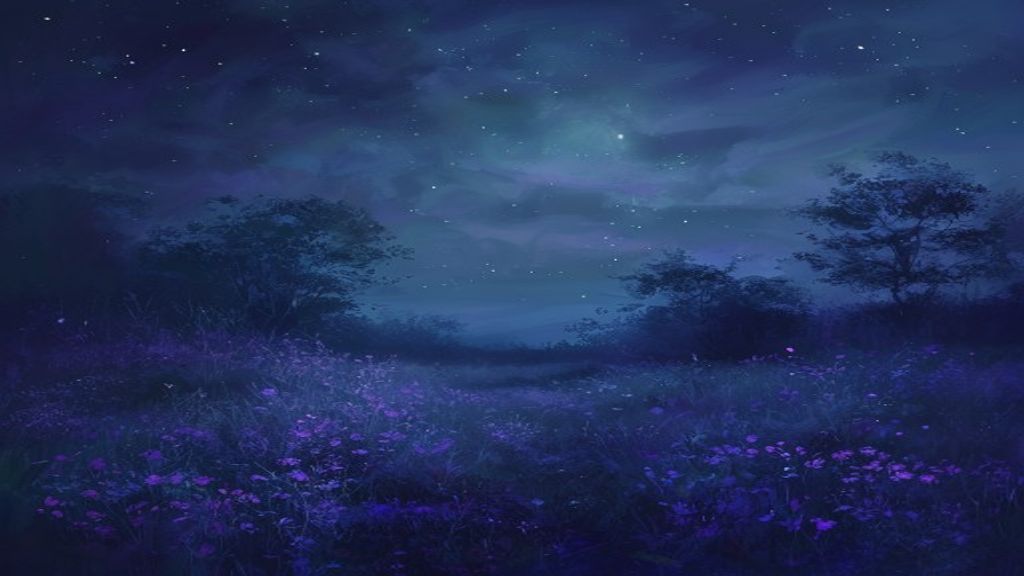
Light through long grass. That specific greenish-gold quality of afternoon sun in a field, where everything is slightly over-bright and you find yourself squinting even in the dream. Most people who tell me about meadow dreams describe it before they describe anything else: the light first, then the silence, then the strange unhurried feeling of standing somewhere without walls. It’s almost always beautiful. And it’s almost always a little unnerving, in that particular way that wide-open spaces unnerve people who are used to edges.
A meadow in a dream usually signals a need for spaciousness, a break from constriction, or a moment of transition between one chapter and the next. Whether the feeling is peaceful or unsettling tells you whether you’re welcoming that openness or resisting it. The absence of obstacles isn’t always reassuring. For some dreamers, all that space is exactly what they needed. For others, it’s exposing.
The feeling of too much space
A meadow is, structurally, the opposite of a forest. No canopy, no undergrowth, nothing to press in from the sides. You can see in every direction and nothing is hiding. That should be comforting, and for many dreamers it is. But I’ve heard the meadow described as lonely almost as often as peaceful, and I don’t think that’s a misreading. Open space exposes. When you’re standing in the middle of a meadow, you’re visible, too. No cover. The dream puts you in a landscape where concealment is impossible, and what you do with that reveals quite a lot.
Carl Jung was interested in the landscape as psychic terrain, and the meadow sits at a specific boundary in that framework: it’s not the wild unconscious depths of a dreaming of an enchanted forest, but it’s not the ordered domesticity of a garden either. It’s somewhere in between. Cultivated enough to cross, wild enough to feel open. That in-between quality matters. Meadow dreams often appear at in-between moments in life.
Walking through it, or standing frozen in it
The action in the dream separates two very different readings. Someone who walks through the meadow with purpose, even without knowing exactly where they’re headed, is dreaming about forward motion. The openness is generative. The absence of obstacles reads as freedom rather than exposure. That version tends to arrive when someone has just made a decision, cleared a path, or let go of something that was weighing them down.
But standing frozen at the meadow’s edge, unable or unwilling to step in, is something else entirely. That’s the threshold dream, the one that shows you a possibility you’re not yet walking toward. The meadow isn’t threatening, but you’re not moving. I find these more interesting than the walking ones, honestly, because the question they leave behind is so specific: not what does the meadow mean, but why aren’t you going in.
Reading the version you got
What tradition made of wide-open land
Artemidorus, who catalogued dream imagery in the second century, treated open fields as broadly positive, aligned with productivity and progress, though he was working from an agricultural context in which an open field was primarily a place of work rather than rest. The productive reading and the restorative reading pull in slightly different directions, and I think both are sometimes true of the same dream. The meadow as place-of-yield and the meadow as place-of-breath aren’t mutually exclusive.
Domhoff’s continuity work suggests something I find genuinely useful here: the emotions in a landscape dream tend to mirror emotions the dreamer is carrying about spaciousness and constraint in their current life. Someone in a restrictive work environment or a crowded, tense living situation dreams of meadows differently than someone who already has room. The same image lands differently depending on how much openness you’re already getting.
The light first
I keep coming back to that greenish-gold quality people describe, the over-bright afternoon light that appears in these dreams before anything else registers. Light before meaning, almost. I think that’s the dream’s real content: not the symbolic terrain, not the decision between walking and standing, but the quality of the air, the sense that you’ve arrived somewhere with less pressure per square foot than the place you came from. Sometimes a meadow dream is just the mind exhaling. Not everything is a message. Some of it is just the brain finding what it needed.
Though I’ll also say: if the meadow connects to a larger landscape with mountains at the edge, the piece on dreaming of a mountain is worth reading next. These two often appear in sequence, and together they say something neither says alone.
- Was I moving through the meadow or standing at its edge?
- Did the openness feel like relief or exposure?
- What in my waking life right now has too much constraint, or unexpectedly too much space?
- If something else appeared in the meadow, what was it, and why might it have shown up there?
Quick answers
What does dreaming of a meadow mean?
A meadow in a dream typically signals a need for spaciousness, or a moment of transition. Whether the feeling is peaceful or unsettling matters: ease suggests you’re welcoming openness; unease or exposure suggests it may feel vulnerable rather than freeing.
Why do I dream about standing at the edge of a meadow?
Standing at the threshold without entering is the classic hesitation dream. An opening exists in your waking life, but you haven’t walked into it yet. The dream is less about the meadow and more about what’s stopping you.
Is a meadow dream a positive sign?
Usually, yes. Most meadow dreams carry a quality of relief or possibility. But the emotional register matters more than the image: a lonely or exposed meadow is still information, just a different kind.
What does it mean to dream of a meadow with something in it?
When an animal, person, or structure appears in the meadow, the open landscape becomes a stage. The meadow itself sets the tone; the other element carries the specific message. Focus on what appeared and how it made you feel rather than on the field around it.