- Tradition
- Psychological readingPlace dreams
- Also read in
- The BibleSame symbol, other tradition
- Draws on
- Domhoff, Artemidorus
- Reviewed
- 5 min read
On the surface a forking path looks like a test: two roads, one right answer, and a dreamer who fails if they can’t pick. The dream rarely works that way. The fork appears, both directions stretch away, and then something happens that makes the choice unnecessary, or you wake up, or the dream dissolves into something else entirely. The path splits and you stand there and the dream ends before you move.
The non-choice is the message. Not a failure of nerve. Not an anxiety about deciding. The dream isn’t testing you. It’s showing you the fork itself, because something in your waking life has reached a point of genuine division, and your sleeping mind hasn’t resolved it yet either.
A forking path in a dream usually reflects a real decision or divergence in waking life. The specific direction you feel pulled toward matters more than whether you actually walk it. Most interpreters, ancient and contemporary, agree that the feeling at the fork is the entire subject of the dream.
What the path’s surface tells you
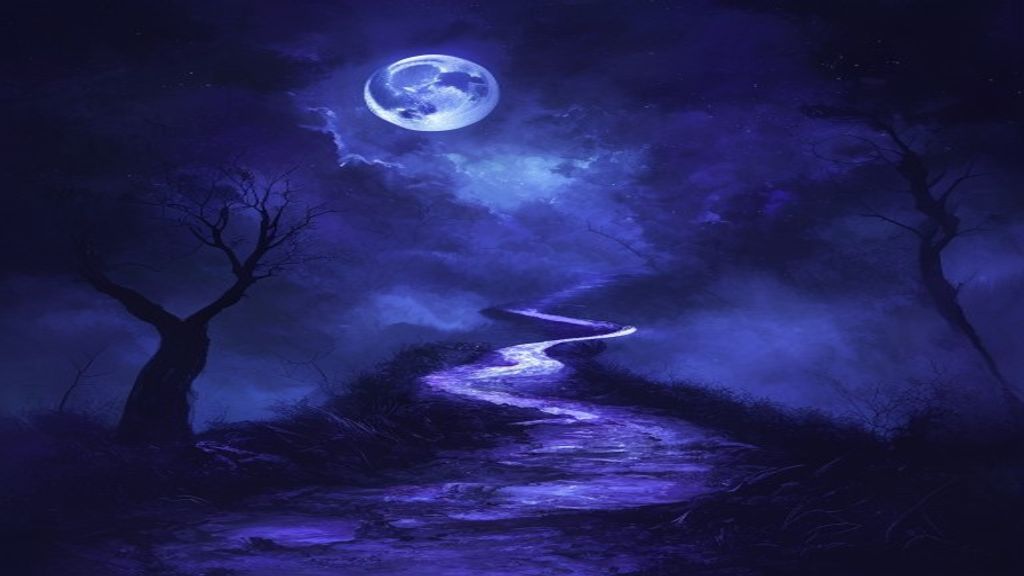
The imagery matters here in a way it doesn’t for every dream symbol. A forking path through a familiar landscape is a different dream from a forking path through fog. A clear, sunlit fork where both paths look passable tends to appear during real-world decisions that aren’t catastrophic. You’re weighing options. The fork is literal.
A dark or overgrown fork is almost always about a decision you’ve been avoiding rather than genuinely deliberating. The path has grown over because you stopped walking toward it. A Jungian reading would say the second path, the one that looks harder or less maintained, is probably the one the unconscious wants attention paid to. That isn’t always right, but it is a useful first guess.
Artemidorus, writing in the second century CE, held that the same dream means different things for different dreamers, depending on age, status and occupation. For a road or a fork, that makes the question circumstantial: who is standing at it, and what is their situation? That is less metaphor than phenomenology, which may be why it still holds up.
- Notice which path you were drawn toBefore analyzing direction or destination, recall your bodily feeling of pull. Did one path feel known? Familiar? Or was the pull toward the less visible one?
- Check the quality of each pathOvergrown, flooded, steeply descending, or brightly lit: your dreaming mind gives each path a texture that reflects how you actually feel about that option.
- Name the waking-life forkWhat decision or divergence have you been near lately? It doesn’t have to be large. The dream runs on emotional weight, not objective importance.
- Ask what the non-choice meansIf you stood at the fork and didn’t walk either direction, something in you is genuinely undecided. That’s not weakness. It’s information about where you actually are.
- Sit with the feeling, not the outcomeThese dreams rarely predict which path is right. They surface how the fork feels. That’s enough to work with.
The road not looked at
There’s a version where one path is invisible. You can see clearly down one fork and the other dissolves into shadow, or turns a corner so quickly that you can’t see where it goes. This is the forking-path dream functioning as a kind of selective rendering: your mind has built one option in full and left the other deliberately unrendered.
I’d spend time with the unrendered path. Not because the shadowed direction is better or worse, but because your mind’s refusal to build it suggests you haven’t let yourself really imagine it yet. Sometimes the fear isn’t of choosing wrong. It’s of finding out that both paths are viable, which would mean you actually have to choose.
Domhoff’s continuity hypothesis is useful here in a way that feels almost too tidy: the dream extends waking concerns without resolution. A forking path dream persists, in his framing, as long as the fork in waking life persists. It’s not prophecy. It’s reflection. The dream is keeping pace with where you actually are. A labyrinth is the harder cousin of this dream, because the labyrinth has no visible exit. The fork at least gives you two.
When you do choose
On the rarer occasion that the dream lets you walk a path, pay attention to what happens immediately after the fork. Not whether you reach a destination, but whether the chosen path feels like relief or like loss. A fork-dream where you choose and immediately feel the other path closing behind you is the dream working through grief of a different kind: not fear of choosing wrong, but mourning the life not taken, which is a real thing and deserves real acknowledgment.
Some cultures have been more honest about this than we tend to be. The Chester Beatty papyrus, from about 1200 BC, sorts dreams into good and bad omens, and a fork is a dream that refuses to be sorted. Where are you going is a less interesting question than: who is doing the walking?
A path that leads toward a temple is rarely the ambiguous one: when the dream hands you a destination with that much weight, the unconscious has probably already made its preference known. And a futuristic city at the end of a road carries a forward momentum that the fork dream itself almost never has. The fork is about the present. What comes after it is another story.
Looking back from the other side of a decision, these dreams often turn out to have been accurate maps of exactly where you were. Not where you should go. Just where you’d stopped.
- Did you choose a path in the dream, or did the dream end at the fork?
- What did each path look like? Were they equal, or did your mind render one more fully than the other?
- What decision in your waking life are you closest to but not quite moving toward?
- If one path made you feel loss just for looking at it, what does that tell you about what you’d be leaving?
One symbol, two traditions
Psychology keeps forking path inside your own story, a symbol your mind built from your days. The biblical tradition looks outward instead, and asks whether Scripture gives the image any voice at all.
A forking path in a dream usually reflects a real decision or divergence in waking life. The specific direction you feel pulled toward matters more than whether you actually walk it. Most interpreters, ancient and contemporary…
You are reading this oneScripture speaks directly about the forking path as a metaphor for moral and spiritual choice. It’s one of the few dream images where the Bible’s own language is close to what the dream shows. The complication is that it’s rarely…
Read the biblical meaning →Quick answers
What does dreaming of a forking path mean?
It usually reflects a real divergence in your waking life: a decision that hasn’t been made, a point where two different futures become visible. The feeling at the fork is more informative than the directions themselves.
Is it bad if I don’t choose a path in the dream?
Not bad, but informative. Not choosing in the dream usually means you’re genuinely undecided in waking life. The dream isn’t urging you to decide faster. It’s showing you where you currently are.
What does the state of each path mean?
Your dreaming mind renders each option with a texture. A clear, open path suggests a choice you’re not afraid of. An overgrown or shadowed path suggests an option you haven’t let yourself fully imagine. The rendering is a mirror of your actual feelings, not a forecast.
Why do I keep dreaming about forking paths?
The dream tends to recur as long as the real-world fork is unresolved. It’s not urging a specific direction. It’s keeping pace with your actual state of indecision. When the choice gets made, or when you genuinely accept that you’re not ready to make it, the dream usually changes.
Sources for this reading
- Domhoff, G. W. (2003). The Scientific Study of Dreams: Neural Networks, Cognitive Development, and Content Analysis. American Psychological Association.
- Domhoff, G. W. (1996). Finding Meaning in Dreams: A Quantitative Approach. Plenum Press.
- Artemidorus of Daldis (2nd century CE). Oneirocritica. English edition: Harris-McCoy, D. E. (2012). Artemidorus’ Oneirocritica: Text, Translation, and Commentary. Oxford University Press.
Full bibliography on Sources and method. Found a mistake? Tell us and see the corrections log.