- Tradition
- Psychological readingPlace dreams
- Also read in
- The BibleSame symbol, other tradition
- Draws on
- Domhoff, Artemidorus
- Reviewed
- 5 min read
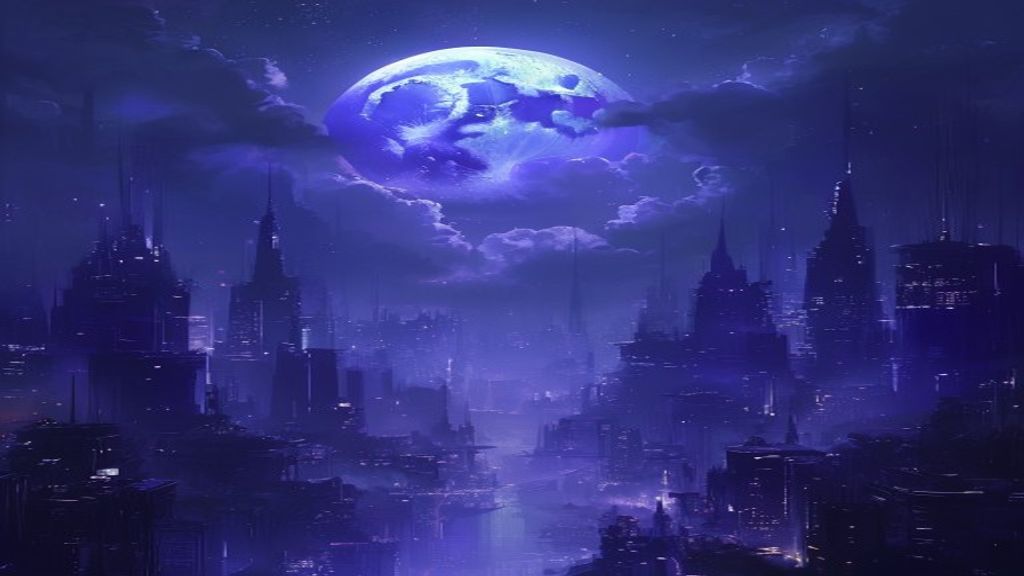
Futuristic cities in dreams tempt a prophetic reading: a glimpse of what is coming, perhaps your own future. It fails because the city is built entirely from what you already know. Glass towers that bend. Bridges with no visible supports. Transit systems that move silently, impossibly fast. You wake up and you can’t quite remember the details, but you remember the feeling of walking those streets and understanding, somehow, every system all at once. That specific cognitive vertigo, intelligence exceeding your own waking capacity, is the fact that matters here. Dreaming of a futuristic city isn’t really about the future. It’s about you, right now, trying to locate yourself in a world that keeps accelerating.
A futuristic city in a dream usually reflects how you’re processing change: your relationship with the pace of your own life, a transition you’re in the middle of, or a version of yourself you haven’t moved into yet. Whether the city feels thrilling or overwhelming tells you almost everything.
The feeling of not being from there
After the architecture, the detail that does the most interpretive work is your status in the city. Were you a resident or a tourist? Did the technology respond to you, or did you stand at the edge of it watching? That distinction does most of the interpretive work. A dreamer who navigates the future city with ease, who knows the transit lines, who belongs there, is dreaming about competence, capacity, a self already built for what’s coming. A dreamer who wanders it confused and slightly frightened is dreaming about the opposite. The city itself is the same. The dreamer’s relationship to it is everything.
What changes between those two versions isn’t the symbol. It’s the confidence buried inside the scene. And confidence tends to track what’s actually happening. If you’ve recently taken on something large and new, a role, a city, a discipline, the overwhelmed tourist dream is almost embarrassingly on-the-nose. If you’ve recently proven something to yourself, the ease-of-navigation version arrives like a receipt.
You belonged there
You moved through the city with ease, understood the transit, felt recognized by it. This version tends to arrive when you’re consolidating something: a skill, a sense of direction, a new chapter you’ve stopped doubting. The dream is less prediction than acknowledgment.
You were a stranger
You stood outside glass doors, couldn’t read the signs, missed the trains. This is the more common version, and it’s not pessimistic. It’s the dream of someone mid-transition, not failed but not yet arrived. The city exists. You’re on your way.
What the architecture is saying
A Jungian reading treats the built environment as one of the oldest images of the organized self, the house as psyche, different floors holding different layers of consciousness. A city extends that: it’s a self at scale, plural and interconnected, a system of systems. A futuristic city, specifically, is a self that the dreamer is projecting forward. The towers are ambitions. The transit is how you imagine moving between different parts of your own capability. If the towers are gleaming and connected, you’re imagining fluency. If they’re beautiful but inaccessible, there’s a gap between where you are and where you think you should be.
Artemidorus, writing in the second century CE, held that the same dream means different things for different dreamers, which is worth carrying into a dream like this: a well-ordered city reads one way for someone building a career and another for someone watching their own field change. I’m not in the habit of reaching back two thousand years for interpretive authority, but on this point the old rule is hard to dismiss. The orderliness of the dream city does seem to track something real about the dreamer’s sense of their own life’s coherence.
The one that keeps coming back
Recurring futuristic cities are a specific category. When the same dream city returns, with its own geography you begin to know, its own neighborhoods, its recurring intersections, you’re building something over time in sleep. Domhoff’s continuity hypothesis suggests this kind of dreaming tracks persistent preoccupations rather than random images. A city you return to is a concern you haven’t resolved. Could be exciting, could be anxious. Probably some of each.
If your futuristic city recurs and the feeling keeps shifting, each visit more comfortable than the last, that’s worth paying attention to. It might be charting a real arc. You might be, over months of dreams, actually moving in.
When the city is wrong
Not all futuristic cities in dreams feel like potential. Some feel like a futuristic city is a threat to something that mattered. The world moved on and left you in it. That version is more elegiac than anxious, and it tends to arrive for people who are watching their own field transform around them, or who feel like the future is being built for someone else. Like a stranger in someone else’s dream of progress.
That’s a harder dream to sit with. It doesn’t point at ambition. It points at grief for a version of the world you understood better. If you woke up from the futuristic city feeling like you’d been left behind, the honest question isn’t what does the dream mean but what is it that you’re afraid of losing. A collapsing house is the same grief at the scale of a home, the structure you understood coming apart. And a window looking onto the void is what that dread looks like when there is no city at all, only the part of the future that hasn’t taken shape yet.
What lingers
The image that matters most isn’t the skyline. It’s the moment of standing at a transit platform, watching a train arrive that you don’t know how to board. You want to get on. You’re not sure the system works for you. The train isn’t hostile. It just hasn’t been explained.
That’s where I think the dream is usually located: not inside the city yet, not outside it either. On the platform. I don’t know if that’s hopeful or heartbreaking. Maybe it’s just honest. Most of us are somewhere in that in-between, and it’s useful when a dream admits it, especially if you’ve been trying to project more certainty than you actually feel. A deserted island peels back the performance in the opposite way, by removing the system entirely: no trains, no signs, just you and what you can do.
- Was I a resident or a stranger in that city? What does my status there mirror in waking life?
- Did the technology respond to me, or was I outside it looking in?
- Was the city exciting, threatening, or somehow both at once?
- Is there a version of my life I’m projecting toward that I haven’t fully said yes to yet?
One symbol, two traditions
A psychologist asks what futuristic city felt like and what it echoes in your week. The biblical reader asks a different question entirely: what does Scripture say when this image appears, and what does it stay silent about?
A futuristic city in a dream usually reflects how you’re processing change: your relationship with the pace of your own life, a transition you’re in the middle of, or a version of yourself you haven’t moved into yet. Whether the…
You are reading this oneScripture has much to say about cities, towers, and visions of ordered human society, but it speaks with two voices: wonder and warning. A futuristic city dream touches both, and honest biblical reflection holds them in tension…
Read the biblical meaning →Quick answers
What does dreaming of a futuristic city mean?
It usually reflects how you’re relating to change and forward motion in your waking life. The city is a projection of where you think you’re headed, and your role in it, confident resident or confused stranger, tells you how you actually feel about the transition you’re in.
Is dreaming of a futuristic city a good sign?
Often yes, especially when you feel capable and at ease inside it. Even the disorienting version isn’t a bad sign. It tends to show up when you’re genuinely mid-transition, not stuck but not arrived yet.
Why do I keep dreaming of the same futuristic city?
Recurring dream settings tend to track persistent preoccupations. A city you return to repeatedly might be charting something you haven’t resolved: an ambition, a fear, a sense of yourself in the future that you keep circling. If each visit feels slightly more comfortable, that arc might be telling you something real.
What does it mean if the futuristic city felt threatening?
It usually points to anxieties about pace, change, or feeling like progress is being built for someone else. If you woke feeling left behind rather than inspired, the dream is probably processing a real concern, something about relevance, belonging, or loss of a world you understood better.
Sources for this reading
- Domhoff, G. W. (2003). The Scientific Study of Dreams: Neural Networks, Cognitive Development, and Content Analysis. American Psychological Association.
- Domhoff, G. W. (1996). Finding Meaning in Dreams: A Quantitative Approach. Plenum Press.
- Artemidorus of Daldis (2nd century CE). Oneirocritica. English edition: Harris-McCoy, D. E. (2012). Artemidorus’ Oneirocritica: Text, Translation, and Commentary. Oxford University Press.
Full bibliography on Sources and method. Found a mistake? Tell us and see the corrections log.