- Tradition
- Psychological readingAnimal dreams
- Also read in
- The BibleSame symbol, other tradition
- Draws on
- Revonsuo, Cartwright, Artemidorus
- Reviewed
- 5 min read
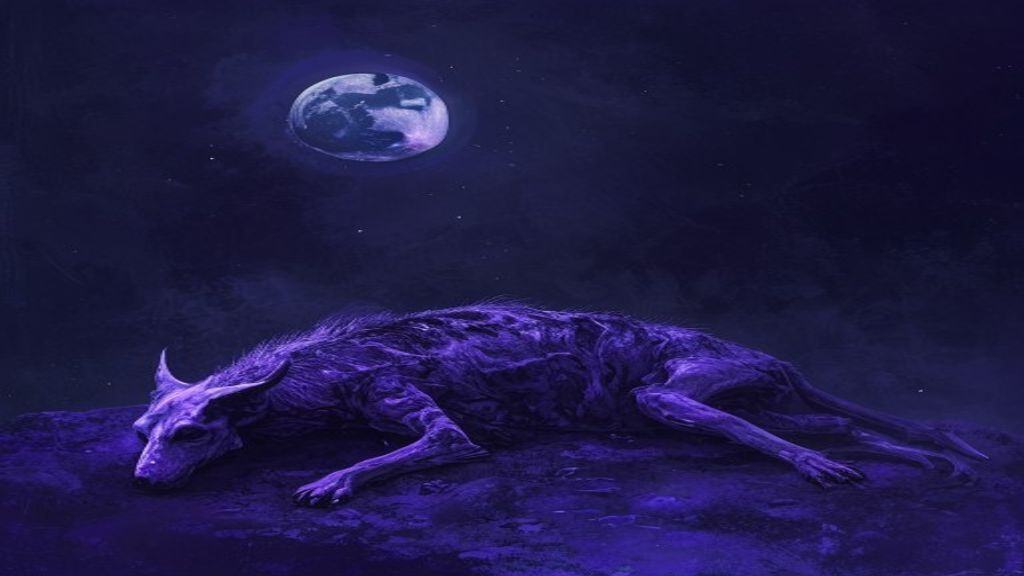
Waking up quiet instead of frightened after a dead animal dream is not as strange as it sounds. Usually it means the dream was less a horror scene than a pause. It’s the pause we take before we let something officially be over: the moment you’re still holding both possibilities, the creature that was, and the fact that it isn’t anymore.
Dead animals in dreams arrive with that same quality of pause. The dreamer is almost always still, looking. Rarely horrified. More often something quieter, a recognition, a weight settling. Dreamers often feel they should apologize for wanting to understand these dreams, as though it were somehow morbid. It isn’t. The image is old and serious and worth sitting with.
What kind of dead animal, and where
The first thing to notice is what the animal meant to you alive. Not in folklore, not in some symbol dictionary, but in the room of your actual mind. A dead dog hits entirely differently than a dead crow, not because one is more significant, but because you came to this dream with a whole history of dogs, or crows, or whatever creature is lying there. A Jungian reading takes animals in dreams to represent the instinctual layers of the psyche, the parts that operate before language. A dead one is an instinct that’s completed its arc. Or been cut off. The difference matters.
Where it was found matters almost as much. A dead animal in your childhood home is doing different work than one you find in an office or a public street. The location is your mind’s way of pointing: here. This part of your life. The death is located somewhere, and the dream is being specific about it even when you can’t immediately say why.
Reading the scene honestly
The uncomfortable reading
Antti Revonsuo’s threat simulation theory allows that dreaming about dead animals may simply be the threat-simulation system doing its maintenance work, processing the fact of death as a category, keeping you calibrated to it. I find that reading honest even when it’s unsatisfying. Sometimes a dead animal in a dream isn’t about your emotional life at all. It’s just death, the fact of it, which is something the mind circles back to for its own reasons and on its own schedule.
Artemidorus held that the same dream means different things for different dreamers, depending on age, status and occupation. He was, as always, less interested in the psychology than in the forecast. But even stripped of the divination, the idea that a death in a dream marks a transition rather than merely a loss feels worth keeping.
What you do with it in the dream
Your behavior in the dream is usually the second most important thing. Walking past can reflect a period of numbness or necessary distance. Staying suggests something is being processed actively. Covering the animal, burying it, or arranging it in some way looks like grief work done in sleep, which is, for what it’s worth, exactly how grief works: in small repeated gestures that don’t make logical sense but feel entirely necessary.
In waking life, burying a dead animal often comes with feeling slightly absurd and also like you have to. Some things ask to be marked even when you’re not sure exactly what you’re marking. That’s the emotional texture these dreams carry too. If your dead animal was a big cat, dreaming of a panther describes the living animal first, which helps with what the dead one has lost.
- What did that animal represent to you when it was alive, in feeling, not in symbol dictionaries?
- Where did you find it? What area of your life might that location be pointing to?
- What did you do in the dream: walk past, stay, bury it? That action is its own message.
- Is there something in your waking life you know is over but haven’t formally acknowledged?
One symbol, two traditions
Where the psychological read treats dead animal as a mirror of your inner state, the biblical tradition treats it as something to weigh, prayerfully, against what Scripture actually says.
Most often it marks an ending: a drive, a phase, a relationship, or a part of yourself that has completed its arc. The specific animal tells you what kind of energy or instinct is involved. The feeling in the dream, grief…
You are reading this oneThe dead animal appears in Scripture primarily in two registers: sacrificial death, which is the entire scaffolding of Levitical worship, and natural death as a sign of the land’s condition. Neither gives a direct verse about…
Read the biblical meaning →Quick answers
What does it mean to dream of a dead animal?
Most often it marks an ending: a drive, a phase, a relationship, or a part of yourself that has completed its arc. The specific animal tells you what kind of energy or instinct is involved. The feeling in the dream, grief, relief, or numbness, tells you how you actually feel about that ending.
Is dreaming of a dead animal a bad omen?
Psychologically, it’s rarely catastrophic. It usually means something has ended or needs to be acknowledged as ended, which is difficult but not the same as dangerous.
What if the dead animal in my dream was a pet?
Then it’s almost certainly about that specific bond, or the qualities of that creature that mattered to you. If the pet is still alive, the dream may be processing anxieties about loss, or about a phase of your life associated with that animal. If the pet is genuinely gone, the dream is grief doing its rounds.
Why do I dream of a dead animal and feel nothing?
Emotional numbness in these dreams is its own information. It may mean you’re in a protected distance from something, not ready to feel it yet, or that you’ve already processed this particular ending and the dream is just filing it. Occasionally it means the opposite: that you’ve been suppressing a loss so effectively that even the dream can’t get around it.
Sources for this reading
- Revonsuo, A. (2000). The reinterpretation of dreams: An evolutionary hypothesis of the function of dreaming. Behavioral and Brain Sciences, 23(6), 877-901.DOI
- Cartwright, R. D. (2010). The Twenty-four Hour Mind: The Role of Sleep and Dreaming in Our Emotional Lives. Oxford University Press.
- Artemidorus of Daldis (2nd century CE). Oneirocritica. English edition: Harris-McCoy, D. E. (2012). Artemidorus’ Oneirocritica: Text, Translation, and Commentary. Oxford University Press.
Full bibliography on Sources and method. Found a mistake? Tell us and see the corrections log.