- Tradition
- Psychological readingAnimal dreams
- Also read in
- The BibleSame symbol, other tradition
- Draws on
- Revonsuo, Jung, Artemidorus
- Reviewed
- 6 min read
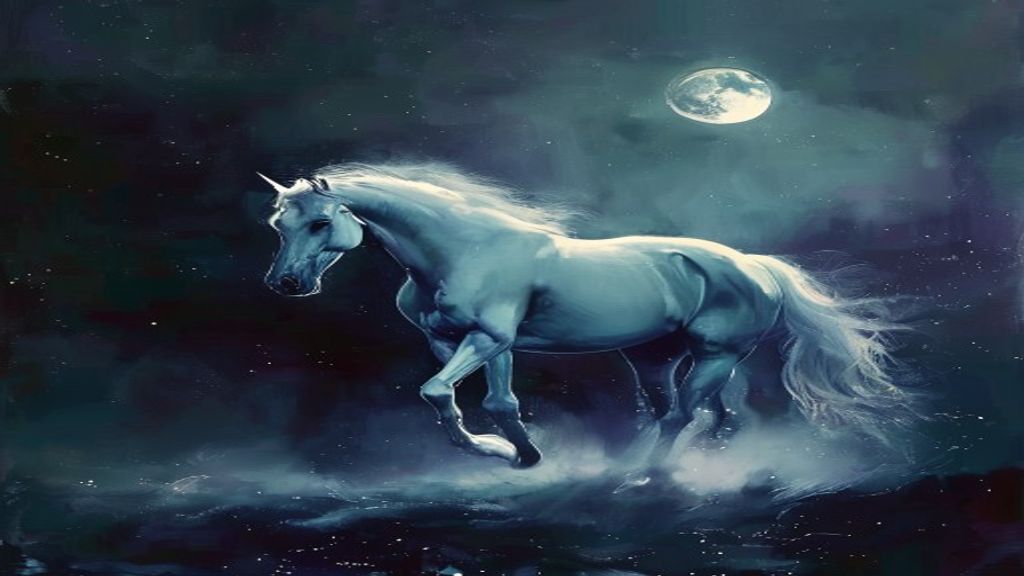
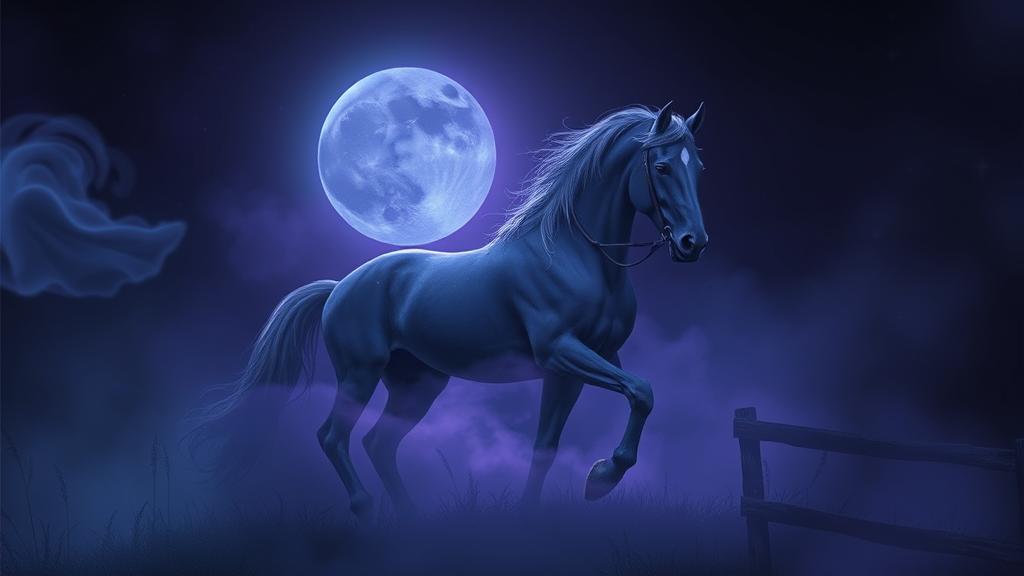
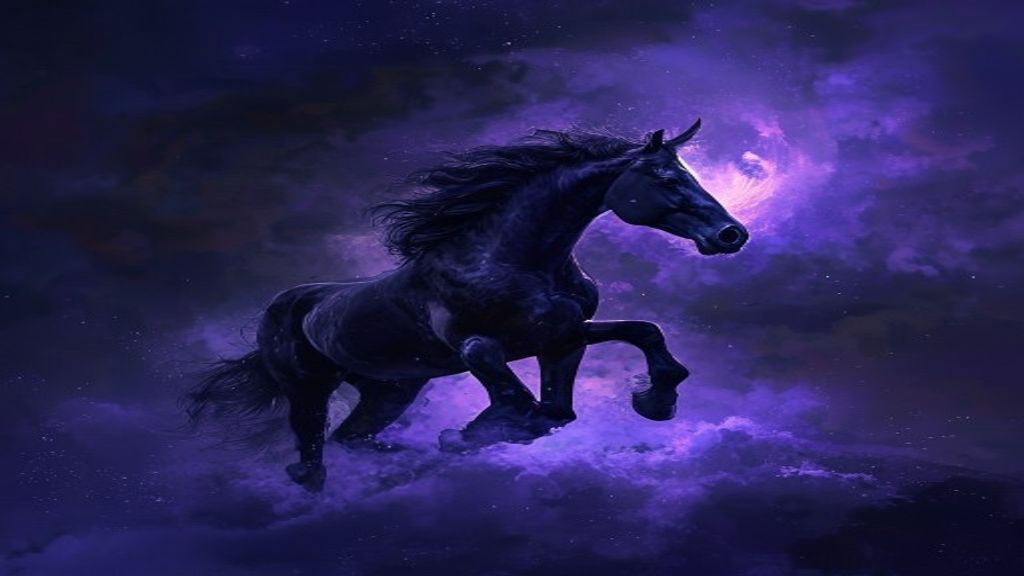
Black horse dreams tend to be felt before they are understood. The thudding of hooves registers in the chest, then the smell, the breath, the sheer size of something moving on its own terms and able to go somewhere you can’t follow. Before there is any meaning, there is sensation, and that is a clue. The dream is less about a symbol than about a force, and about how you stand in relation to it.
Black horses in dreams are not the same as dark horses in folk symbolism, even though we often conflate them. The color carries weight, certainly. But the horse itself carries more, and what gets lost in the omen-talk is the sheer physicality.
A black horse in a dream usually signals raw, unintegrated energy, something powerful in you that’s either running without direction or waiting to be ridden. The black coat amplifies the intensity but doesn’t determine whether the force is threatening or available.
Whether you rode it changes everything
The single most important detail in a black horse dream isn’t the horse. It’s your position relative to it. Riding, standing back, being pursued, watching from a distance, reaching for the bridle and finding it just out of reach: these are completely different dreams that happen to share a horse. The animal is the energy. What you do with it is the question your unconscious is actually asking.
A dreamer stuck in a decision may well get the watching-from-a-distance version. The horse moves, and they don’t. They wake up wistful in a way they can’t quite explain. Someone going through an intense transition, a new role, a creative project they’ve thrown themselves into fully, may be more likely to ride, and the feeling that goes with it is less comfortable than you’d expect: exhilarating, yes, but also precarious. Speed without total control. Which is often exactly what a major change feels like from the inside.
The color isn’t the villain
Black gets a bad reputation in Western dream symbolism. Death, the unconscious, the unknown, all the things we push to the edges of daily life. I want to push back on this, mildly but firmly.
A black coat in a horse simply means you’re not diluting the energy with associations. A white horse brings in purity, spirituality, the civilized. A brown or grey horse blends into the landscape. A black horse does not blend. It’s fully present, fully there, not softened by cultural prettiness. What the tradition calls “dark energy” is often just intensity that hasn’t been named or integrated. Jung’s idea of the shadow holds that the parts of ourselves we relegate to darkness are not simply bad. They’re just unowned. They’re powerful and they’re yours and you’ve been looking away from them.
That framing changes what the dream means completely. A large, powerful animal in a dream is often a mirror rather than an enemy, and dreaming of a puma works the same way: the predator is power you haven’t claimed yet.
What older traditions made of it
Artemidorus, writing in the second century, held that the same dream means different things for different dreamers, depending on age, status, and occupation, so a horse would not mean the same for a soldier, a farmer, and a merchant. What has outlived that world is the core idea of the horse as personal vital force, which has proved more durable than a lot of ancient categories.
Color commentary in older systems reflects the associations of their era, not universal ones. Black horses appear in traditions that read them as omens of change, and in others that read them as guides between worlds, the psychopomp in four-legged form. Neither of these is wrong exactly. They’re each capturing one facet of what “intense, purposeful power” can mean depending on your context.
When the same horse comes back
Recurring black horse dreams are worth taking seriously, not because they’re ominous but because the repetition tells you something isn’t resolved yet. Antti Revonsuo’s threat simulation theory argues that the dreaming mind rehearses threatening situations. I think recurring animal dreams behave similarly: the horse keeps appearing because whatever it represents, the energy, the decision, the part of yourself you’re dancing around, hasn’t been engaged with directly yet.
A recurring horse dream can shift over time, and the shift is worth watching. The horse moves from far away to closer. From running past to waiting. The progress of the dream over months sometimes maps the progress of the dreamer toward integrating whatever the horse was. It isn’t always tidy. But a change in the horse’s behavior is a fair sign that something is changing.
A calm-horse dream can hinge on one small moment: the horse slows and turns its head toward you, briefly, before moving on. Just an animal checking its surroundings. But it is the detail that stays, the moment of being seen by something that doesn’t need anything from you. Anyone who dreams of a calm black horse nearby probably knows what that feels like, and they’re right to trust the feeling.
And if the horse has left the scene but something else dark has taken its place, dreaming of a dead bird is the opposite of the horse: power gone still. Dreaming of a firefly is a small light coming and going in the same dark, which is a different kind of energy again.
- Were you on the horse, near it, or watching from a distance? That placement is the key.
- Did the horse seem aware of you? What did it do with that awareness?
- Where in your life right now is there something powerful moving without a clear direction?
- Is there energy you’ve been treating as dangerous that might just be intense?
One symbol, two traditions
Read side by side, the two traditions pull in different directions: black horse as a signal from your own mind, or black horse as an image to test against the text. Knowing which question you are asking is half the interpretation.
A black horse in a dream usually signals raw, unintegrated energy, something powerful in you that’s either running without direction or waiting to be ridden. The black coat amplifies the intensity but doesn’t determine whether…
You are reading this oneIn Revelation 6:5, the black horse’s rider carries scales and announces famine-level prices for grain while sparing oil and wine. It represents scarcity and measured judgment, not simply evil or death. In Zechariah 6, black…
Read the biblical meaning →Quick answers
What does dreaming of a black horse mean?
It usually points to raw personal energy, ambition, desire, or force that you haven’t fully owned or directed yet. The black coat isn’t a bad sign; it means the energy is undiluted. Whether that’s exciting or alarming depends entirely on what you’re doing with it in the dream and in your waking life.
Is a black horse in a dream a bad omen?
In some folk traditions, yes. Psychologically, no. A black horse represents intensity, not danger. The same energy that feels threatening when it’s galloping toward you feels like aliveness when you’re riding it. The dream is usually asking you to distinguish between the two.
What does it mean to ride a black horse in a dream?
That you’re currently engaged with a powerful aspect of yourself or your situation, and the feel of the ride matters. Exhilarating but slightly out of control usually means you’ve taken on something significant and are still finding your footing. Smooth and sure means you’ve integrated it. Either way, you’re in motion.
Why does the black horse keep appearing in my dreams?
Recurring horse dreams usually indicate that something, a decision, an energy, a part of yourself, hasn’t been engaged with directly. The dream repeats because the situation is still unresolved. Many people find the horse’s behavior shifts over time as they begin to address whatever it represents.
Sources for this reading
- Revonsuo, A. (2000). The reinterpretation of dreams: An evolutionary hypothesis of the function of dreaming. Behavioral and Brain Sciences, 23(6), 877-901.DOI
- Jung, C. G. (Ed.). (1964). Man and His Symbols. Doubleday.
- Artemidorus of Daldis (2nd century CE). Oneirocritica. English edition: Harris-McCoy, D. E. (2012). Artemidorus’ Oneirocritica: Text, Translation, and Commentary. Oxford University Press.
Full bibliography on Sources and method. Found a mistake? Tell us and see the corrections log.