- Tradition
- Psychological readingAnimal dreams
- Also read in
- The BibleSame symbol, other tradition
- Draws on
- Revonsuo, Artemidorus
- Reviewed
- 4 min read
You find a sparrow on the back step. Perfectly intact, wings folded, as if it had sat down and decided to stop. You stand over it for longer than makes sense, not wanting to touch it but not able to walk away. Something about its stillness is insistent. It is still a bird. It just isn’t a bird anymore.
That specific bewilderment, the thing that was alive and now isn’t, while still looking like what it was, is exactly what a dead bird dream tends to carry. It arrives when something in your life has gone quiet in that same way. Still recognizable. No longer moving.
What the bird was doing matters
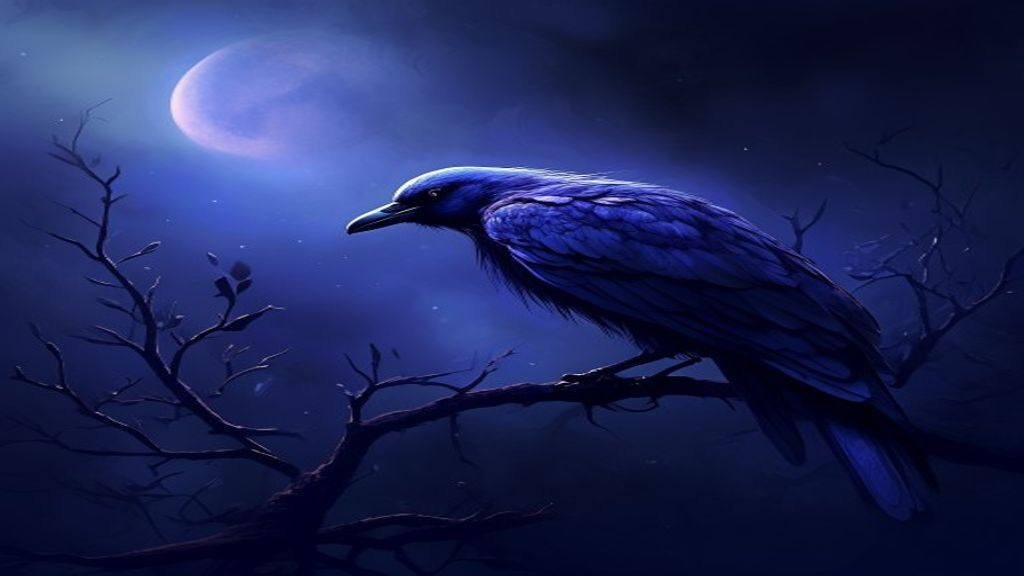
Birds in dreams almost universally stand for freedom, for the parts of ourselves that travel beyond the daily and the fixed. Your ambitions, your creative life, the piece of you that imagines something different. That’s not mystical; it’s just what birds do. They leave. They can go where you can’t. When you dream of one dead, you’re dreaming of that capacity in its arrested state.
A Jungian reading takes birds as symbols of transcendence, the psyche’s impulse toward something higher or beyond the immediate. I’m cautious about framing everything in those terms, because sometimes a bird is just a bird, but on this image I think the reading picks up on something real. This dream is rarely about crisis. It tends to belong to someone who has quietly let something lapse: a creative project shelved indefinitely, a long-held plan that got quietly dropped, a version of themselves they used to believe in.
The species and condition of the bird shift the reading. A songbird carries different weight than a bird of prey. A bird still warm and freshly fallen reads differently than one picked clean and long gone. Your mind did not choose these details by accident, and noticing them is half the work of the interpretation.
Old readings and why they still land
Artemidorus, in his second-century dream manual, held that the same dream means different things for different dreamers, depending on age, status and occupation. By that logic a dead bird for a poet and a dead bird for a sailor are different dreams, and the reasoning is practical: the bird means whatever that dreamer’s life has most in common with a bird. What in your life flies freely? That’s what the dead bird is about.
Thousands of years and the underlying logic hasn’t shifted much. Antti Revonsuo’s threat simulation theory, which suggests dreams evolved partly as a rehearsal space for real-world dangers, doesn’t cover the dead bird well. Dead birds aren’t threats to simulate. They’re notices of arrival, a new state of affairs that needs processing. They show up not to prepare you for loss but because you’re already in it and haven’t fully acknowledged it.
Carrying it
A detail worth tracking: whether you pick the bird up or walk past it. Picking it up, holding it, even burying it in the dream, these are all active forms of processing. Your dreaming mind is performing the thing grief asks for: tending to something after it’s gone. Walking past, or turning away, is usually your mind showing you what you’ve been doing in waking life.
Dreaming of a spider spinning its web is the rebuilding image: something ended and something new is quietly being made. Dreaming of a dragonfly carries transformation from one state to another, a small winged creature that is the living opposite of the one lying still.
That small stillness is hard to put into words: something can look completely like itself while being entirely finished. Adults do know that feeling; we know it about relationships, about versions of ourselves, about decades. The dead bird dream is often the mind’s way of giving that wordless thing its due.
What holds the dreamer there, standing over the bird, usually isn’t fear. It is a kind of respect. The dream may be asking for the same thing.
- What was the bird’s condition? Fresh, or long gone? The timeline in the dream is the timeline in your life.
- Did I pick the bird up or walk past it? That gesture tells you what you’ve been doing with this loss.
- What part of my life moves freely, or used to? Is it still moving?
- Is there something I keep calling “on pause” that I already know is finished?
One symbol, two traditions
The two schools are not reading the same book: psychology asks what dead bird is doing in your waking life, while the biblical tradition tests the image against Scripture and leaves the meaning with God.
It usually points to something in your life that used to move freely and no longer does: a creative project, a long-held plan, a version of yourself you’ve quietly stopped believing in. The bird represents freedom or…
You are reading this oneScripture says more about birds than almost any other animal category, and quite a lot about what God thinks of their deaths. What it doesn’t do is provide a dream specifically about dead birds. The meaning comes from applying…
Read the biblical meaning →Quick answers
What does dreaming of a dead bird mean?
It usually points to something in your life that used to move freely and no longer does: a creative project, a long-held plan, a version of yourself you’ve quietly stopped believing in. The bird represents freedom or transcendence; its death in the dream represents an ending that may not have been fully acknowledged yet.
Is a dead bird dream a bad omen?
In psychological terms, a dead bird dream is more about processing a real loss than predicting a new one. It’s often a signal that something is ending, not that something catastrophic is coming.
What does it mean if I killed the bird by accident in my dream?
This variant tends to generate guilt well out of proportion to the dream action. It’s rarely about actual harm to something external. More often it’s about a part of yourself, an ambition, a creative impulse, an old version of your plans, that you’ve been quietly overruling or neglecting in waking life.
Why do I keep dreaming about dead birds?
Recurrence with this image usually means an ending in your life hasn’t been fully processed or named. The dream keeps returning to the image because the waking-life recognition hasn’t quite arrived. Identifying what has gone quiet, what used to move freely and no longer does, tends to change the dream’s frequency.
Sources for this reading
- Revonsuo, A. (2000). The reinterpretation of dreams: An evolutionary hypothesis of the function of dreaming. Behavioral and Brain Sciences, 23(6), 877-901.DOI
- Artemidorus of Daldis (2nd century CE). Oneirocritica. English edition: Harris-McCoy, D. E. (2012). Artemidorus’ Oneirocritica: Text, Translation, and Commentary. Oxford University Press.
Full bibliography on Sources and method. Found a mistake? Tell us and see the corrections log.