Place Dreams
Dreaming of a Church: Beyond the Obvious Reading
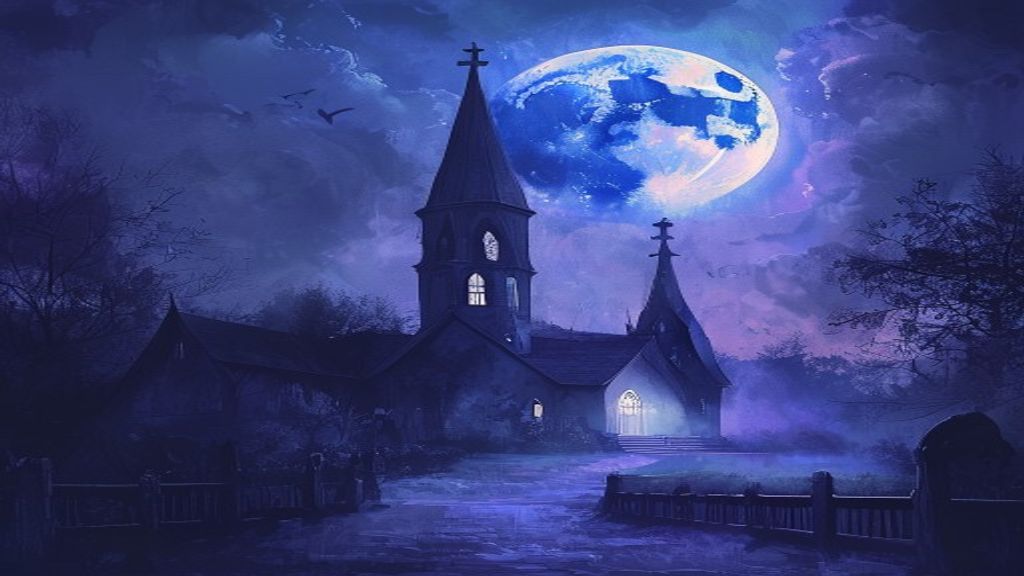
A stone church in winter light, windows darkened, no one going in or out. That image landed in front of me years ago on a walk through a neighborhood I didn’t know well, and it’s stayed with me with the odd persistence of a half-remembered tune. Not menacing. Not welcoming. Just there, solid and specific, occupying its corner as if it had always been there and always would be.
Church dreams arrive with the same quality. Dreamers who bring them to me are rarely frightened. They’re puzzled. They weren’t raised religious, or they were and have complicated feelings about it, or they believe deeply and can’t figure out why the dream made the church feel wrong. The image almost always carries more than its surface.
Dreaming of a church is rarely about religion and almost always about your relationship with something you consider sacred, whether that’s a belief system, a moral code, a sense of belonging, or a version of yourself you hold to a higher standard. The state of the building and how welcome you feel inside it are the real content.
What the building is actually holding
Jung’s reading of the church dream is one of the places where his framework genuinely earns its weight. The church, in his interpretation, represents the Self’s orientation toward the transcendent, toward whatever the dreamer considers larger than the ordinary ego. That doesn’t have to be God. It can be community, moral purpose, creative calling, the values you hold yourself accountable to. The building is the container for what you treat as non-negotiable.
Which is why the structural condition of the church matters so much. A well-maintained church with warm light inside and people you can see through the windows reads as a relationship with your own values that feels intact. A crumbling church, walls splitting, roof open to rain, reads as a system of meaning under strain. Not collapsed. Straining. That distinction matters.
Artemidorus, writing in the second century, catalogued sacred building dreams with careful attention to what the dreamer was doing rather than what the building looked like. Praying inside meant one thing. Standing at the threshold meant another. Being locked out was a distinct category. Two thousand years later, the same distinctions hold: the position of the dreamer relative to the sacred space is still where the interpretation lives. Inside, outside, at the door, descending into a basement: each one is a different dream.
| Tradition | How it reads the symbol |
|---|---|
| Christian tradition | Church as the body of the faithful, a dream of being inside suggests belonging; being outside or expelled pointed to spiritual alienation or, in some readings, moral reckoning. |
| Jungian analysis | The church as the Self’s container for transcendence: any sacred building in dreams points to your inner relationship with what you hold as highest or most binding. |
| Islamic dream tradition (Ibn Sirin) | A mosque or house of worship appearing in a dream typically signals a call toward sincerity, reflection on what the dreamer has promised themselves or others. |
| Ancient Greek incubation (Asclepius temples) | Sleeping inside a sacred building was itself the practice: the building was the instrument of the dream, making the church-as-location a direct portal to guidance. |
The door and what it’s doing
Whether the church door is open, locked, or somewhere in between is the detail I always ask about first. An open door you choose not to walk through is a different dream entirely from a door that won’t open when you try it. The first carries ambivalence: you have access and you’re hesitating. The second carries exclusion or blockage: something that should be available isn’t. And a door you walk through freely, into warmth and light, is what it sounds like, a sense of arrival that may have been a long time coming.
When you’re not religious and the church keeps appearing
This is the version I find genuinely interesting. People with no religious practice, sometimes with active skepticism toward organized religion, still dream of churches with real frequency. Domhoff’s continuity research is helpful here: our dreams pull from whatever actually matters to us, not from what we think should matter. If a church keeps appearing, your sleeping mind has decided it’s a useful image for something in your life, regardless of your waking theology.
For secular dreamers, the church in the dream often represents: a community you feel you’ve lost or been excluded from; a moral framework you’re questioning; a sense of ritual or ceremony that’s missing from your waking life; or a part of yourself you consider serious enough to need a serious building. None of those require belief in anything supernatural. They just require that you take something seriously.
The dreams I hear most often involve standing outside a church that’s clearly active inside, light showing, sound muffled through the walls, and not being able to get in. That dream, more than almost any other sacred-building image, tends to cluster around feelings of not belonging, of being adjacent to a community or meaning-system that functions for everyone else. If that’s your version, you might find it usefully paired with the article on dreaming of a cemetery, which often addresses the same sense of separation from a different angle.
A note on the interior
Dreamers who make it inside describe three distinct interiors. There’s the warm, inhabited church with other people, which tends to confirm belonging. There’s the empty church with some light still coming in, more ambiguous, a sense of a tradition or community that used to hold people but holds fewer now. And there’s the dark church, light failing or entirely absent, which carries the heaviest emotional weight.
That last one often accompanies a crisis of meaning: not faith in the religious sense necessarily, but the broader faith that certain structures in your life will hold. If the dream version felt disturbing rather than melancholy, the article on dreaming of a ruined house addresses a very similar feeling, and some of the same questions apply. And if the church in your dream transformed into a theater or performance space, check the piece on dreaming of a theater, where the sacred and the performed sometimes blur in the same interesting ways.
That winter church on the corner has been demolished since. Something practical replaced it. I noticed the absence before I noticed the building had ever been there. That’s probably something I should think more about.
- Was I inside the church, outside, or at the threshold? What did it feel like to be in that position?
- What was the state of the building: maintained, crumbling, or something in between?
- What do I treat as sacred or non-negotiable in my waking life right now?
- Is there a community or belief system I feel I’m on the outside of?
One symbol, two traditions
Where the psychological read treats church as a mirror of your inner state, the biblical tradition treats it as something to weigh, prayerfully, against what Scripture actually says.
When you dream of a church, religion is often the least interesting part. Nora Vance explores what the steeple, the silence, and the closed door actually mean.
You are reading this oneWhat the Bible actually says about the church as body and building, and how to read a church dream with honest theological grounding rather than easy answers.
Read the full biblical meaning →Quick answers
What does dreaming of a church mean?
It usually points to your relationship with something you treat as sacred or morally serious: a belief system, a community, a personal code of conduct, or a sense of higher purpose. The building’s condition and whether you’re inside or outside it tell you more than the church itself.
What does it mean to dream of a church when you’re not religious?
Churches appear in the dreams of secular people quite regularly. The image stands for whatever you treat as non-negotiable about yourself or your life, not necessarily God or faith. A community you’ve lost, a moral question you’re sitting with, or a sense of ritual and ceremony missing from your days can all take the form of a church.
What does it mean to be locked out of a church in a dream?
This version tends to reflect feelings of exclusion or blocked access to something you consider meaningful or important. It may be a community, a value system you’ve drifted from, or a sense of belonging you can see working for others but can’t access yourself.
Is dreaming of a dark or empty church a bad sign?
It’s worth taking seriously, but it’s not a bad omen. An empty church often reflects a questioning or strain in your relationship with whatever the building represents for you, whether that’s faith, community, or personal meaning. It’s an invitation to look at what you’re relying on and whether it’s still holding.