- Tradition
- Psychological readingPlace dreams
- Also read in
- The BibleSame symbol, other tradition
- Draws on
- Domhoff, Jung, Artemidorus
- Reviewed
- 5 min read
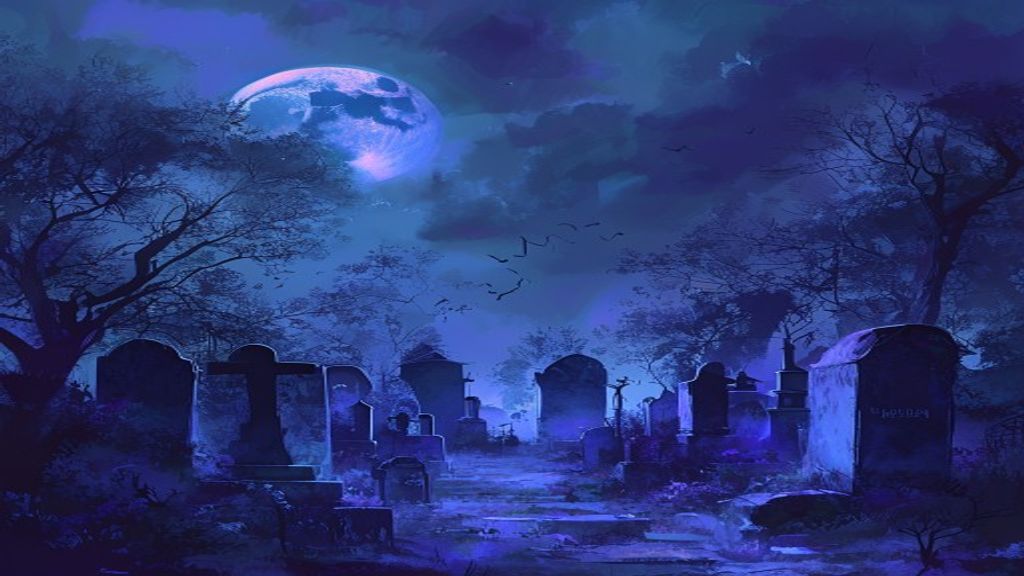
Cemeteries are the only public spaces where nobody checks their phone. On an autumn afternoon a groundskeeper rakes leaves three rows over, no one else is there, and yet the silence feels occupied. That particular quality of stillness is what cemetery dreams tend to carry: not frightening, not mournful, just intensely present. Like the air is paying attention.
Cemetery dreams can feel like something to apologize for, as if having them were slightly embarrassing. I want to say upfront: they are among the least morbid things your sleeping mind produces. They almost never predict death. They’re usually about something much more personal.
Dreaming of a cemetery most often signals that something in your life has genuinely ended and deserves to be acknowledged. The cemetery is your mind’s way of marking a real closing, not predicting a new one. The emotional tone you wake with matters more than the gravestones themselves.
What the groundskeeper rakes over
The first useful question is whether you felt like a visitor or like you belonged there. Most dreamers are visitors passing through. They’re not buried. They’re walking the paths between the stones, reading names, sometimes tending to a grave they don’t recognize. That’s a crucial difference: visiting a place of endings is not the same as being inside one.
Carl Jung would’ve found the distinction meaningful. The cemetery, in his reading, fits inside the larger image of the house as self: if the house is your psyche, the cemetery is its long-term storage. The things that have truly finished, the selves you’ve outgrown, the relationships that fully closed. Not suppressed or avoided. Finished. There’s a dignity to that reading I find more useful than the dread most people bring to the symbol.
The setting can also vary in ways that shift the meaning significantly. A well-kept cemetery, green grass, legible names, maybe flowers, reads differently than a neglected one with tilted stones and long weeds. The condition of the graves tends to mirror how you’re relating to your own past: honored and tended, or abandoned and overgrown.
Visiting a grave you recognize
The person or thing attached to that name is occupying your mind. You may not have fully processed the loss yet, or you may be honoring it. The grief can be old. The visit can still be necessary.
Standing at an unknown grave
This version tends to point at something you’ve let go of without quite naming it: a version of yourself, a path you chose not to take, a friendship that faded rather than broke. The unknown name is the unnamed loss.
The locked gate and the open one
Whether you can enter or leave matters enormously in these dreams. A cemetery with a locked gate you’re pressing against is different from one you wander through freely. Confinement here reads like confinement in waking life: something feels over, but the door to moving forward hasn’t opened. The open cemetery, the one you can leave, is actually a gentle dream. You’re visiting, not trapped.
A very old symbol, and why that’s relevant
I want to mention Artemidorus here, the second-century dream cataloguer, because he’s the rare ancient source worth reading rather than just citing. He held that the same dream means different things for different dreamers, depending on age, status and occupation, which is a context-first approach that feels modern. The interpretive instinct behind it, that the dreamer’s situation and feeling together determine meaning, has held up remarkably well across the centuries of dream study since.
Cross-culturally, the site of burial has almost always been treated as a threshold rather than an endpoint. Many traditions, from practices across West Africa to parts of Asia, treated the dead as still communicative, still present in some consultable way. That’s not how I’d personally frame it, but the psychological kernel survives the supernatural wrapping: cemeteries are where humans go to maintain a relationship with what has ended. Dreams use the image for exactly that.
G. William Domhoff’s continuity hypothesis is the framework I keep returning to with placement dreams like this one. Dreams tend to stage what is genuinely active in your life, the unresolved, the unacknowledged, the unfinished. A cemetery dream, in that light, is your sleeping mind pointing at something that may have closed in fact but hasn’t been processed in feeling. If the same dream happens after dark, dreaming of a cemetery at night reads that version, and the biblical meaning of a cemetery in dreams covers what Scripture says about burial and resurrection.
When the dream keeps repeating
Recurring cemetery dreams almost always mean that some ending in your life hasn’t been fully named or honored. Not necessarily a death: a career phase, a chapter of your identity, a version of a relationship. A groundskeeper keeps returning to the same corner, raking the same stretch of path. Efficient maintenance. That’s what a recurring dream is doing. It comes back because the acknowledgment hasn’t happened.
If what you saw was emptiness rather than a place of rest, dreaming of a window looking onto the void asks a related question: an ending with no headstone to mark it. And if the cemetery in your dream holds a building, a chapel or a crypt with a door, dreaming of a cathedral reads that enclosed sacred space on its own.
A cemetery’s silence is the kind that holds still long enough to hear yourself, and people go there when they need to think about something that’s actually over. Not to be morbid. When a dream brings you to that same gate, it’s probably offering something similar.
- Was I visiting or was I somehow confined there?
- Did I recognize any of the names or graves?
- What was the condition of the place: tended or neglected?
- Is there something in my waking life that has ended but hasn’t been formally acknowledged?
One symbol, two traditions
The two schools are not reading the same book: psychology asks what cemetery is doing in your waking life, while the biblical tradition tests the image against Scripture and leaves the meaning with God.
Dreaming of a cemetery most often signals that something in your life has genuinely ended and deserves to be acknowledged. The cemetery is your mind’s way of marking a real closing, not predicting a new one. The emotional tone…
You are reading this oneScripture records significant events at burial places: the demoniac who lives among the tombs, the resurrection of Lazarus, the empty tomb of Easter morning. These aren’t avoided locations in the biblical world. They’re where…
Read the biblical meaning →Quick answers
What does dreaming of a cemetery mean?
It most often signals that something in your life has genuinely ended and deserves acknowledgment. The cemetery is your mind marking a real closure, not predicting a new one. The tone you wake with, peaceful, sad, or trapped, shapes the reading more than the image itself.
Is dreaming of a cemetery a bad omen?
Historically some traditions read it that way, but most modern dream research points in the opposite direction. These dreams are about processing endings, not predicting them. An open, quiet cemetery is often one of the more settling dream environments.
What does it mean to tend a grave in a dream?
Actively caring for a grave usually reflects how you’re relating to a finished chapter of your life: with respect, attention, and some ongoing connection. It’s a healthy image, not a disturbing one.
Why do I keep dreaming about the same cemetery?
Recurrence almost always means an ending in your waking life hasn’t been fully processed or named out loud. The dream repeats until the acknowledgment happens. Naming what’s actually over, to yourself if to no one else, tends to be what quiets it.
Sources for this reading
- Domhoff, G. W. (2003). The Scientific Study of Dreams: Neural Networks, Cognitive Development, and Content Analysis. American Psychological Association.
- Domhoff, G. W. (1996). Finding Meaning in Dreams: A Quantitative Approach. Plenum Press.
- Jung, C. G. (Ed.). (1964). Man and His Symbols. Doubleday.
- Artemidorus of Daldis (2nd century CE). Oneirocritica. English edition: Harris-McCoy, D. E. (2012). Artemidorus’ Oneirocritica: Text, Translation, and Commentary. Oxford University Press.
Full bibliography on Sources and method. Found a mistake? Tell us and see the corrections log.