- Tradition
- Biblical reading
- Also read as
- PsychologySame symbol, other tradition
- Scripture
- Daniel, Revelation, Jeremiah, Habakkuk
- Reviewed
- 4 min read
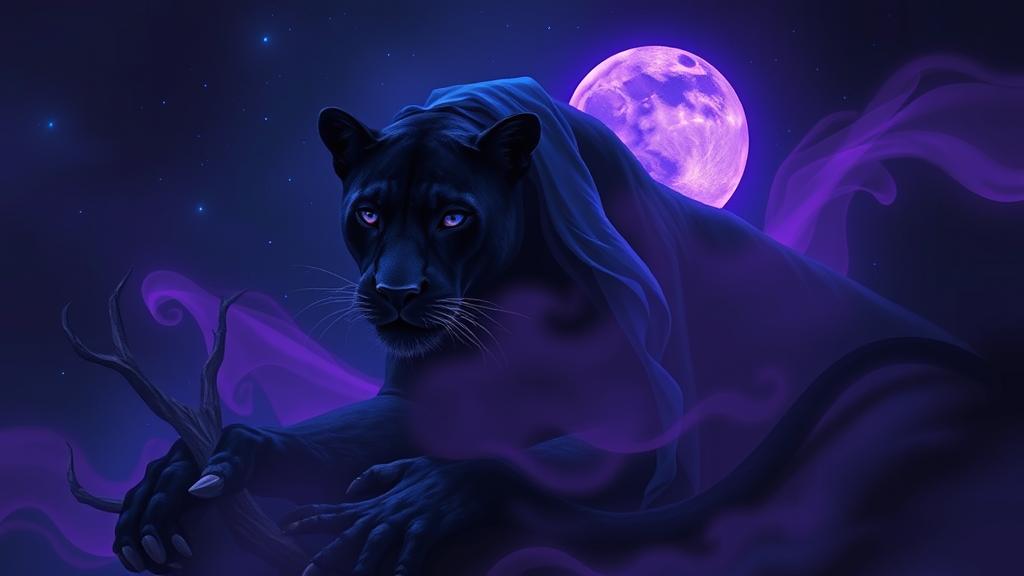
A panther is easy to read as a symbol of evil: black, silent, and hunting. The Bible gives that reading no direct support, because the panther as a recognized creature appears in Scripture zero times, and an honest answer is worth more than a confident invented framework. What Scripture does contain is a rich theology of big cats, and the panther as a specific animal can be understood within that framework, as long as we’re clear about what we’re doing.
People dream of panthers and the dream carries weight. The animal is silent, enormous, and capable of either threat or strange companionship in the logic of sleep. Reaching for a biblical reading is a legitimate instinct. But it requires going one honest step back: from ‘panther’ to ‘leopard’ and from ‘leopard’ to the full biblical picture of powerful, swift, dangerous animals in service of theological ideas.
What the Bible actually says about big cats and leopards
The leopard appears in Scripture most prominently in two contexts: prophetic warning and apocalyptic vision. Neither reading is simple, and both deserve careful attention.
- Daniel 7:6Daniel’s vision includes a leopard-like beast with four wings and four heads, representing a swift world empire. The leopard here is speed and sudden power, something that moves faster than human preparation can account for.
- Revelation 13:2The beast from the sea in John’s vision is ‘like unto a leopard.’ The same swift, spotted predator now appears in the context of false authority and widespread deception.
- Jeremiah 5:6Jeremiah warns that ‘a leopard shall watch over their cities’ as a consequence of persistent unfaithfulness. The leopard as judgment is waiting, patient, inevitable.
- Jeremiah 13:23‘Can the Ethiopian change his skin, or the leopard his spots?’ This is Scripture’s most famous leopard verse, a statement about the intractability of deeply formed habits: some patterns don’t change by wanting them to.
- Habakkuk 1:8The Chaldean horses are described as ‘swifter than leopards,’ again using the animal as a picture of unstoppable, rapid advance.
That’s a consistent picture: the leopard in Scripture is swift, powerful, patient in waiting, and associated with either prophetic judgment or apocalyptic authority. It’s not the lion’s commanding dominance, and it’s not the bear’s brute force. The leopard is the animal that moves quietly and arrives before you’ve heard it coming.
The lion connection and what 1 Peter adds
1 Peter 5:8 compares the adversary to ‘a roaring lion, seeking whom he may devour.’ That’s specifically a lion, not a leopard, but it establishes the broader biblical framework: large predators in spiritual context represent adversarial force that is real, active, and seeking an opening. The panther, understood through that framework, carries similar weight to the 1 Peter lion: something powerful that may be circling. That reading shouldn’t be over-applied to every panther dream, but it’s the clearest biblical thread.
If the panther in your dream felt like threat or pursuit, the leopard passages and the 1 Peter lion frame are the closest biblical anchors. The secular reading of dreaming of a panther looks at power, instinct, and hidden strength; the biblical layer asks whether the power in the dream felt threatening, authoritative, or like something you were being warned about. The 1 Peter lion is the clearest thread above, and the biblical meaning of a roaring lion in dreams develops that predator-threat framework in full.
What Scripture never says about panthers
The panther as a distinct animal does not appear in Scripture. No dream in the Bible involves a panther or even a leopard. Daniel’s leopard-beast is part of a waking vision, not a night dream in the ordinary sense. So any ‘biblical meaning’ of a panther dream is an application of the leopard’s biblical associations to your nocturnal encounter with the animal, not a direct verse about your situation. That gap is honest, and it matters.
Two readings are possible. One treats a large black animal as a picture of hidden or spiritual danger, drawing on the general predator framework. The other emphasizes strength and protection: the panther as a dream image might represent God’s protective power, since the same qualities of speed and silence that make the animal frightening also make it an effective guardian. Both readings can find some biblical grounding. Neither can claim a specific verse. If the panther felt protective, the Lion of Judah in Revelation 5:5 is the biblical image closest to that, and the biblical meaning of a lion in dreams follows it through.
- Was the panther in the dream pursuing you, watching you, or moving alongside you? What does each feel like against what’s happening in your life right now?
- Is there a pattern in your life that the Jeremiah 13:23 question makes you think about: something that hasn’t changed despite your wanting it to?
- What is moving toward you quickly right now, and have you been paying attention to it?
- If the dream carried a quality of ‘something powerful is near,’ does that feel like threat, warning, or protection?
One symbol, two traditions
Psychology keeps panther inside your own story, a symbol your mind built from your days. The biblical tradition looks outward instead, and asks whether Scripture gives the image any voice at all.
A panther in a dream usually points to something powerful and largely unconscious moving through your life. Whether it’s hunting you, walking beside you, or watching from a distance shapes the meaning enormously. Fear and…
Read the psychological meaning →Not specifically. The Bible uses the lion as an explicit metaphor for the adversary in 1 Peter 5:8. The leopard appears in prophetic and apocalyptic contexts associated with swift judgment or false authority, but not with Satan…
You are reading this oneQuick answers
Is a panther dream a message from God?
Joel 2:28 says God can speak through dreams. But Ecclesiastes 5:7 warns that dreams can be empty, and Jeremiah 23:25-28 is a serious caution against reading every vivid dream as divine speech. A panther dream can carry real emotional weight without being a prophecy. If it feels urgent, bring it to prayer and to a trusted person. The test is whether what the dream seems to say aligns with what God has already said clearly in Scripture.
Does the Bible say the panther represents Satan or evil?
Not specifically. The Bible uses the lion as an explicit metaphor for the adversary in 1 Peter 5:8. The leopard appears in prophetic and apocalyptic contexts associated with swift judgment or false authority, but not with Satan directly. Applying that to a panther requires moving through the leopard association, which is a reasonable biblical application but not a direct statement.
What does it mean biblically if the panther in my dream felt protective, not threatening?
The biblical framework doesn’t only read powerful animals as threats. The Lion of Judah in Revelation 5:5 is a symbol of Christ’s authority. God’s protection in Psalm 91 covers the ‘terror by night.’ The same qualities that make a leopard dangerous (speed, strength, silence) can function as protective power when understood differently. If the panther felt more like guardian than predator, that reading is worth holding alongside the warning framework.
Why does the Bible use big cats in prophecy and visions?
Ancient Near Eastern cultures understood leopards and lions as the most powerful predators in their world. Using them in prophetic imagery conveyed unstoppable force, sudden danger, or authority that couldn’t be resisted by normal means. The images would have landed with immediate visceral weight for their original audiences. When we read Daniel’s leopard-beast or Habakkuk’s leopard-horses, we’re meant to feel what ‘fast, powerful, and beyond your ability to stop’ feels like.
Sources for this reading
- The Holy Bible, King James Version (1611). Public domain. Scripture quotations on this site are from the KJV.
Full bibliography on Sources and method. Found a mistake? Tell us and see the corrections log.