Action Dreams
Dreaming of Skiing: What the slope says about your life
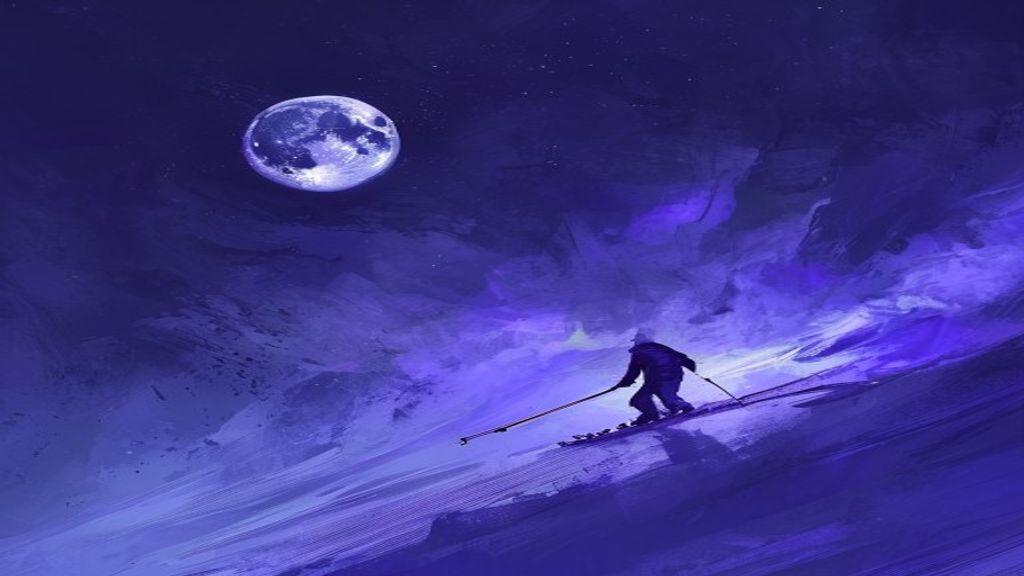
Cold metal under a chairlift. That particular silence when you push off and the whole white hill opens ahead of you. If you’ve skied even once in your life, your body remembers it before your mind does. And if you dream about skiing, you already know what I mean by that: the dream isn’t really about skiing. It’s about what it felt like to commit to the hill.
A skiing dream usually plays with two opposites: freedom of movement and the risk that comes with speed. Whether the slope felt exhilarating or terrifying tells you more than almost anything else. The mountain is the challenge. You are the person deciding how to meet it.
The moment you push off
The detail that keeps showing up when people describe these dreams is the top of the run. Not the bottom, not the lift, not the lodge. The very instant before you commit your weight forward. In waking skiing, that second is the whole sport compressed into a heartbeat: you can still back out, you haven’t fallen yet, the speed is still potential. Your dream is almost certainly set there, or somewhere on that spectrum between standing frozen at the edge and flying down out of control.
That’s the anchor. Hold it. We’ll come back.
Two versions of the same mountain
Fluid and fast
You’re moving well. The turns feel natural, your edges hold, the slope rewards you for reading it. This dream tends to come when some real-life pursuit has finally clicked into place, when the effort has gone quiet and the skill is just running. It might feel almost too easy. It usually isn’t a warning.
Out of control
The skis won’t respond. The slope is steeper than expected. You’re heading for something and can’t redirect. This version doesn’t mean failure is coming. It tends to mirror a situation where you’ve committed to something, momentum is genuine, and the control you thought you’d have hasn’t materialized. The hill is real. So is your speed.
Most skiing dreams sit somewhere between these two. They’re not pure flow and they’re not pure panic. They’re the middle of a run: the part where you’re doing it, where there’s no longer any question of whether you’ll go, only the question of how well.
What the snow does
The terrain matters more than people usually think. Ice means the situation won’t give you purchase, no traction, no grip, the conditions don’t care about your technique. Deep powder means you’re working harder than necessary, expending more to stay upright than the path requires. A groomed piste is the cooperation of a situation that has been prepared for you. And if the run suddenly turns into a bare rock face or a cliff, your dream has stopped being about skiing entirely.
Icy slopes come up again and again in dreams during situations where someone feels their usual skills aren’t landing. A job they’re good at, in an environment that isn’t responding. A relationship where the effort keeps sliding off. I find that image accurate in a way no therapist-approved metaphor ever quite is.
The fall
Short section, because it usually doesn’t need much: falling in a skiing dream is almost never about injury. It’s about releasing control. If you land and keep going, that’s the interesting part. If you wake at the moment of impact, Aron Revonsuo’s threat-simulation work would read the fall as exactly what it looks like, a rehearsal. Your sleeping brain testing whether you can tolerate going down. Most people who dream of falling on a slope are people currently on one in their lives, committed, moving, and not entirely sure of the landing.
Competitors, empty slopes, and the wrong mountain
Other people on the slope tend to represent the comparison game, the ambient awareness of who else is doing what you’re doing and how fast. Racing someone in a skiing dream is almost always about competition in waking life, though rarely with the person you’re racing. An empty mountain is a different feeling altogether, solitude that’s either peaceful or exposed depending on your mood.
The wrong mountain is the version I find most interesting: you packed for one slope and arrived at another. Steeper, longer, different snow, no map. Domhoff’s continuity hypothesis would say your dream picked up a real emotional scent, that sense of “the situation turned out to be harder than advertised.” It’s a shape that shows up near dreaming of surfing too, where the wave turns out to be bigger than the one you trained on.
That image I started with, the cold metal, the white hill opening, the potential of it. Near the end of a project I’d dragged through an entire winter, I dreamed I was at the top of a run and couldn’t move. Just standing there while other skiers went past. Nothing wrong with the slope. Nothing wrong with my skis. I just couldn’t make myself lean forward. I woke up knowing exactly what the dream was about, and I think that’s the ski dream at its most honest: not the rush of descent but that last held moment before you decide to go. If you dreamed of tennis or dreamed of karate, the sports share that quality, a discipline with a moment of no-return baked in.
Whatever slope your dream put you on, that’s where you’re standing right now in some form. The dream just gave you edges.
- Was I in control of my speed, or was the hill deciding for me?
- What did the snow feel like underneath me, solid, icy, or like it kept swallowing my skis?
- Was I alone on that mountain, and how did that feel?
- Is there something in waking life I’m still standing at the top of, not yet committed to the drop?
Quick answers
What does dreaming of skiing mean?
It usually revolves around forward momentum and the question of control. The slope is whatever challenge you’re currently committed to. How the descent goes, smooth, panicked, or somewhere between, reflects how that real situation feels to navigate.
Is dreaming of skiing out of control a bad sign?
Not necessarily. Out-of-control skiing tends to appear when you’ve set something in motion and the speed has outpaced your confidence, not when failure is incoming. The dream is tracking that gap, not predicting a crash.
What does it mean to fall while skiing in a dream?
Falling rarely signals injury in these dreams. It tends to represent a release of control, a moment of letting go rather than catastrophe. How you land, and whether you get up, matters more than the fall itself.
Why do I dream of skiing when I’ve never skied?
Sport dreams often have nothing to do with the sport. Skiing carries a specific feeling set: speed, steep commitment, cold clarity, the body’s negotiation with gravity. Your mind borrows that imagery for an experience with the same emotional texture, even if you’ve never stood on a slope.