- Tradition
- Psychological readingVehicle dreams
- Draws on
- Domhoff, Artemidorus
- Reviewed
- 4 min read
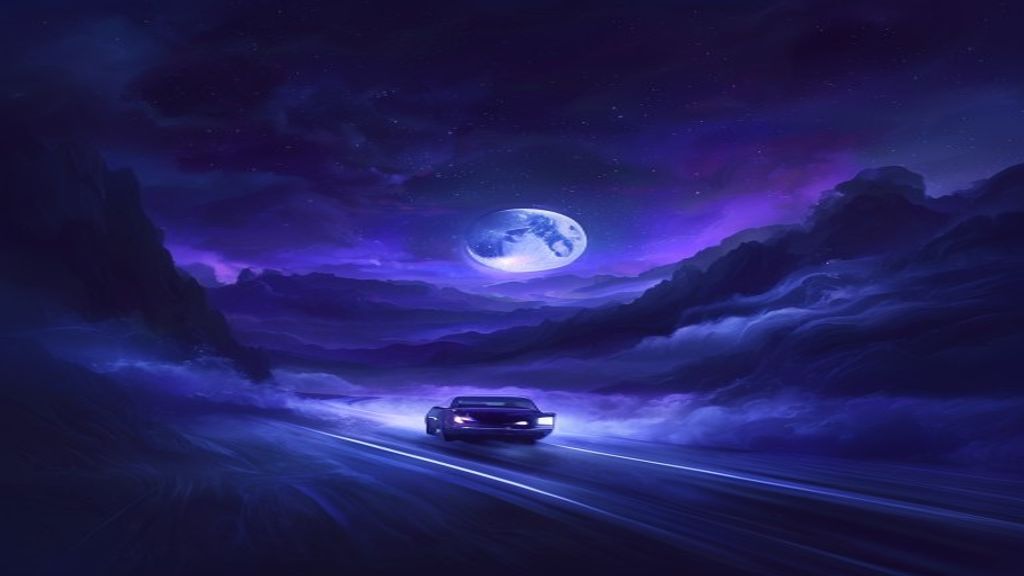
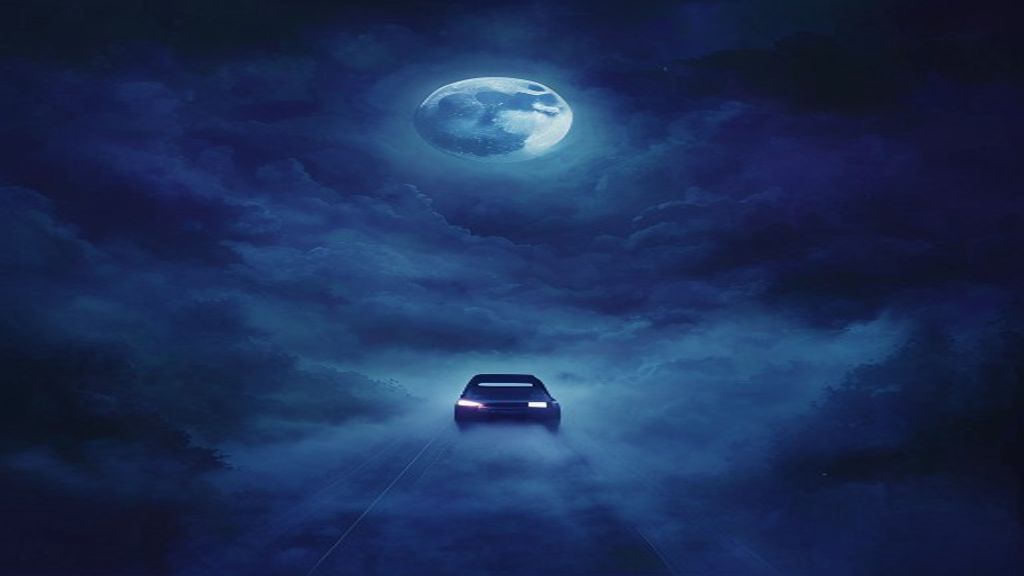
Read quickly, a fog dream says you are lost, and the fog is a warning to turn back. That misses what the dream actually shows. Fog rarely makes anyone stop. You slow down, you lean forward, you grip a little harder, and you keep driving. The road is still there; you just can’t see how far it goes. That combination, motion without visibility, is the dream: not being lost, but proceeding without confirmation.
Driving in fog in a dream usually means you’re making progress in a situation where you can’t see the outcome. The fog isn’t failure; it’s uncertainty. How you’re driving through it (anxious, calm, reckless, crawling) is the part that actually tells you something about how you’re handling things.
What the fog is actually doing
Real fog changes the quality of attention. Everything shrinks to what is immediately in front: the radio off, the speed down, the world reduced to the cone of the headlights and whatever comes out of it next. What remains is less fear than a particular kind of focus.
That quality of attention is what this dream is made of. A very specific detail marks it: you kept going even though you couldn’t see. You had the knowledge, somewhere, that the road continued even when you couldn’t confirm it. That’s not helplessness. That’s trust operating under conditions that don’t deserve it yet.
The car is almost always the self in motion, in Jungian reading and in many popular ones. And fog over a road is the mind’s compression of “the future is present but unreadable.” Not blocked. Not missing. Temporarily illegible. There’s an important difference between a road that ends and a road that disappears into gray, and the dreaming mind knows it.
How you’re driving matters more than the fog
- Driving slowly, staying on the roadYou’re managing uncertainty without freezing. This is often the dream’s way of showing you that you’re already handling the unclear situation better than you think. Cautious isn’t the same as stuck.
- Driving too fast, can’t slow downThe fog becomes genuinely threatening. This version often arrives when life is moving at a pace you haven’t chosen, a project spiraling, a situation accelerating. The car out of your control is worth taking seriously, and the dream of a car without brakes explores that exact gap between steering and stopping.
- Pulled over, not movingNot defeated, usually. Often this dream-state points to a deliberate pause: you’ve stopped to reckon with the situation rather than drive blindly. The feeling underneath tells you whether the pause is wisdom or avoidance.
- Lost the road entirelyWhen fog becomes total disorientation and the road disappears, that’s a different dream: less about progress and more about a loss of direction in a particular area of life. The next step isn’t faster driving. It’s finding out which way is forward.
- Fog clearing aheadThe best version. Usually arrives when something that’s been uncertain is about to resolve. People often wake from this one with a strange, sourceless confidence. Sometimes it’s wishful. Sometimes it’s accurate.
The thing about passengers
If someone else is in the car, the fog dream doubles in complexity. Driving someone through fog you can’t read is a specific kind of responsibility. It tends to arrive when you’re navigating an unclear situation that has consequences for other people, a team, a family, a partner. You’re the one who has to maintain the fiction that you know where the road goes.
What older traditions made of obscured roads
Artemidorus, writing in the second century in the Oneirocritica, held that the same dream means different things for different dreamers depending on age, status and occupation, which suits a travel dream: whether you were on the road for work, for war or for home would change the reading. Older dream traditions in general treated obscured roads as difficulties ahead that were real but not permanent. The key interpretive question was whether the dreamer continued or stopped. Stopping was the more ominous sign. Continuing through difficulty meant the goal would be reached by exactly those difficult means.
Domhoff’s continuity work would interpret this more practically: if you’re in the middle of a genuinely uncertain stretch of life, your dreaming mind will produce uncertain travel. The fog is the mind accurately representing the state of things. That’s not mysticism; it’s a reasonable description of what dreams do with current stress. The dreamer continued anyway, in the older sense and the Domhoffian one, and both arrive at the same useful point.
Dreaming of a car is where to go if the vehicle itself caught your attention, before any road conditions came into it. And if what you’re feeling is more like flying blind at altitude than navigating by ground, dreaming of an airplane puts the same not-knowing in the air, where there is no road to follow.
Fog dreams leave a lesson about not-knowing. The road is the same road you knew well, and driving it blind changes your relationship with uncertainty. There’s a version of forward movement that requires you to proceed without confirmation. Most people who have this dream are already doing it. They’re just not giving themselves credit for continuing to drive.
- Was I driving cautiously or recklessly? Was the speed chosen or imposed?
- Did the fog feel temporary or permanent? Did I believe the road continued?
- Was anyone else in the car? Whose situation was I navigating on behalf of?
- What in my waking life am I currently moving through without being able to see the outcome?
Quick answers
What does it mean to dream of driving in fog?
It usually reflects a waking situation where you’re making progress without being able to see the outcome. The car is you in motion; the fog is genuine uncertainty. How you’re driving through it, reckless or careful, moving or stopped, carries most of the interpretive weight.
Is this dream a bad omen?
Not typically. The more concerning version is when you stop entirely or lose the road. Slow, careful progress through fog usually reflects exactly the kind of steady navigation you’re already doing.
Why do I keep having this dream?
Recurring fog dreams almost always track a recurring period of uncertainty that hasn’t resolved. They tend to stop when either the situation clarifies or you find a way to genuinely accept the not-knowing, which is harder but also possible.
What does it mean if the fog clears in my dream?
That’s the optimistic version. It can mean the situation you’ve been navigating is about to become readable, or it can be the dreaming mind’s way of processing a hope rather than a fact. The feeling when you woke is your best guide to which.
Sources for this reading
- Domhoff, G. W. (2003). The Scientific Study of Dreams: Neural Networks, Cognitive Development, and Content Analysis. American Psychological Association.
- Domhoff, G. W. (1996). Finding Meaning in Dreams: A Quantitative Approach. Plenum Press.
- Artemidorus of Daldis (2nd century CE). Oneirocritica. English edition: Harris-McCoy, D. E. (2012). Artemidorus’ Oneirocritica: Text, Translation, and Commentary. Oxford University Press.
Full bibliography on Sources and method. Found a mistake? Tell us and see the corrections log.