- Tradition
- Psychological readingObject dreams
- Draws on
- Domhoff, Hartmann, Hobson
- Reviewed
- 6 min read
In REM sleep, which is concentrated toward the morning, your muscles are switched off while the brain keeps performing. That is the odd gift of a musician dream: a piano in the corner of a room that isn’t yours, a seat you didn’t plan to take, and hands that know exactly what to do. Not the applause, not the stage, but the moment the fingers move before the mind decides they should.
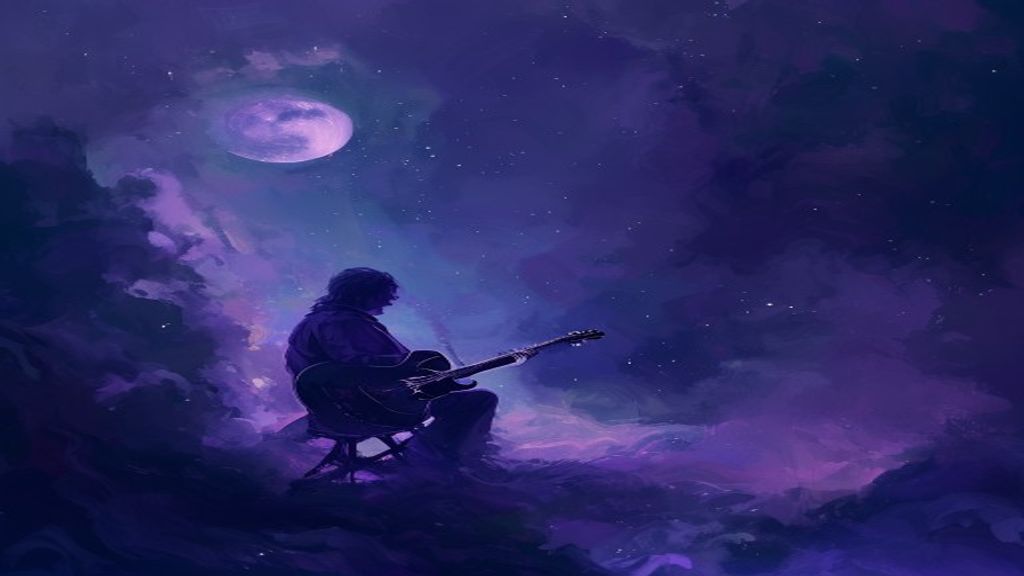
Dreaming of being a musician usually signals an unexpressed part of you asking for an outlet. The instrument and the feeling you have while playing are the real message. A confident performance points to creative readiness; a struggling or silent performance points to something you want to say but haven’t found the words for yet.
The hands that know the music
In these dreams the ability is almost never earned. It arrives pre-loaded. You pick up the guitar and you already play. You step to the microphone and your voice is already trained. The dream doesn’t make you practice. And I think that’s the clue worth pulling at, because in waking life, the thing you’re circling around doesn’t feel pre-loaded at all. It feels earned by other people, not you. The dream is disagreeing with you about that.
Music in dreams tends to work as a metaphor for expression at its most physical, the kind that bypasses language entirely. Not what you mean to say, but what your body already knows how to make. Someone who is blocked creatively, who hasn’t written or painted or built anything for a long stretch, can turn up in these dreams as a skilled musician. Someone with something to tell a person and no way to get it out in words may dream of playing the one song that would explain everything.
Dreaming of being an architect shares the act of making something that didn’t exist before. But architecture dreams lean toward structure and legacy. Musician dreams are more urgent, more about now, more about sound that disappears the moment it’s made. Impermanence is part of the point.
You’re in an empty room or a quiet house, and the playing is just for you. This is the most common version, and probably the most honest one: a need for creative expression that has nothing to do with recognition. The audience of zero is the message.
The crowd is there, maybe watching, maybe waiting. This version mixes creative need with visibility anxiety. Often arrives during periods when you feel unseen or when something you’ve made is about to be evaluated. The crowd’s reaction matters disproportionately.
You know the song, but the hands won’t cooperate. Or the instrument is broken. Or the music comes out wrong and you can’t understand why. This is creative frustration in a very literal disguise: you have something to express and the medium keeps failing you.
The music is completely unfamiliar, and it’s yours. You composed it in your sleep. You wake from this one strangely moved, sometimes trying to hum it back into existence. Hartmann would say the emotion became the central image; I’d say you briefly solved something without your conscious mind interfering.
The performance nobody warned you about
If you dream of performing and something goes wrong, the temptation is to call it a classic anxiety dream and leave it there. I’d push back on that a little. Anxiety dreams about performing tend to have a specific texture: you forgot to practice, or you can’t find the stage, or your clothes are wrong. When the dream focuses on the music failing, that’s different. That’s not anxiety about judgment. That’s the sensation of having something inside you that won’t come out the way you intended.
Which brings me to a version that matters most for people who definitely aren’t musicians: waking up with the melody still in your head. A tune you’ve never heard before, fully formed, fading. It’s a grief dream sometimes. Not grief for a person necessarily, but for a version of yourself that made things. The melody is a ghost of a creative life that got postponed.
The question of whether your voice is reaching anyone is also at the center of dreaming of being a teacher, where what you’re passing on is knowledge rather than sound.
What it probably isn’t
A literal calling. Almost nobody who dreams of being a musician is secretly meant to be one. I want to say that clearly, because there’s a kind of dream interpretation that reads professional dreams as vocational prophecy, and it’s not helpful. The dream uses the musician as a symbol. What the symbol stands for is yours to figure out.
Why this dream keeps coming back
Recurring musician dreams almost always map onto recurring creative suppression. Something in your daily life is absorbing your attention at the expense of expression, and the dream is logging the complaint. G. William Domhoff spent years building the case that dreams are continuous with our waking preoccupations; if you’re dreaming about making music week after week, the question isn’t what it means but what you’ve stopped making in your waking hours.
Hobson, who’d rather you not over-interpret any of this, would tell you the dream is just your brain replaying emotional and sensory patterns with minimal narrative coherence. He’s not wrong that the brain does that. But the patterns it picks are still yours. The particular sensation of playing and being heard is still a sensation your brain chose to rehearse.
For people who already play an instrument or sing, the dream tends to be more literal: rehearsal anxiety, a piece you can’t quite get right, a performance coming up. Context matters. If you’re a musician, a musician dream is probably just that. It’s the people who haven’t touched an instrument since school who interest me most.
And often, if you trace it back carefully, there’s something from that earlier part of life: a choir, a guitar sold, an afternoon spent with headphones and nothing else to do. The dream isn’t nostalgic for the music. It’s keeping count. Like dreaming of being a police officer sometimes flags an old drive toward order or justice that got redirected, this dream marks the point where creative energy got rerouted and hasn’t yet found its new channel.
Among profession dreams, this is one of the less distressing, even when it’s tinged with longing. You wake from it carrying something, a mood, a fragment of sound, a feeling that you almost had it. It is a dream worth waking into, and worth asking what you stopped making.
- Was the music coming from me or was I playing someone else’s song?
- Did the ability feel earned or did the dream hand it to me?
- What am I not letting myself make right now?
- Who was in the room, and did it matter whether they heard it?
Quick answers
What does dreaming of being a musician mean?
It usually points to an unexpressed creative need or a desire to be heard in a way that goes beyond ordinary language. The instrument you’re playing and how confident you feel while playing it are the most useful details.
What if I’m playing but the music sounds wrong in the dream?
That version tends to mirror creative frustration: you have something to express but the medium or the moment keeps failing you. It’s less about musical ability and more about the gap between what you want to convey and what comes out.
Does this dream mean I should become a musician?
Almost certainly not in a literal sense. Profession dreams use the job as a symbol, not a career directive. The musician stands for expression, voice, and making something that exists only in the moment it’s made.
Why do I wake up with a melody in my head from a musician dream?
The brain can generate genuinely novel musical material during sleep, especially in REM. Waking with a tune intact usually means the emotional charge was high enough to carry it into consciousness. It’s worth humming it out while it’s still there, even if it immediately starts to dissolve.
Sources for this reading
- Domhoff, G. W. (2003). The Scientific Study of Dreams: Neural Networks, Cognitive Development, and Content Analysis. American Psychological Association.
- Domhoff, G. W. (1996). Finding Meaning in Dreams: A Quantitative Approach. Plenum Press.
- Hartmann, E. (1998). Dreams and Nightmares: The New Theory on the Origin and Meaning of Dreams. Plenum Trade.
- Hobson, J. A., & McCarley, R. W. (1977). The brain as a dream state generator: An activation-synthesis hypothesis of the dream process. American Journal of Psychiatry, 134(12), 1335-1348.DOI
Full bibliography on Sources and method. Found a mistake? Tell us and see the corrections log.