- Tradition
- Psychological readingObject dreams
- Draws on
- Domhoff, Hobson, Artemidorus
- Reviewed
- 5 min read
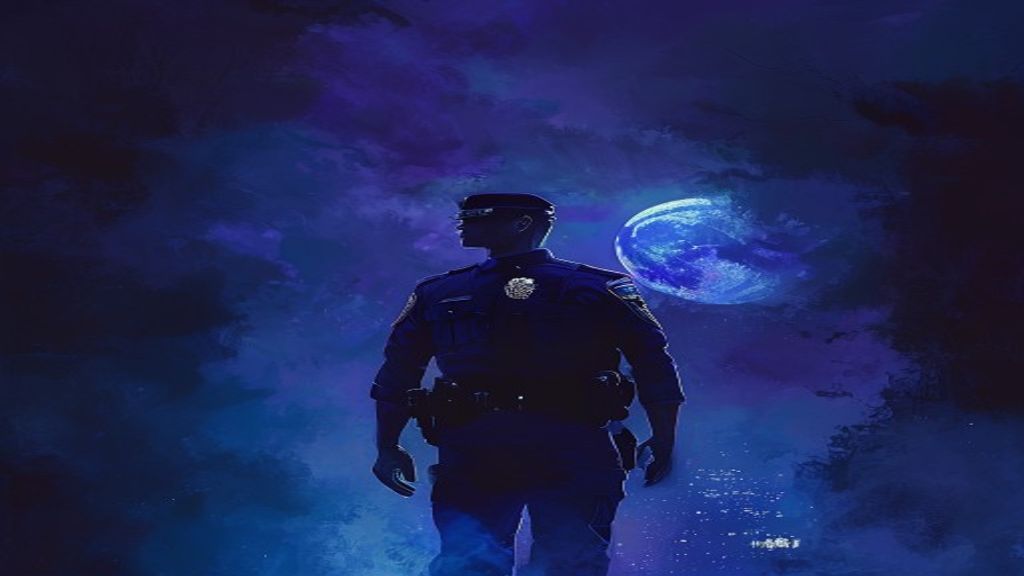
Why would you dream of wearing a police uniform when your relationship with authority is complicated, as it is for most people? Often because the badge has little to do with law enforcement. It stands for a role taken on quietly: keeping tabs on things, managing everyone’s behavior, being the one who notices when something’s wrong and feels responsible for fixing it. The dream can be as plain as that. Nothing happens. You are just wearing the uniform, and you wake uncomfortable anyway.
Dreaming of being a police officer is usually about the part of you that monitors, enforces, and intervenes, not external law, but your own internal rule-keeper. It shows up when you’re over-responsible for others, navigating a breakdown of order, or sitting with an uncomfortable relationship to authority.
How this image got into our dreams
- Ancient traditions
Early dream traditions, from the Egyptian dream book of about 1200 BC to Artemidorus in the second century CE, read dreams as omens and social signs. There were no uniformed police to dream of. The enforcer of social order was a god, a king or a magistrate, not an officer on a street.
- Medieval and early modern periods
The figure with the power to name wrongdoing was a judge, a magistrate or a church official. The anxiety is recognizable: being examined, found wanting, having to account for yourself. The costume differs from ours; the feeling doesn’t.
- Industrial modernity
The uniformed civil authority, officer, inspector, official, enters the symbolic vocabulary as cities expand and anonymity becomes normal. Under Domhoff’s continuity hypothesis, dreams extend waking concerns, so figures of authority turn up for people navigating institutional power, which is most of us, most of the time.
- Contemporary dreams
Today the police officer in dreams often carries the full cultural weight of that image: protection and threat, safety and surveillance, the complicated feelings most people have about rules that protect some and burden others. Your dream pulls from everything you’ve absorbed about what the badge means.
The inner officer most people don’t acknowledge
Here’s the part that tends to land hardest: dreaming of being the officer is often less about authority over other people and more about authority over yourself. The police officer in the dream is a costume for your own internal enforcer, the part of you that keeps score, sets rules, notices violations, and sometimes catches you doing something you’d told yourself you wouldn’t do.
That internal officer isn’t always fair. Sometimes it’s punitive in ways that go beyond anything a reasonable standard would require. Sometimes it lets things slide that it shouldn’t. Dreams of being a police officer often reveal what that inner rule-keeper is currently focused on: what it’s trying to control, what it’s given up on, and what it’s watching with the particular attention that comes just before intervention.
Domhoff would describe this without the psychological dressing, he’d say the dream reflects ongoing concerns, and if you’re running an internal monitoring operation in your waking life, the dream will stage it. Hobson would probably say the badge and the badge’s feelings are the data, and the metaphorical architecture is something you’re adding after the fact. Both of them are describing something real, they just disagree on where the meaning lives.
The red-light feeling
Most people know the experience of sitting at a red light when there’s no traffic in any direction, and waiting anyway. Not because a camera is watching. Just because. That small act of self-policing, following the rule when no enforcement is possible, is what these dreams are often mapping. The question the dream is asking isn’t whether you follow the rules. It’s whether you’ve internalized a rule that no longer fits, and you’re still stopping for it out of habit.
These dreams make the most sense if you’re over-responsible in your environment. If you feel you’re the only one keeping things running. If you inherited a monitoring role in a family or team without being asked. If you grew up in a household where someone had to keep track of everything, and that someone is still, years later, you.
If you’ve also been dreaming of being a judge, the combination is worth sitting with. A judge issues verdicts; an officer enforces and observes. Together they describe a psyche that’s doing a lot of moral accounting: watching, evaluating, pronouncing. That’s exhausting work. The dreams might be telling you that the court has been in session too long.
When authority is the problem, not the role
Not every police officer dream is about being the officer. Some are about an authority you’re dreaming against, a figure in a uniform who represents a system, a parent, an institution that told you what was allowed. Those dreams can feel very different: threatening, oppressive, suffocating in a way that has nothing to do with personal guilt.
The nurse and the police officer don’t seem like related symbols. But dreaming of being a nurse and a police officer on alternating nights can point to the same underlying tension: care and control, the two registers a person in a caregiving or managing role moves between. Which role your dream gives you might be telling you which mode you’re overusing.
Something that doesn’t resolve cleanly
The dream where you are just wearing the uniform and nothing happens may never get a clean reading. The discomfort is real, and it points at something real, but the dream offers no verdict. It lets you stand there in someone else’s authority and notice what that feels like.
Maybe that’s the point of some dreams, not to interpret, but to let you inhabit a role long enough to feel its weight. If you’ve been acting as the monitor, the one keeping everything in order, for months, the dream doesn’t tell you to stop. It just puts the badge where you can see it.
- Were you the officer enforcing rules, or were you subject to someone else’s authority?
- What was the violation you were responding to, and does it resemble something in your waking life?
- Is there a role in your life where you’ve quietly appointed yourself the person who keeps order?
- Does your internal rule-keeper feel like a fair one, or does it hold you to standards it wouldn’t apply to anyone else?
Quick answers
What does it mean to dream of being a police officer?
It usually points to your internal enforcer: the part of you that monitors, sets rules, and feels responsible for maintaining order, in your own life or in the lives of people around you. It shows up often when you’re over-responsible, navigating a breakdown of norms, or sitting with complicated feelings about authority.
Is dreaming of being a police officer a sign of control issues?
Not exactly. It can mean you’ve taken on genuine responsibility for a situation that needs order. But when the dream feels heavy or uncomfortable, it sometimes reveals that the monitoring role has expanded beyond what’s actually yours to manage. The dream is less a verdict than a mirror.
What does it mean to dream of being a corrupt or bad police officer?
That version usually shows up when you’re aware of a gap between your stated values and your actual behavior, or when you’re worried that the authority you exercise over others is being misused. It’s your conscience staging a scene, not a prophecy.
What if the police officer in my dream is threatening me?
Then the dream is probably about an authority you feel subject to, not one you hold. That authority might be an institution, a person who has power over you, or your own internalized rules that have become punitive. The threat in the dream tends to correspond to real pressure you’re feeling in waking life.
Sources for this reading
- Domhoff, G. W. (2003). The Scientific Study of Dreams: Neural Networks, Cognitive Development, and Content Analysis. American Psychological Association.
- Domhoff, G. W. (1996). Finding Meaning in Dreams: A Quantitative Approach. Plenum Press.
- Hobson, J. A., & McCarley, R. W. (1977). The brain as a dream state generator: An activation-synthesis hypothesis of the dream process. American Journal of Psychiatry, 134(12), 1335-1348.DOI
- Artemidorus of Daldis (2nd century CE). Oneirocritica. English edition: Harris-McCoy, D. E. (2012). Artemidorus’ Oneirocritica: Text, Translation, and Commentary. Oxford University Press.
Full bibliography on Sources and method. Found a mistake? Tell us and see the corrections log.