- Tradition
- Psychological readingAnimal dreams
- Draws on
- Revonsuo, Artemidorus
- Reviewed
- 6 min read
A small green bird sits on your shoulder, light as a glove, and it speaks. “You already know,” it says, in a voice you almost place. Just that. The bird is entirely calm about having spoken. You wake up laughing, because the line was too on-the-nose to be interesting, and then you stop laughing.
That combination, bird plus speech, is not rare at all. And what strikes me every time isn’t the content of what the bird says but how startling it is that the bird says anything. We accept it completely while we’re asleep. Then we wake and realize we’ve been listening to a parrot deliver a verdict.
A talking bird usually carries a message your waking mind has been dodging. The species and voice tell you where the message is from; the words, even if you can’t recall them exactly, tell you what you already know.
The moment the beak opens
Here’s the thing about bird sounds that I keep coming back to: they cut through. You can be deeply absorbed in something, a task, a conversation, traffic noise, and a single bird call lands on your attention differently. It doesn’t wait. It doesn’t build to a point. It arrives complete. And I think that’s exactly why the dreaming mind reaches for a bird when it wants to say something unmissable.
The anchor for this whole symbol, the thing that makes talking-bird dreams feel unlike ordinary animal dreams, is that quality of pure arrival. The bird doesn’t ask permission. It opens its beak and you hear it, instantly and completely, in a way that a human character in the same dream rarely manages. The human might mumble. The bird does not.
Which means if you dreamed of a talking bird, the first question worth sitting with isn’t about the bird at all. It’s about whether you actually heard it. Dreams where the bird speaks and you catch every word are different from dreams where you know it spoke but the words dissolved before you woke. Both matter, differently.
What kind of bird, and whose voice
A known mimic. Often means you’re repeating something, a belief, a pattern, a family script, that you absorbed from someone else without meaning to. Whose voice was it? That’s the question.
Night vision, silence before the strike. When an owl speaks in a dream it tends to deliver the kind of news you’ve been putting off receiving. Not bad, necessarily. Just clear.
Canary, wren, sparrow with opinions. Usually carries a note of conscience: a small thing you pushed aside, a small promise you haven’t kept. The smallness is the message.
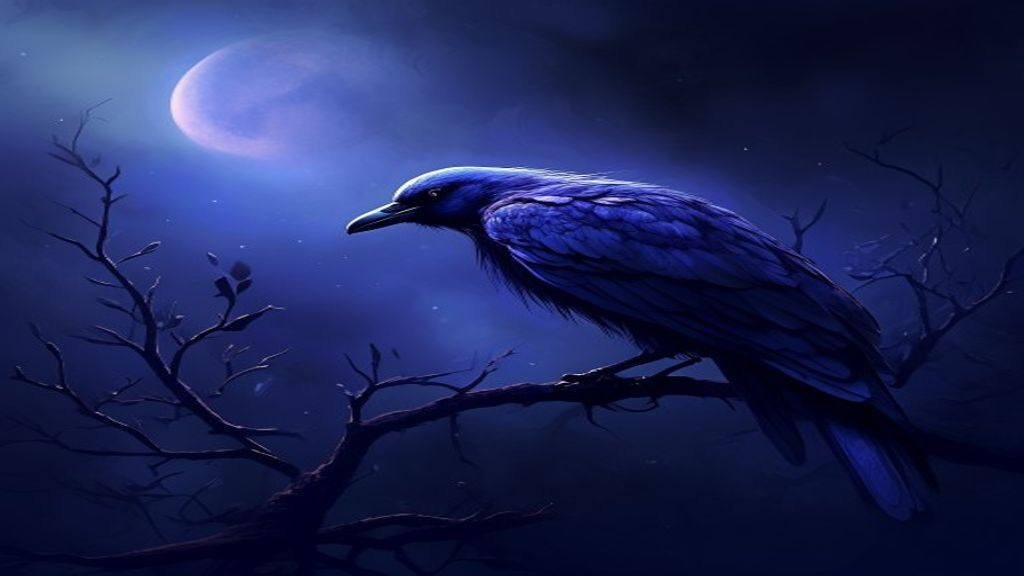
The bird your culture taught you to read as omen. Interestingly, talking crows in dreams are rarely threatening. They tend to be frank, even a little impatient, like a friend who has waited too long to say something.
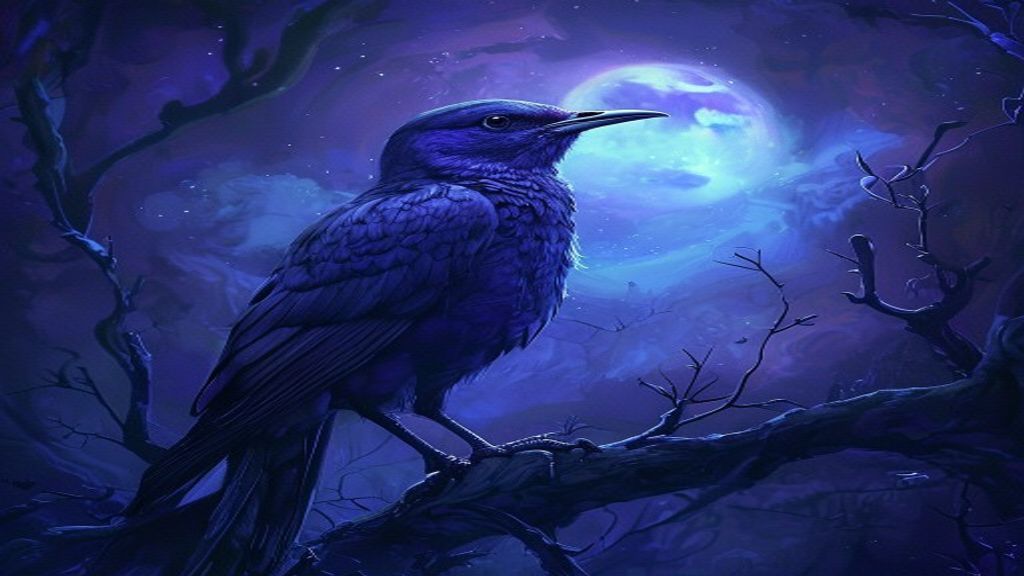
A bird with no species, or a bird that shouldn’t exist, brilliant and strange. This is the dream at its most symbolic: whatever it says comes entirely from you, not from any cultural script about what crows mean or what owls represent.
And the voice matters as much as the species. A bird that speaks in your own voice is doing something different from a bird that speaks in your father’s, or a stranger’s, or in no voice you recognize. Many people find the stranger-voiced bird the most unsettling, which I understand, but I’d argue that one is actually the most honest: it’s purely internal. It hasn’t borrowed anyone’s authority. The same principle works with dreaming of a giant snake: the detail that makes the animal feel alien is usually where the meaning lives.
What history made of this
Birds have been carrying symbolic weight in dreams for about as long as anyone has been writing anything down. Artemidorus, working in the second century, held that the same dream means different things for different dreamers, depending on age, status and occupation. A talking bird is a good test of that: the message belongs to whoever hears it, and the same bird would carry one meaning for a householder and another for a merchant.
I cite Artemidorus here not because second-century dream taxonomy deserves uncritical trust but because the fact that it exists at all says something. People have wanted their dreams explained for a very long time. The need is ancient. The frameworks change.
When the bird says what you needed to hear
A Jungian would call a talking bird a messenger from the unconscious wearing nature’s feathers. That reads as poetry, but there’s a functional version of the same idea. The bird externalizes a voice that is technically yours: it puts into a character, a creature with its own authority and presence, something you’ve been unable to say to yourself in the first person. You can dismiss a thought. It’s much harder to dismiss a bird that looked you in the eye and said your name.
The messages are often uncomfortable in exactly the way truth is uncomfortable: not dramatic, not cryptic, just steady. “You’re tired.” “You miss her.” “That job isn’t it.” The words sound ordinary typed out like that. They don’t feel ordinary at three in the morning with a bird on your shoulder saying them.
Sometimes the bird in these dreams is gentle and sometimes it isn’t. The impatient ones, the birds that repeat themselves, the ones that turn away if you don’t answer, those come to people who have been ignoring a signal for a while. If an earlier run of dreams was about a dog attacking, and now something is speaking instead of threatening, that’s the psyche downshifting from alarm to explanation.
What Revonsuo would say about a bird with a message
Antti Revonsuo’s threat simulation theory is most often applied to nightmares, but I find it useful for talking-bird dreams too, just sideways. Revonsuo argues that dreams rehearse social and physical threats, keeping ancient skills sharp. A bird that speaks and delivers a warning fits that frame neatly enough: the dream is running a simulation of a moment of uncomfortable truth, letting you experience it in a context where you can’t avoid hearing it. The bird makes evasion structurally impossible. It’s right there. It speaks.
I’m not sure that’s the whole story, but it explains why talking-bird dreams tend to stay with people longer than most. The message format triggers something that matters to us: the sensation of being directly addressed.
Back to the small green bird and the voice you almost placed. Suppose the dreamer eventually calls the person it sounded like, a call postponed for months for reasons described as logistical. The conversation is hard and then fine, and midway comes a sentence: “I already knew we needed to talk.” Exactly. That’s the bird.
Other animals speak in dreams too, with the same quality of unignorable attention. Dreaming of a talking dog is speech from something loyal, and dreaming of a talking cat is speech that almost lands. A bird’s speech, by contrast, lands completely.
- Do you remember exactly what it said, or just that it said something? The answer shape is part of the answer.
- Whose voice was it? Even if you’ve told yourself you don’t know, sit quietly with it for a moment.
- Did you answer the bird, or did you listen without responding? What would you have said back?
- Is there something you’ve known for a while that you haven’t said out loud to yourself yet?
Quick answers
What does it mean to dream of a talking bird?
Usually it means your unconscious has something to say that you’ve been sidestepping in your waking hours. The bird externalizes the message, giving it a presence and authority that a stray thought doesn’t have. The specific words matter less than whether you actually heard them and whether they landed.
Why does the bird in my dream sound like someone I know?
Because it’s borrowing a voice that already carries weight with you. The dream is using someone’s vocal authority to make you listen. It doesn’t mean the real person sent the message; it means their voice is the one your mind reached for to make sure you paid attention.
Is a talking bird in a dream a bad omen?
Only if you’re in a tradition that treats birds as omens in the first place. Psychologically, a talking bird is usually a clarifying sign rather than a warning. It tends to arrive when something needs to be heard. Whether that thing is uncomfortable depends on the situation, not on the bird.
What if I can’t remember what the bird said?
That’s actually common and not a failure. The fact that a bird spoke, that a message existed, is sometimes enough. Many people wake from these dreams with a felt sense of what was communicated even without the words. Trust the feeling rather than searching for the transcript.
Sources for this reading
- Revonsuo, A. (2000). The reinterpretation of dreams: An evolutionary hypothesis of the function of dreaming. Behavioral and Brain Sciences, 23(6), 877-901.DOI
- Artemidorus of Daldis (2nd century CE). Oneirocritica. English edition: Harris-McCoy, D. E. (2012). Artemidorus’ Oneirocritica: Text, Translation, and Commentary. Oxford University Press.
Full bibliography on Sources and method. Found a mistake? Tell us and see the corrections log.