- Tradition
- Psychological readingVehicle dreams
- Draws on
- Domhoff
- Reviewed
- 6 min read
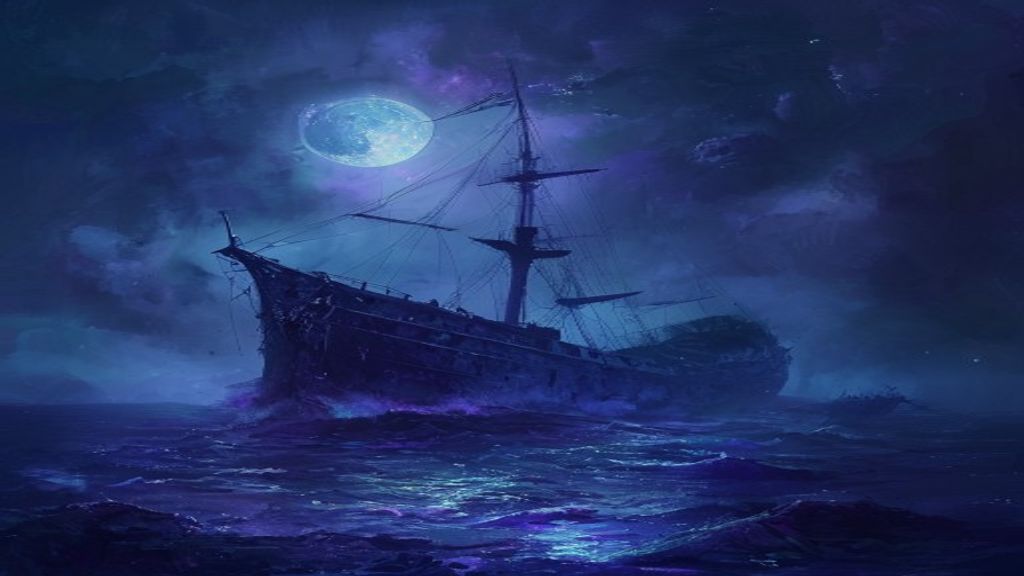
You can hear it before you see it: the irregular thud and give of water against a hull, the kind of chop that makes you grip the railing without quite meaning to. Then the sound changes. This is a vessel you are supposed to be steering, and the grey water has decided otherwise. A shipwreck dream is rarely a forecast. It is a failed crossing, rendered in the detail of the one you were trying to make.
Wrecks have long been read as bad omens, and the symbol does carry weight. What it is probably predicting is nothing. It is reflecting something that has already come apart.
A shipwreck dream almost never predicts disaster. It reflects a journey that’s come apart, a plan that didn’t hold, or a crossing you’re not sure you’ll complete. The ship is yours: what you’re trying to get somewhere. The water is everything outside your control.
What you were trying to cross
Ships in dreams are vessels in the most literal sense: they carry you from where you are to somewhere else. So the first question isn’t about the wreck at all. It’s about the crossing. Where were you going? What in your waking life is currently a transit, a move from one state to another, a thing you started and haven’t finished? A career change. A relationship in its early weeks. A project halfway to wherever it was supposed to land. The ship is that thing. The wreck is what happened to it.
A Jungian reading would say the sea itself deserves as much attention as the vessel, because deep water holds the unconscious, all the material below the line of your awareness. That makes a shipwreck a particular kind of dream: not just a failure but an immersion, the tidy container of your plans going under and the contents scattering into the depths. I find that reading dramatic but not wrong. Plenty of people dream about shipwrecks in the middle of a decision they haven’t admitted to themselves. The ship went down before they’d consciously accepted that it was sinking.
Whether you were on board or watching from shore
This matters more than most people realize, and it changes almost everything about the reading. Being aboard a sinking ship is different from watching one go down from a safe distance, and that difference isn’t just dramatic, it’s structural. If you’re on the ship, you’re inside whatever’s collapsing. If you’re on shore, you might be a witness to it: perhaps someone else’s wreck, or a version of yourself you can see clearly because you’re no longer in it.
The survivor variation, where you get off and watch the ship go down, is the most interesting. It can leave something unexpected on waking: not grief but relief. That’s worth holding. If the ship is an old plan or an old identity, then watching it sink from a safe distance is the dream’s way of saying the escape already happened. The wreck is behind you. You just needed to watch it go.
You’re the one who steers, or was. This version usually visits people who feel responsible for a failing project, relationship, or plan. Not quite guilt, but something heavier: the sense that the rudder was in your hands.
Carried by something you didn’t choose or can’t control. The wreck lands differently when you weren’t steering. Often points to external circumstances, a job lost, a plan someone else made, collapsing around you.
The relieved version. Survival here tends to mean you’ve already survived, or you’re about to. The dream isn’t announcing disaster. It’s processing one that’s either passing or already past.
The observer’s position. This wreck might not be yours, or it might be an old version of you or your plans, far enough away now that you can see the whole shape of it going under.
You arrive and it’s already sunk. Ruins under water, the hull visible on the bottom. This version leans toward things already lost, a relationship, a time, an ambition. The grief is older than the dream.
The water’s the part that does the work
A shipwreck without water would just be a broken boat on land. The water is why the symbol carries weight. What kind of water surrounded the wreck matters. Stormy and violent says something different from eerily calm. Cold grey chop is different from a warm tropical surface. The detail your sleeping mind chose for the water tells you something about how you experience whatever is going wrong: chaotic and overwhelming, or quiet and inexorable, or bright and beautiful and still fatal.
G. William Domhoff’s work on dream continuity would frame this predictably and correctly: the water is probably borrowed from your emotional register. If your waking life feels turbulent, the sea will be turbulent. Dreams don’t usually invent emotional weather. They borrow it. Which is both reassuring and a little unsettling, because it means the storm in the dream is probably real. It’s just wearing a different costume.
What’s already sunk
Ships that haunt dreams don’t always represent present dangers. Sometimes they’re archaeology. Like an old sound that keeps returning in the dark, some dream material is old and patient. A shipwreck can be a way the sleeping mind handles something that went under years ago, a project that failed, a relationship that collapsed, an ambition quietly retired. The dream surfaces it, not to revive it, but because there’s something in your current life that rhymes.
If you’ve been dreaming about missing a flight alongside the shipwreck, or about planes in trouble, the transit theme is probably doing some real work in your life right now. Multiple transport symbols at once tend to mean a crossing you’re genuinely uncertain about completing. That’s useful information, even when it’s uncomfortable to hold.
The recurring wreck
Shipwrecks that come back tend to be doing something persistent. Usually there’s a failure or loss that hasn’t been fully processed, something that went under that you’ve been explaining away rather than grieving. The dream doesn’t need a resolution so much as an acknowledgment. Naming what sank, even just to yourself, tends to change the dream. The ship steadies. The water clears. Dreams are not subtle when they’ve been heard.
The hull-knock from the opening is worth another look, because the sound is comforting, not frightening. Something solid holding against water it wasn’t meant to love. Whether your dream ship is still afloat or already on the bottom, the vessel says something about how you think about the journey. Dreaming of a boat reads that vessel before anything goes wrong, and a sinking boat catches the same event mid-sink, before it becomes a wreck. The wreck just says it didn’t arrive.
- What crossing was I on? Where was the ship supposed to take me?
- Was I steering, or was I a passenger? Did I feel responsible for what happened?
- What was the water like, and does that match how something in my waking life has been feeling?
- Did I survive, and if so, did I feel relieved or bereft?
Quick answers
What does dreaming of a shipwreck mean?
It usually points to a plan, project, or transition that’s failing or has already failed. The ship represents something you were trying to get somewhere. The wreck tells you it didn’t make it, and the water tells you something about the forces involved.
Is dreaming of a shipwreck a bad omen?
Not in the predictive sense. It’s more of a mirror. If something in your waking life is genuinely sinking, the dream tends to say so. But it isn’t conjuring disaster out of nowhere. It’s reflecting a situation you probably already know is in trouble.
What does it mean to survive a shipwreck in a dream?
Often it’s the more hopeful version. Surviving the wreck and watching the ship go down can mean you’ve already escaped the thing that was failing, or you’re in the process of getting clear of it. The relief some people feel on waking is worth taking seriously.
Why do I keep dreaming about ships sinking?
Recurrent shipwreck dreams usually track something in your life that keeps not arriving, or a loss you haven’t fully grieved. Once the underlying situation is resolved or genuinely acknowledged, the dream tends to change or stop.
Sources for this reading
- Domhoff, G. W. (2003). The Scientific Study of Dreams: Neural Networks, Cognitive Development, and Content Analysis. American Psychological Association.
- Domhoff, G. W. (1996). Finding Meaning in Dreams: A Quantitative Approach. Plenum Press.
Full bibliography on Sources and method. Found a mistake? Tell us and see the corrections log.