- Tradition
- Psychological readingSpiritual dreams
- Draws on
- Domhoff, Hartmann
- Reviewed
- 5 min read
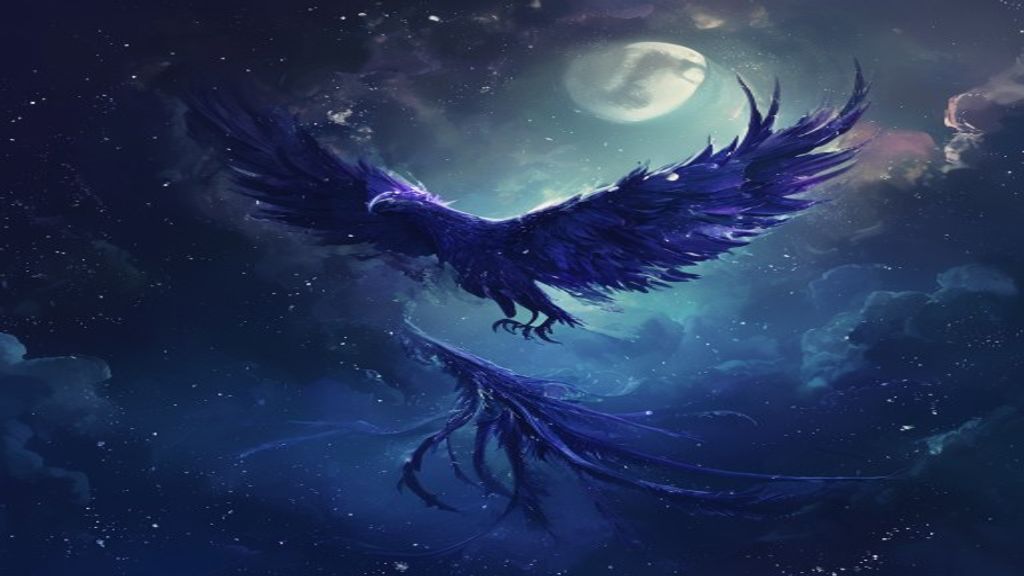
Charcoal in a bowl. That’s the first image: you’re looking at it before the kettle boils on an ordinary Tuesday, and there’s something about the remnant shape, the way the original wood is still perfectly readable in the black brittle form, that makes you think: it didn’t disappear. It just changed state. A phoenix dream works exactly like that. The bird doesn’t escape the fire. It completes it. And your sleeping mind chose this particular image because something in your life is mid-combustion right now, and the dream is trying to tell you about what comes after.
A phoenix in a dream almost always signals transformation through loss rather than despite it. The fire is not the enemy. The thing being burned is something that needed to go. The question isn’t whether you’ll survive. It’s what you’re going to be when the ash cools.
Watching the bowl, watching the bird
Take a period of life that works like a controlled burn: not catastrophe, but a deliberate dismantling. Old habits, a city, a version of yourself that has stopped fitting. And in the middle of it, two or three dreams with fire that isn’t menacing. Just present. Hot and quiet and doing its work. You might not call them phoenix dreams at the time. But looking back, the structure is there: the flame, the sense of something watching from inside it, the knowledge that the dreaming self isn’t afraid.
That quality of fearlessness matters. A phoenix dream where you’re terrified of the fire is a different animal, closer to what dreaming of a house on fire reads: what burns there is rarely random, and the fear is part of the message. But when the fire in the dream feels purposeful, even when it’s consuming something you loved, the phoenix reading holds.
Which version found you
The myth is older than you think
Older dream traditions tended to read fire from a divine or supernatural source as either great suffering leading to great honor, or purification through ordeal. It’s worth noting how different that is from our modern instinct to read fire as purely destructive. In that logic, the fire was often the best news in a dream, provided you came out on the other side of it. A phoenix isn’t required for the underlying idea: something had to burn first.
Ernest Hartmann spent years tracking how intense emotional experiences find their way into dream imagery, and his central idea, that a dominant emotion tends to crystallize into a single central image, is probably the most useful frame for a phoenix dream. If you’ve been carrying grief, transition, or the specific exhaustion of something in your life that’s ending but hasn’t quite ended, the sleeping mind looks for an image that holds all of that at once. A bird made of fire that dies and lives again is an almost structurally perfect container for that feeling. The myth exists because the image is exactly right.
What Domhoff would say
He’d probably say: look at the last six months. Domhoff’s continuity hypothesis doesn’t leave much room for the mythological grandeur of a phoenix, and I find that useful as a corrective. The dreaming mind reached for this symbol because your waking life handed it something that needed a symbol this large. So what’s been burning? A career, a relationship, a belief system, a city, a version of yourself you’d held since your twenties? The phoenix isn’t decorative. It’s the dream scaling the image to fit the event. If the fire itself is what you remember, dreaming of fire separates the controlled flame from the one out of control, and the thing that needed to go from the thing you valued.
And if the dream felt like something entirely other, something visiting rather than something rising from inside you, dreaming of your soul looks at the encounter with the you beneath. There’s a meaningful difference between dreaming of a symbol of transformation and dreaming of an encounter with something that feels genuinely outside the self. The two can overlap.
After the ash
It’s hard to say what comes out of a controlled burn. Or rather, you will know what you became, but you couldn’t have described it from inside the process. That’s the uncomfortable truth about transformation-in-progress: you can’t see the bird while you’re still the fire. The dream can. That’s why it shows you the myth instead of the mess.
The charcoal in the bowl still holds the shape of the wood. The phoenix still holds the shape of the bird. Whatever you’re losing right now, the shape of you is in there. That may be what the dream is saying. It isn’t an easy thing to believe from inside the burn.
- Was I watching the phoenix, inside the fire, or something else entirely? The position tells you where you are in the process.
- Did the fire feel destructive or purposeful? Fear versus awe changes the reading completely.
- What in my life right now is mid-combustion, ending but not quite done?
- What do I suspect will be different on the other side, if I’m honest about it?
Quick answers
What does dreaming of a phoenix mean?
It usually signals transformation through loss rather than despite it. Something in your life is ending or has ended, and the dream is showing you that the ending is part of a larger process. The phoenix doesn’t avoid the fire. It needs it.
Is a phoenix dream a good omen?
Most traditions would say yes, eventually. The dream tends to appear during hard transitions, not after them. It’s not a reassurance that things are fine. It’s a signal that the difficulty has a direction. That’s different, and sometimes more useful.
What does it mean if I was the phoenix in my dream?
Then you’re not watching the transformation. You’re it. This version often appears when someone is in the middle of a major identity shift: a loss, a reinvention, a departure from who they used to be. The myth lives inside you in the dream, which means the process is already underway.
Why do I keep dreaming of fire and birds?
Recurring fire dreams with a bird presence often mean that something transformative hasn’t been fully processed or acknowledged yet. The dream keeps returning to the image because your waking self hasn’t quite allowed the ending to be real. Naming what’s actually burning tends to help.
Sources for this reading
- Domhoff, G. W. (2003). The Scientific Study of Dreams: Neural Networks, Cognitive Development, and Content Analysis. American Psychological Association.
- Domhoff, G. W. (1996). Finding Meaning in Dreams: A Quantitative Approach. Plenum Press.
- Hartmann, E. (1998). Dreams and Nightmares: The New Theory on the Origin and Meaning of Dreams. Plenum Trade.
Full bibliography on Sources and method. Found a mistake? Tell us and see the corrections log.