- Tradition
- Psychological readingSpiritual dreams
- Also read in
- The BibleSame symbol, other tradition
- Draws on
- Domhoff, Hartmann, Artemidorus
- Reviewed
- 5 min read
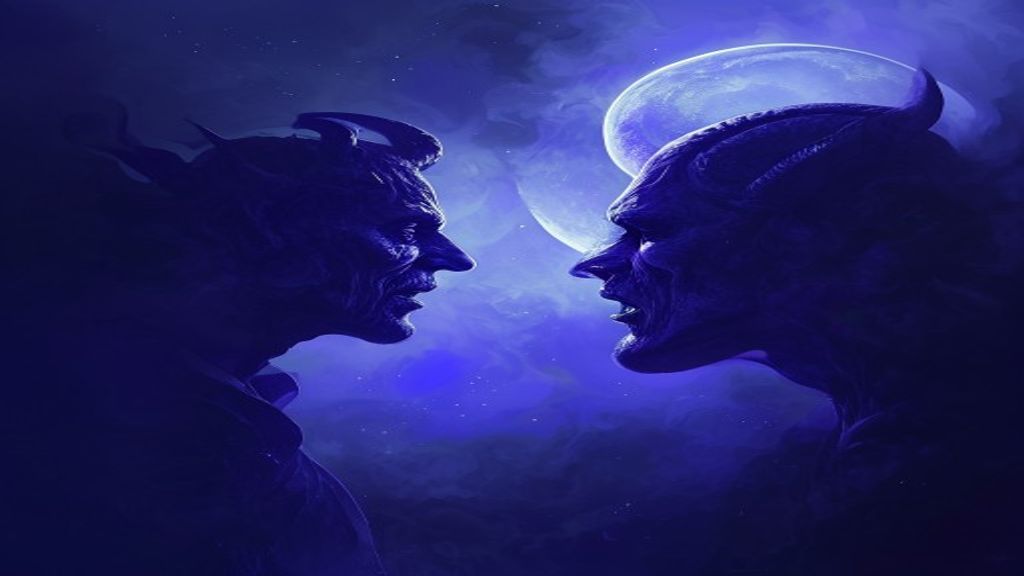
You are held still in the dark and something is speaking to you. It isn’t a roar. The voice is calm, close, almost reasonable, and it sounds uncomfortably like someone you know, calm and disappointed. There are no horns in this version, no fire, no dramatic entrance. There is only the voice, and it is saying something you recognize.
That’s the anchor for this whole symbol: the voice. The demon almost always speaks, and what it says is never random.
A demon speaking in a dream is almost always a projected emotion: rage, shame, self-contempt, or a fear that’s been refused daylight long enough that it built itself a body and learned to talk. The content of what it says matters more than anything else in the dream.
The voice you didn’t want to hear
Here’s the pattern. The demon that speaks is almost always delivering a message you already know. That’s the part people find unsettling when they slow down to actually listen. It says you’re wasting your life. It says no one needs you. It says you’re a fraud. Not ancient evil. Just the thought you’ve been batting away at 2am.
Ernest Hartmann spent a long time arguing that intense dream images, especially frightening ones, crystallize the dreamer’s dominant emotion into a central character. The demon isn’t invading from outside your psyche. It’s the shape your mind gave to something already living there. That framing shouldn’t make the dream less interesting. It makes it more interesting, because suddenly you’re asking which emotion was large enough to need that kind of body.
The message varies by the dream, but it almost never varies wildly from what the dreamer already suspects about themselves. That’s the part worth sitting with. If you dreamed of a demon telling you something you found plausible, even in the strange logic of the dream, that’s the thread to pull.
The demon speaks and you listen
You’re held still, engaged, almost in conversation. This is often a dream about something you’ve been avoiding examining. The demon isn’t threatening you; it’s holding court. It can follow weeks of busyness that covered something over. The voice gets louder the longer you ignore it.
The demon speaks and you run
You hear the voice and immediately flee, or the dream becomes a chase. This version is more about dread than message. You already know what it might say. The running is the avoidance made visible. In this version the words are often lost, which is its own kind of information.
What it said, and whether you believed it
This is the section most dream guides skip, and I think it’s the only one that actually matters. Did you believe what the demon said? Inside the dream logic, did it land as true?
If it did, you’re almost certainly dealing with internalized criticism that’s found a more dramatic vehicle than it usually travels in. The demon is shame in a Halloween costume. It’s wearing a better outfit than the quiet self-doubt you scroll past at midnight, but it’s the same resident.
If you stood your ground, argued back, refused, that’s its own reading entirely. Dreams where you confront the demon and don’t buckle tend to follow moments in waking life where you’ve begun pushing back against something that had too much authority over you. The dream seems to be rehearsing the argument you’re building.
G. William Domhoff might call an interest in the specific words the demon used overly romantic, but his own continuity hypothesis supports exactly this: dream content mirrors waking concerns, fears, and unresolved conflicts with almost boring reliability. The demon isn’t an exception to that. It’s just a more vivid instance.
The Artemidorus problem
Artemidorus wrote in the second century that the same dream means different things for different dreamers, depending on age, status and occupation. That is the right instinct for a demon: a frightening figure means one thing for someone with real enemies and another for someone whose enemy is a critical inner voice. The external enemy and the internal critic are the same threat wearing different period costumes.
If the demon looked like someone
This is the version that requires the most care to read, because it’s the least about the demon and most about the person whose face it borrowed. A demon wearing your father’s face is a dream about your relationship with your father’s voice inside you. The supernatural packaging is almost irrelevant. You’re not processing the occult. You’re processing authority, expectation, or old damage.
Same logic applies if the demon looked like you. That one tends to shake people when they wake, and I understand why. A demon that is you is the shadow argument, the version of yourself doing the things you won’t let yourself do or acknowledge wanting. It’s not evil. It’s just the parts you’ve locked in the basement. They’ve been practicing a speech.
If you’re navigating other dark presences in your dreams, in dreaming of demonic possession the boundary between self and threatening force collapses entirely, which is a different kind of crisis than being spoken to. And if the demonic visit came with a sense that everything was ending, dreaming of the apocalypse speaks to that larger dread.
What to do with the voice
Write down what it said. Immediately, before you talk yourself out of it. Even if it sounds melodramatic on paper. Especially then. The worst of these dreams have a habit of softening within an hour into something vaguer and more manageable, and the specific language is where the meaning lives.
Then ask whether you believe it. Not whether it’s true. Whether you believe it. Those are different questions, and the gap between them is where most of the work is.
A run of these dreams, lasting weeks or even months, may fade after a single honest conversation with a therapist, a friend, or sometimes just yourself in a journal. The voice didn’t need to be obeyed. It needed to be heard. That’s a frustrating conclusion for anyone who wanted the demon to mean something older and stranger. But it isn’t less remarkable for that.
- What exactly did the demon say, and do I believe it?
- Was the voice familiar, and whose critical authority does it carry?
- Did I listen, argue, or run, and what does my response tell me about how I’m handling this in waking life?
- Which feeling was bigger: fear of the demon, or recognition of what it said?
One symbol, two traditions
The two schools are not reading the same book: psychology asks what demon speaking to you is doing in your waking life, while the biblical tradition tests the image against Scripture and leaves the meaning with God.
A demon speaking in a dream is almost always a projected emotion: rage, shame, self-contempt, or a fear that’s been refused daylight long enough that it built itself a body and learned to talk. The content of what it says matters…
You are reading this oneJoel 2:28 affirms that God can speak through dreams, and the tradition takes that seriously. But Ecclesiastes 5:7 and Jeremiah 23:25-28 both caution against treating any dream-voice as automatically authoritative. The biblical…
Read the biblical meaning →Quick answers
What does it mean to dream of a demon speaking to you?
It usually means an internal emotional force, shame, rage, fear, a deep self-criticism, has found a dramatic body in your dream. The demon is almost always projecting something you already sense about your situation. The content of what it says is more diagnostic than the demon itself.
Is dreaming of a demon speaking a bad omen?
In most psychological readings, no. It’s not a supernatural warning. It’s a sign that something in your emotional interior has been unacknowledged long enough to demand a more dramatic format. That can actually be useful, if uncomfortable.
Why does the demon in my dream speak in someone I know’s voice?
Because the dream is about your relationship with that person’s authority over you, specifically the internal version of their judgment you carry around. The borrowed face is telling you where to look.
What if I couldn’t understand what the demon was saying?
That version often means you’re still not ready to hear it, or the emotion hasn’t crystallized clearly enough yet. The muffled message tends to precede dreams where the voice becomes clear, usually when the underlying fear or conflict has sharpened in waking life.
Sources for this reading
- Domhoff, G. W. (2003). The Scientific Study of Dreams: Neural Networks, Cognitive Development, and Content Analysis. American Psychological Association.
- Domhoff, G. W. (1996). Finding Meaning in Dreams: A Quantitative Approach. Plenum Press.
- Hartmann, E. (1998). Dreams and Nightmares: The New Theory on the Origin and Meaning of Dreams. Plenum Trade.
- Artemidorus of Daldis (2nd century CE). Oneirocritica. English edition: Harris-McCoy, D. E. (2012). Artemidorus’ Oneirocritica: Text, Translation, and Commentary. Oxford University Press.
Full bibliography on Sources and method. Found a mistake? Tell us and see the corrections log.