Nature Dreams
Dreaming of a Jungle: Wildness, Overwhelm, and What's Growing Unchecked
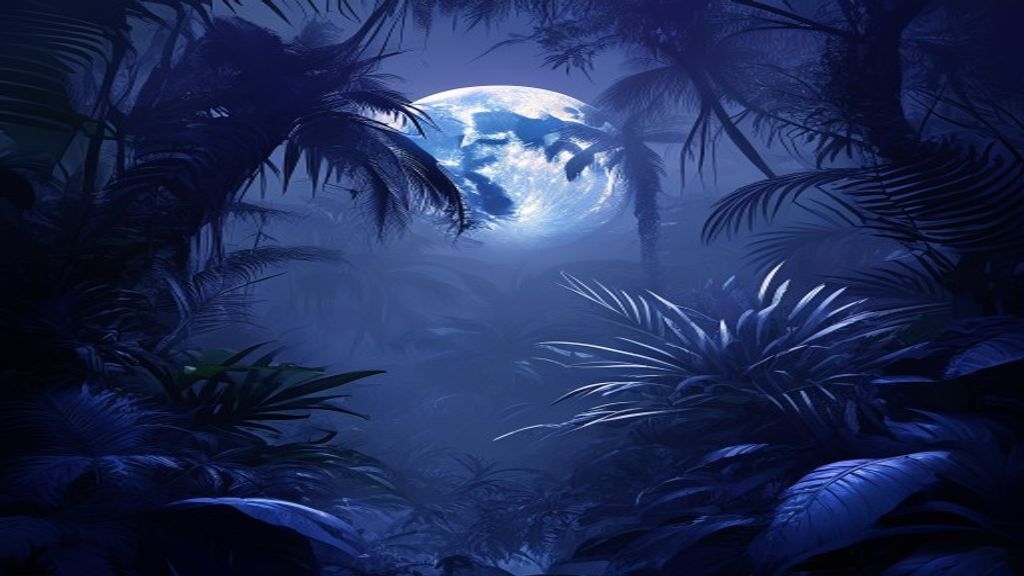
“I couldn’t tell where the path was, and the weird thing is I wasn’t scared, I was just completely overwhelmed.” That’s how a colleague described her jungle dream, standing in a doorway with a coffee mug, entirely matter-of-fact about it. Not scared. Overwhelmed. I’ve heard that distinction so many times since that I’ve stopped treating it as unusual. The jungle dream isn’t usually a nightmare. It’s more like standing inside a machine that’s running too fast, with too much happening in too many directions, and no obvious panel to turn it off.
What the jungle actually is
Strip away the cinematic associations for a moment, the expeditions and danger and adventure, and what you have is a place where growth has outpaced any organizing principle. Things grow over other things. The canopy blocks the light. Navigation is genuinely difficult because there are no clear lines of sight. This is the dream image for a mind, or a life, where something has been proliferating without restraint.
That something might be thoughts. It might be obligations. It might be a project that started small and is now consuming everything around it. It might be emotion, specifically the kind that feels productive in small doses and suffocating at scale. The jungle doesn’t distinguish between these. It just shows you the condition of ungoverned growth and lets you feel your way through it.
The comparison with neighboring symbols is useful here. Dreaming of fog is disorientation without density: you can’t see, but there’s no weight to it. The jungle is disorientation with density: you can’t see because there’s too much in the way. Same navigational problem, completely different quality of cause.
How this symbol has traveled through time
- Second century
Artemidorus catalogued wilderness landscapes as emblems of chaos and unmet difficulty. Dense vegetation in a dream generally read as obstacles to the dreamer’s plans or tangled personal affairs, not supernatural threat, but the practical weight of things that are harder than expected.
- 19th century
Western dream interpretation inherited the wilderness as a zone of the primitive and the repressed. The jungle specifically became loaded with colonial projection in ways that are worth naming: it was cast as the place of irrationality, of instinct, of what civilization was supposed to suppress. That framing has shaped interpretation in ways we’re still sorting out.
- Early 20th century
Jung’s engagement with the shadow, the unacknowledged parts of the psyche, gave the jungle a more specific psychological address. Dense, dark, ungoverned growth maps cleanly onto aspects of the self that have been let run without attention. The jungle isn’t the enemy; it’s the unintegrated. I think this is the most useful reading in the tradition.
- Contemporary dream research
Domhoff’s continuity hypothesis lands squarely here: jungle dreams cluster around periods of genuine overwhelm in waking life, multiple simultaneous pressures, a sense that things are growing faster than the dreamer can manage. The image tracks the condition with unusual fidelity. Nothing mystical. Just accurate.
Not scared. Overwhelmed.
That distinction my colleague drew is the one I keep returning to. Fear in a dream has a target: something is threatening you and you know what it is, even if only vaguely. Overwhelm doesn’t have a target. Everything is the target. The jungle as overwhelm is a dream about abundance that’s turned against itself, growth that’s lost its organizing principle.
And that’s a surprisingly specific message, once you sit with it. It’s not warning you about a predator or a threat. It’s showing you a system that has outgrown its structure. The question it leaves is: what in your life is currently doing that?
Animals in the jungle
A jungle with no animals feels different from a jungle full of sound. The pure density with no life visible can feel more claustrophobic, because you’re alone in it. When animals appear, they tend to carry their own message, but they’re also doing something structural: they’re making the wilderness legible. A predator gives you something to relate to as a threat. A guide animal gives you direction. Even a creature that unsettles you is more navigable than featureless undergrowth, and the dream that sends an animal into the jungle is often making the same point.
Jung was particularly interested in what he called the shadow in these dense, ungoverned landscapes, the parts of the self that aren’t integrated into the conscious personality. Not evil, necessarily. Just unacknowledged. The jungle is where the shadow tends to live in people’s dream lives, and the animals that appear in it are often its emissaries. I’m not sure I’d take that reading literally, but as a way of asking what aspects of yourself you’ve been unwilling to examine, it points somewhere real.
What to do with a path that’s disappeared
The path that’s overgrown, hard to find, gone entirely: this is almost its own sub-category of jungle dream, and it tends to arrive during genuine life transitions when the previous route is genuinely no longer available. Not wrong turns. Just paths that closed. Sometimes the jungle dream isn’t about overwhelm at all; it’s about the specific disorientation of not knowing which way is forward, and the work of finding a new line through dense terrain.
If your jungle dream had a clearing in it, that’s the opposite image inside the same landscape: the jungle showing you what’s possible rather than what’s closing in. Read that with the piece on dreaming of a thunderstorm, because a clearing after intensity is often what that dream is building toward, and the two frequently travel together.
My colleague never did figure out what her jungle was about, at least not as a clean interpretation. She said it faded within a week, right around the time a particular work situation resolved itself. She didn’t connect the two until months later. That timing, she said, was the strange part. I didn’t find it strange at all.
- Was the feeling overwhelming or frightening? The difference points in different directions.
- What in my waking life has been growing without an organizing principle?
- Did anything appear in the jungle that gave me a direction or a point of focus?
- Was I trying to find a path, or had I stopped looking for one?
Quick answers
What does dreaming of a jungle mean?
A jungle typically represents a situation or inner state where growth has outpaced any organizing principle: too many obligations, thoughts, or pressures expanding without structure. The feeling matters more than the details. Overwhelm rather than fear is the most common quality.
Is a jungle dream a bad sign?
Not necessarily. It’s an accurate one. Jungle dreams tend to mirror periods of genuine complexity or overwhelm in waking life. They’re not warning about something coming; they’re usually describing what’s already happening. That’s uncomfortable but useful.
What does it mean when there are animals in a jungle dream?
Animals give the jungle a legible point of focus. A predator gives you something specific to navigate; a guide animal gives you direction. Jung read jungle animals as aspects of the unintegrated self. Even an unsettling animal is more navigable than featureless undergrowth.
Why do I keep dreaming about being lost in a jungle?
Recurring jungle dreams usually track ongoing overwhelm or a genuine absence of clear direction in waking life. The path disappearing repeatedly is the mind flagging that you haven’t found the new route yet. The dream tends to ease when the real-world tangle starts to loosen.