Nature Dreams
Dreaming of a Flood: what rises when the banks give way
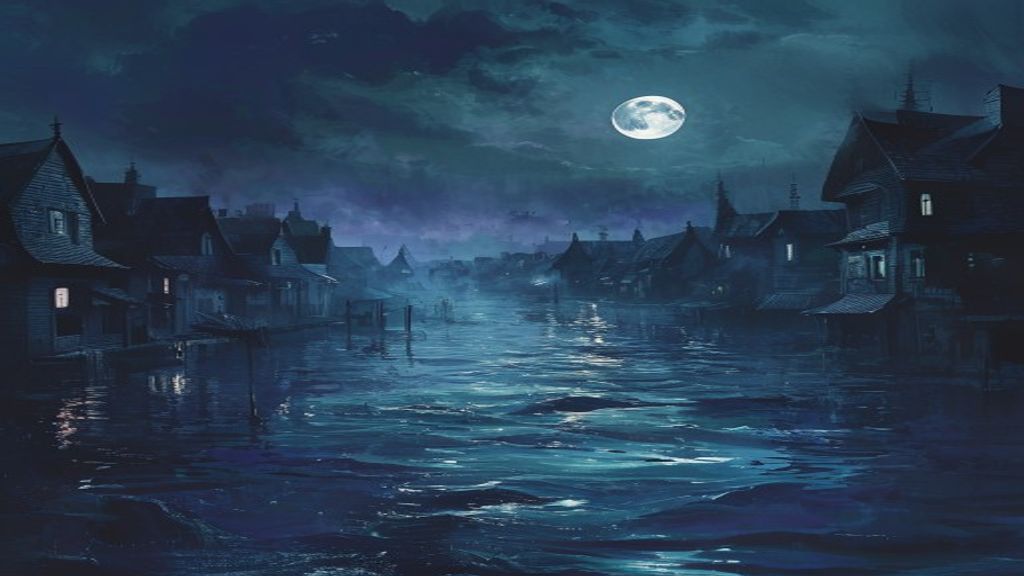
“I woke up and my feet were wet.” That’s what a colleague said the morning after her flood dream, and she meant it as a joke. But she’d been standing at the edge of the rising water, watching it come, and she’d known in the dream that she’d built her house in the wrong place. She wasn’t laughing by the time she finished telling it.
The flood dream has that quality. It starts as spectacle and turns into something more personal before you’ve finished describing it. The water isn’t really water. You know that when you wake up. What you don’t always know is what it actually is.
A flood in a dream almost always signals an overwhelming of some boundary you’d maintained. Emotion, obligation, change, something you’d been managing just fine is no longer staying where you put it. The question is whether you’re fighting the water or letting it take you somewhere new.
What’s been contained and what just broke
Water in dreams has been read as emotion for so long across so many different traditions that I’m almost reluctant to say it again. But it keeps being true. Whatever you’ve been holding at a manageable level, keeping behind the right walls, keeping in the right channels, a flood dream tends to arrive when that’s no longer working.
It doesn’t have to be grief or distress. It can be love, or creative energy, or the sheer accumulation of small pressures that haven’t been released. The flood isn’t named in the dream. It doesn’t arrive wearing a label. You have to feel backward into your waking life and identify what’s been pressing against the banks.
G. William Domhoff’s continuity research would predict that flood dreams cluster around periods of genuine overwhelm, and in my experience that’s exactly right. They don’t forecast floods in the literal world. They record floods in the psychological one. If you’ve been managing something that’s quietly gotten unmanageable, the dream tends to be quite punctual about that.
How to read the flood you had
- Find the water’s sourceBefore you try to interpret the flood, ask where it came from. A flood rising from inside a building, through floors and walls, points toward internal pressure: something generated from within you. A flood coming in from outside, over barriers, through windows, tends to reflect external circumstances that have breached a boundary you’d built.
- Notice whether you ran or stood stillRunning from flood water in a dream usually reflects active avoidance of something overwhelming. Standing in it, watching it rise around you without panic, often reflects a different relationship: you know the water’s there and you’re not fighting it. Neither is better. Both are accurate.
- Check the color and qualityClear water flooding is different from dark water. Clear tends to reflect emotions that are intense but not toxic, something you might actually be able to work with once it settles. Dark or murky flood water often points toward accumulated things you haven’t wanted to look at. The texture of the overwhelm tells you something about its nature.
- Ask who else was in the dreamFlood dreams are often populated, or pointedly empty. If specific people were there, the water probably concerns your relationship with them or your shared situation. If you were entirely alone in the flood, the overwhelm is likely something you haven’t shared with anyone yet.
- Look for what was already underwaterSometimes the flood dream shows you what was submerged before the water rose: a street, a room, a whole neighborhood already gone. That detail tends to indicate that this particular overwhelming has been building for longer than the dream’s arrival suggests.
If you also dream of a thunderstorm, the two often travel together as a system: the storm is the pressure building, the flood is what happens when the pressure has nowhere else to go.
What the ancients made of rising water
Artemidorus, in the Oneirocritica, had a fairly practical approach to flood dreams: he read them in relation to the dreamer’s current circumstances, particularly whether they were in a stable period or a transitional one. Floods in stable periods were warnings of disruption. Floods in already-disrupted periods were more ambiguous, sometimes indicating that the disruption would reach its limit and recede. He was more interested in context than symbol, which strikes me as the right instinct even two thousand years later.
The Chester Beatty papyrus, among the oldest surviving dream texts at roughly 1200 BC, included water dreams among the most significant, associating rising water with abundance in some interpretations and with disruption in others. The water itself doesn’t decide. The dreamer’s situation does.
Jung read floods as a manifestation of unconscious content breaking into consciousness, the interior reservoir overflowing the careful structures we build to keep it contained. That’s the reading I find hardest to argue with on this particular symbol. Whatever you’ve been keeping back, the flood dream says it’s moved.
When being swept away is the dream’s actual gift
Not every flood dream is a warning. Some of them are releases. The dream where the water rises and you stop fighting it, where you let the current take you and wake up feeling lighter rather than frightened: that version I’ve heard described as one of the more transformative dreams people have. The flood wasn’t the disaster. The flood was the end of a dam that had been doing damage.
Something about this relates to what it means to dream of a flower: both can signal that something suppressed has finally found a way to grow. One’s gentle, one’s violent. Same underlying motion.
My colleague’s wet feet
She’d built her house in the wrong place. That was the detail that sat with both of us. Not the water itself, not the rising, but the dawning knowledge in the dream that the site had always been wrong and she’d only just understood it.
If you dreamed that quality too, where the flood revealed not just water but a structural problem you’d been overlooking, I’d take that seriously. The flood’s the symptom. The wrong location is the thing worth looking at. Dreams of fog sometimes precede the flood dream in the same week, as if the mind spends a few nights making things unclear before it decides to wash them out entirely.
She figured out what it was about two days later. She didn’t tell me what. But she stopped joking about her wet feet.
- Did the flood come from inside or outside? Internal pressure or external circumstance?
- Was I running, watching, or letting the water take me?
- What was the water’s quality, and what was already submerged before I arrived?
- What have I been containing that’s been pressing harder lately?
One symbol, two traditions
Psychology keeps flood inside your own story, a symbol your mind built from your days. The biblical tradition looks outward instead, and asks whether Scripture gives the image any voice at all.
Flood dreams are rarely about water. They're about what's been held back for too long and what happens when it finally moves. Here's how to read yours.
You are reading this oneWhat the Bible actually says about floods in dreams, from Noah to the Psalms, and where Scripture is silent. KJV references, honest discernment, no invented meanings.
Read the full biblical meaning →Quick answers
What does dreaming of a flood mean?
A flood in a dream almost always reflects an overwhelming of some boundary you’d been maintaining. Emotion, obligation, accumulated pressure, something has found its way past the management structures you built. Whether that’s frightening or relieving in the dream tends to reflect your actual relationship to what’s overflowing.
Is a flood dream a bad sign?
Not necessarily. Artemidorus read flood dreams in context rather than as inherently negative, and his instinct was right: a flood in a stable period is more alarming than a flood in one that was already in motion. Some flood dreams are releases, the end of something contained too long, and people wake from them feeling lighter.
What does dark or murky flood water mean?
Dark water tends to indicate that what’s overflowing has a quality you haven’t wanted to examine closely. It’s not necessarily more serious than clear water, but it’s probably older, stuff that’s been accumulated rather than something that arrived recently.
Why do I keep having flood dreams?
Recurrent flood dreams usually mean the underlying pressure hasn’t been addressed or acknowledged yet. Domhoff’s research would predict that the dreams continue as long as the waking-life overwhelm does. Naming what’s been pressing against the banks, even just to yourself, tends to affect the frequency.