- Tradition
- Psychological readingAnimal dreams
- Also read in
- The BibleSame symbol, other tradition
- Draws on
- Revonsuo, Jung, Artemidorus
- Reviewed
- 6 min read
Bad luck is the verdict a black cat dream collects first: an omen, a warning, something about to go wrong. The verdict fails because it borrows its authority from the folklore about black cats in waking life and ignores everything the dream actually shows. A dream cat is not a road-crossing superstition. What counts is what the cat does and how you react to it.
Still, a black cat reaches past your rational understanding and touches something older than your opinions about it. That quality doesn’t disappear in dreams. It might intensify. The black cat that crosses your sleeping mind doesn’t care that you consider yourself well past folk superstition. It still lands.
A black cat in a dream most often represents instinct, shadow self, or something just beyond your current understanding. The superstition reading, luck or misfortune, rarely holds up under examination. What matters most is the cat’s behavior and your own reaction in the dream.
How we loaded the black cat with so much history
- 2nd century CE
Artemidorus of Daldis argued that the same dream means different things for different dreamers, so a dream animal was read against the dreamer’s life, not by a fixed verdict. No unified negative reading for the cat yet.
- Medieval Europe
Black cats become associated with witchcraft and the devil. The association is cultural panic made manifest in symbol, not universal dream wisdom.
- Ancient Egypt
Cats were sacred, associated with Bastet and with protection. The dread attached to black cats is not an ancient universal.
- Japanese tradition
The maneki-neko, or beckoning cat, is strongly associated with good fortune, and black versions exist. The negative reading is largely a European one.
- Behavior-first readings
Many dream traditions read an animal by what it does, whether it is aggressive, docile, or mysterious, rather than by its color. A more practical approach.
- Modern psychology
The black cat as shadow symbol, something pushed to the margins of consciousness, gains traction through Jungian analysis. The focus shifts from omen to inner life.
The history matters because it explains the noise you have to cut through when you try to interpret a black cat dream. Centuries of panic-driven folklore have piled up around this creature in particular. The negative associations grew out of specific historical anxieties, witchcraft panics among them, and out of the habit of turning natural things into moral allegory. That’s not dream wisdom. That’s history.
Jung and the shadow that looks back at you
Jung’s concept of the shadow, the parts of the self we’ve suppressed, repressed, or refused to acknowledge, lends itself unusually well to the black cat dream. The cat’s blackness makes it nearly invisible in certain light. You catch it at the edge of vision. It’s there and then it isn’t. That’s precisely what shadow material feels like: you know it’s there, you can almost see it, and then it slips back into peripheral darkness when you look directly at it.
I think this reading is legitimate, and I’m usually wary of how easily Jungian shadow theory gets applied to anything dark in a dream as a kind of catch-all. But the black cat has a behavioral quality that genuinely matches: it moves along edges, it appears when you’re not watching for it, and it disappears on its own terms. Your shadow self has exactly those manners.
The instinctual reading works alongside this. Cats are often read as representing intuition, the part of intelligence that doesn’t operate through linear reasoning. A black cat specifically adds the quality of hidden knowledge, the knowing that doesn’t announce itself. If you’ve been ignoring your gut about something, the black cat might be its emissary.
What the cat was doing matters more than its color
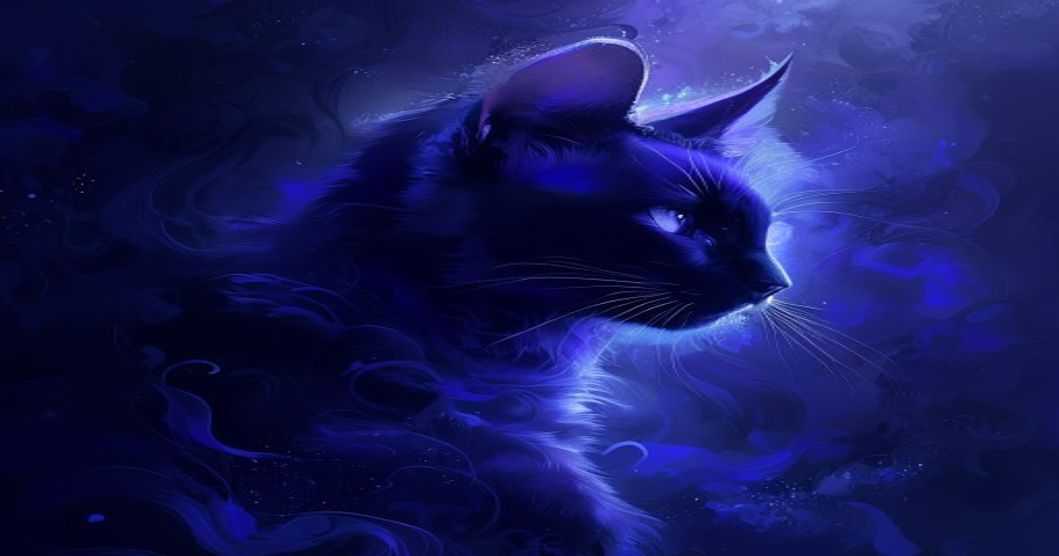
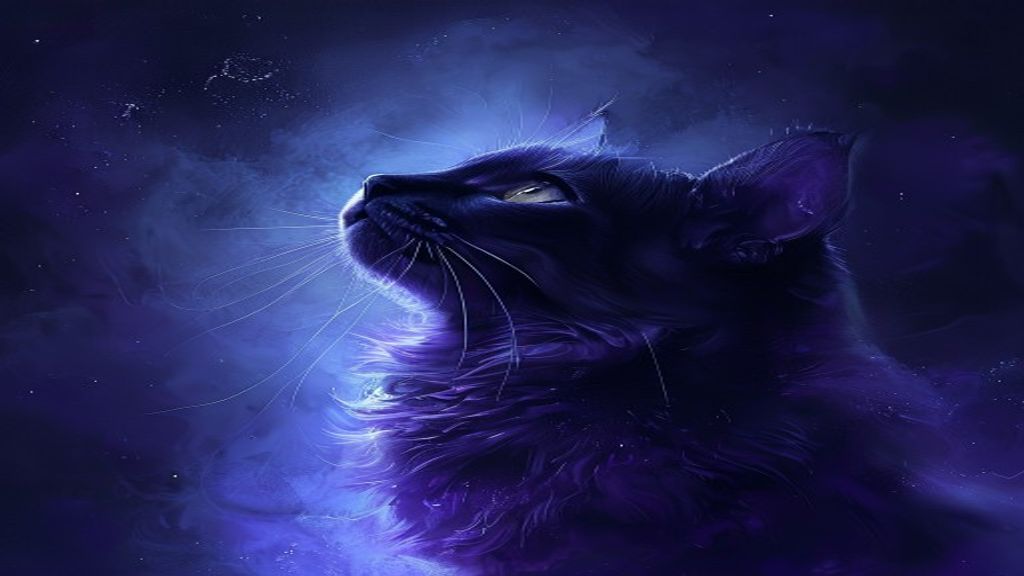
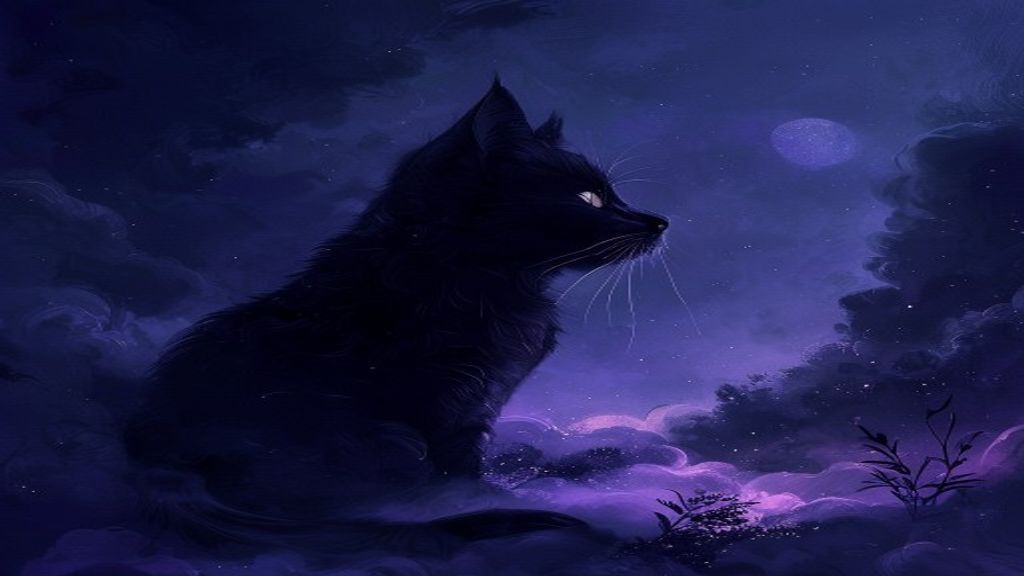
Context decides, which is Artemidorus’s old point in another form: the behavior is the message, not the species or color. A black cat crossing your path in a dream (as in waking life, apparently) triggers entirely different associations than a black cat curled asleep in your lap, or a black cat that won’t stop following you, or a black cat at a window you can’t open.
The following version gets to people. A black cat that won’t stop appearing, room to room, unasked for, not threatening but consistent, is usually pointing to something that has been persistent in your inner life and won’t be redirected. You’ve tried changing the subject on it. It’s still there. The dream is noting that.
Revonsuo’s threat simulation theory helps clarify the fear response you might have had in the dream. The cat activates low-level predator scripts in the nervous system, and darkness compounds this. If you woke from the dream scared, that’s the ancient hardware running. But once you’ve noted it, look at whether the cat was actually threatening you, or just present. Almost always, it’s just present.
The question underneath is whether you have domesticated this instinctual energy or it is still doing what it wants, which is also the question in the tamed wild animal dream. A black cat in your dream that feels completely comfortable in your house is a very different message than one that feels like it shouldn’t be there.
The superstition you feel in your body
It is rarely the cat that unsettles you. It is what the cat has been taught to mean. A black cat is one of those symbols that arrives pre-loaded with cultural freight you didn’t choose to carry, and that’s worth noticing in the dream context too. The unease on waking from a black cat dream is usually disproportionate to anything the cat actually did. Nothing happened. It was just a black cat. And somehow that’s enough.
That disproportionality is itself information. You’re not afraid of the dream. You’re afraid of what you suspect the dream is pointing toward. The cat is just the arrow.
If the black cat dream keeps recurring, the spider spinning its web is another creature that works unseen: a web gets built slowly, in a dark corner you aren’t watching closely enough. And the earthworm dream is about what runs underground, beneath your visible life, much as the cat moves along the edges of it.
The reflex that outlasts the belief
You can know exactly where the black cat superstition comes from, what anxieties manufactured it, and why it doesn’t hold water. And on the right kind of gray afternoon, a black cat crossing in front of you can still set off the old reflex: the slight intake of breath, a pause.
There is nothing embarrassing in that. The body remembers things the intellect decided to discard. The reflex is worth honoring, not because the cat is a bad omen, but because the hesitation is genuine. Something in you knows that particular animal carries symbolic weight that education hasn’t fully neutralized. That knowing isn’t stupid. It’s old.
- Was the cat crossing my path, following me, or already at home with me? Each posture means something different.
- Did I feel the superstition reflex in the dream, and was it proportionate to what the cat actually did?
- What have I been refusing to look at directly lately, the thing I keep catching at the edge of my vision?
- Is there a part of my instinctual self that I’ve been trying to keep in the margins?
One symbol, two traditions
A psychologist asks what black cat felt like and what it echoes in your week. The biblical reader asks a different question entirely: what does Scripture say when this image appears, and what does it stay silent about?
A black cat in a dream most often represents instinct, shadow self, or something just beyond your current understanding. The superstition reading, luck or misfortune, rarely holds up under examination. What matters most is the…
You are reading this oneThe Bible is silent on black cats specifically. What it says about darkness as a spiritual concept is extensive and nuanced: darkness is sometimes threatening, sometimes simply the absence of light, and sometimes the very place…
Read the biblical meaning →Quick answers
What does it mean to dream of a black cat?
A black cat in a dream most commonly points to shadow material, instinct, or something just outside the edges of your conscious awareness. The omen reading, good or bad luck, varies wildly by culture and has more to do with historical anxiety than with any consistent dream wisdom. The cat’s behavior in the dream is almost always more useful than its color.
Is dreaming of a black cat bad luck?
The bad luck association is specific to certain European folk traditions and was generated by a particular period of cultural anxiety around the 12th to 17th centuries. Egyptian, Japanese, and many other traditions read cats, including black ones, quite favorably. From a psychological standpoint, the black cat in dreams is much more likely to be pointing toward something internal than predicting external fortune.
What does it mean when a black cat follows you in a dream?
A black cat that follows you persistently usually represents something in your inner life that won’t be redirected. An emotion, an instinct, a piece of knowledge you’ve been trying to set aside. The fact that it’s following you rather than threatening you suggests it’s not hostile. It just won’t agree to be ignored.
Why does a black cat dream feel so unsettling even when nothing bad happens?
Because the unease is usually about what you suspect the dream is pointing toward, not about the cat itself. The disproportionate feeling is actually informative: you already have a sense of what the black cat represents, and the dream’s real content is that awareness. The cat didn’t scare you. What it stands for did.
Sources for this reading
- Revonsuo, A. (2000). The reinterpretation of dreams: An evolutionary hypothesis of the function of dreaming. Behavioral and Brain Sciences, 23(6), 877-901.DOI
- Jung, C. G. (Ed.). (1964). Man and His Symbols. Doubleday.
- Artemidorus of Daldis (2nd century CE). Oneirocritica. English edition: Harris-McCoy, D. E. (2012). Artemidorus’ Oneirocritica: Text, Translation, and Commentary. Oxford University Press.
Full bibliography on Sources and method. Found a mistake? Tell us and see the corrections log.