Nature Dreams
Dreaming of a Tree: What Your Mind Is Growing
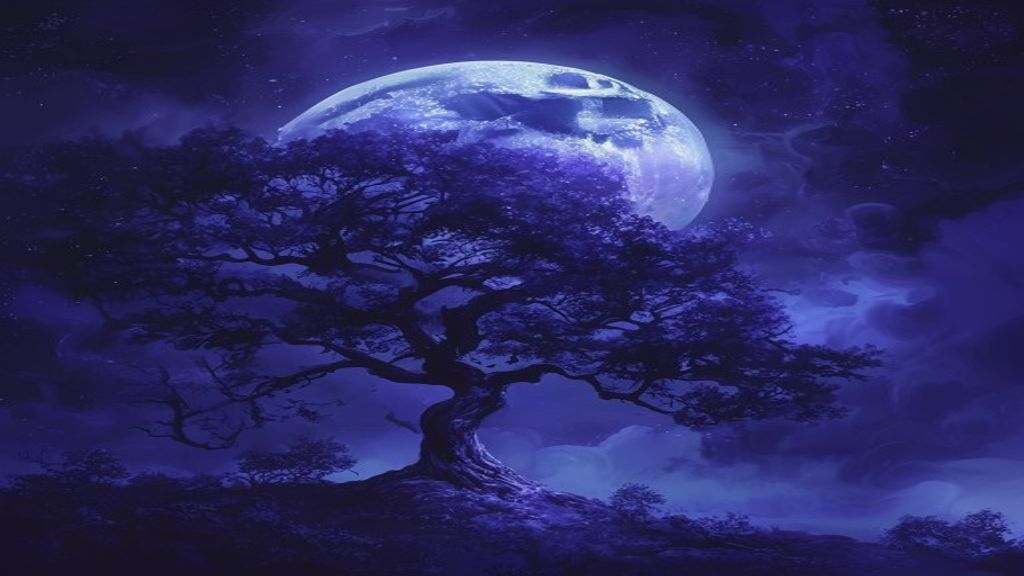
A dead oak stood at the end of the street where I grew up, and I walked past it for years without giving it much thought. Gray, branching into nothing, entirely still while every other tree moved. I don’t know when I started noticing it. But it started appearing in dreams not long after I moved away from that neighborhood, which tells me something: the mind files away what the eyes dismiss. That tree wasn’t doing anything dramatic. It was just very much itself.
Dreams about trees come in quietly. No chase, no door that won’t open, no crowd staring. Just a tree, or sometimes a whole grove, and you wake up carrying something you can’t immediately name. People write to me about these dreams more often than almost any other nature symbol, and they almost always apologize for it: ‘I know it sounds boring.’ It isn’t.
A tree in a dream stands for your life as structure: the roots are your foundation, the trunk your core self, the branches what you’re reaching for. The tree’s condition matters most. A healthy, full tree points to felt stability; a damaged or bare tree tends to surface during periods of internal upheaval or grief.
What makes this image so old
Artemidorus was cataloguing tree dreams in the second century, and even then he was clearly working from material that predated him, listing varieties and conditions with the confidence of someone drawing on a long tradition. The Oneirocritica notes that a flourishing tree signals good outcomes, a withered one signals losses, and a tree struck down mid-growth signals a life interrupted. That’s an ancient observation and it maps almost exactly onto how people describe these dreams today, which either means he got it right or means our minds have been using the same symbol for reasons that don’t change.
Carl Jung would say both things are true simultaneously. His sense of the tree as a symbol of the self, specifically of the psyche’s growth and individuation, runs through his writing like a spine. I’m not always comfortable reaching for Jungian language because it can slide quickly from observation into architecture you can’t test. But the tree-as-self reading has a quality I trust: it stays honest about complexity. A real tree isn’t a metaphor for simple, linear growth. It grows toward light and still has dead wood. It survives storms and still loses branches. That tension is what makes it useful.
The condition is the message
A tree in full leaf often arrives when something in your life feels established and nourishing. Notice what you’re standing near it doing. Resting under it points to security; climbing it points to ambition you’re feeling ready for.
Not the same as dead. A bare tree in a dream usually signals a dormant season: energy pulled inward, not lost. Ask what you’re waiting for. There’s usually an answer.
The most unsettling version. If you watch it fall, it often reflects something foundational that has already shifted or is about to. If you’re the one who cut it, the question is whether you meant to.
This is the version that follows me most often in the dreams people describe. The structure is there; the life isn’t. That’s a very specific grief: the form of something intact, the substance gone.
A tree unlike any real one. Sometimes this is just the dreaming mind’s visual freedom. Sometimes it marks a part of your life with no precedent, something you’re growing without a map.
Roots and branches are not the same question
Where the dream puts your attention tells you which part of the metaphor is active. Dreams that keep returning to roots, to what’s underground, to the base of the trunk, tend to surface when questions of origin and belonging are loud. Family, history, the ground you came from. Dreams that send your gaze up into the canopy, into what the tree is reaching toward, carry a different quality: forward-facing, aspirational, sometimes anxious. The middle of the trunk, the main body, is about now. About the self as it currently stands.
I’ve heard from people who dream of climbing trees they couldn’t reach the top of, and from people who dream of trees so enormous the roots are a landscape. The scale matters. A tree that dwarfs you suggests a force larger than your control, something you’re reckoning with rather than mastering. A tree you could wrap your arms around suggests something that feels knowable, even intimate.
If you dream of a dead tree specifically, the reading sharpens. The deadness there isn’t about dormancy anymore. And if the image in your dream moved toward darkness, toward water that felt wrong or too still, you might also look at what comes up for people who dream of black water: the two images sometimes arrive as a pair when the psyche is working through something it hasn’t named yet.
Lightning-struck
Dreams about trees hit by lightning sit in their own category. Something that was whole is suddenly split. These tend to arrive around ruptures: sudden losses, relationships that ended without warning, moments when something you thought was solid turned out to be otherwise. Whether the lightning is the interesting part or the damage afterward is tells you where the dream wants you to look. And if the storm itself loomed large, the dreaming of lightning piece takes that up in more detail.
When the tree keeps coming back
Recurring tree dreams often mean the thing the tree represents hasn’t been consciously acknowledged. G. William Domhoff’s continuity hypothesis, which he’d be the first to call unromantic, argues that dreams don’t reveal hidden things so much as they reflect things already occupying your waking mind. A tree that appears again and again is most likely mirroring a concern that keeps occupying your waking mind too. The dream isn’t ahead of you. It’s keeping pace.
That dead oak at the end of the street kept appearing in my dreams for about two years after I left that neighborhood. It was always just standing there. Eventually I realized the dreams weren’t about the tree at all. They were about a period of my life I’d filed away as ‘over’ without actually finishing it. When I stopped treating that time as closed, the tree stopped showing up. I don’t know what to do with that exactly. I’m not sure I need to.
- Was the tree living, dormant, or dead? Which phase of something in your life matches that?
- Where was your attention: roots, trunk, or branches? Foundation, present self, or reaching forward?
- Was the tree your scale or larger? Does what it represents feel manageable right now?
- If it was damaged, did that feel like something happening to you or something you’d done?
Quick answers
What does dreaming of a tree mean?
It’s usually your mind using the tree as an image for your life as structure. A healthy full tree tends to appear when you feel established; a bare or damaged tree tends to surface during loss or transition. The condition and scale matter more than the species.
Is dreaming of a tree falling a bad omen?
Not in any literal sense. A falling tree in a dream tends to reflect a felt rupture in waking life, something foundational that has already shifted. It’s less a warning than a signal that your mind is processing something real.
What does it mean to climb a tree in a dream?
Climbing usually carries an aspirational quality. You’re reaching toward something, testing how far your abilities take you. Whether you reach the top or don’t is part of the message. It’s worth asking what you’re working toward in your waking life right now.
Why do trees keep appearing in my dreams?
Recurrence usually means the thing the tree stands for hasn’t been fully acknowledged in waking life. It might be a question about where you belong, what you’re building, or something foundational that’s changed. The dream tends to ease when you name the concern directly.