Object Dreams
Dreaming of Armor: what the shell you're wearing means
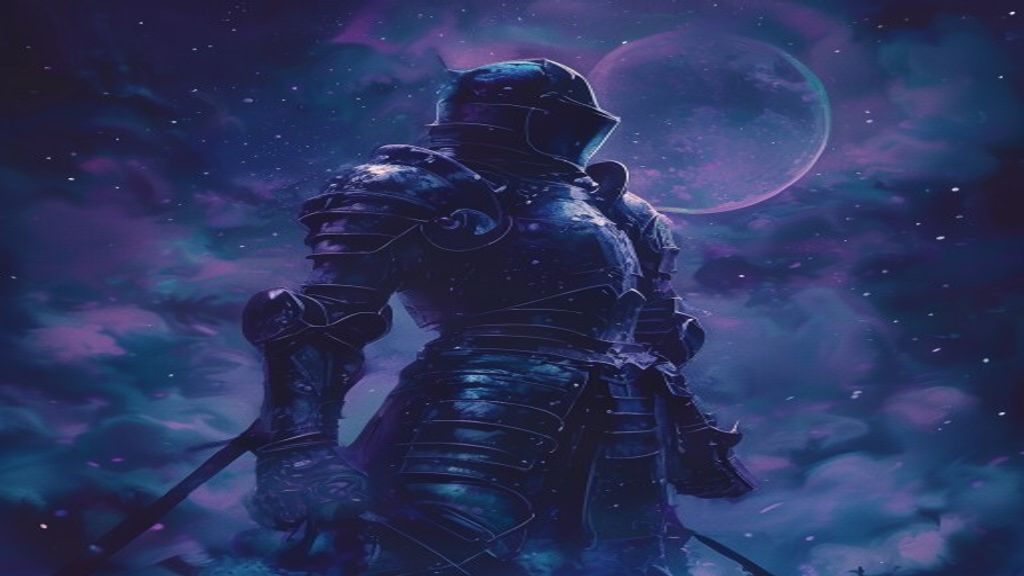
What does it actually feel like to wear armor? Not the Hollywood version, the weight of it, I mean. A friend who does historical reenactment once let me try on a replica breastplate. The thing clamped around my torso and the first sensation wasn’t safety. It was constriction. I could breathe. But I couldn’t forget that the metal was there.
That feeling is exactly what armor dreams tend to carry. The protection is real. The restriction is also real. And the dream doesn’t usually tell you which one it’s commenting on.
Armor in a dream usually stands for a defense you’ve built against emotional hurt. Wearing it comfortably points to healthy boundaries. Struggling to remove it, or finding you can’t, points to defenses that have outlived their purpose and are now keeping out people or experiences you actually want.
The thing about protection is it works both ways
Wearing it willingly
The armor fits. You move in it. You feel capable and ready. This version tends to show up when you’re genuinely preparing for something difficult, or when you’ve recently held a boundary and it went well. It’s your mind rehearsing competence, not fear.
Can’t get it off
You want to remove the armor and you can’t. Or it’s fused to your skin. Or removing it hurts. This is the version that lingers into the afternoon. It usually points to a defensive posture you adopted for good reasons, once, that’s now simply how you move through the world. The protection became the prison.
There’s a third version people don’t mention as often: armor that belongs to someone else. You’re wearing a dead relative’s plate mail, or a suit that clearly wasn’t made for your body. That one tends to surface when you’ve inherited someone else’s way of being guarded, a parent’s emotional unavailability, a family culture of toughness that was handed down like furniture and now sits oddly in your life.
What Artemidorus noticed about iron and skin
Artemidorus, writing in the second century, treated armor as one of the clearest dream symbols he knew. Weapons and protective gear, he argued, almost always reflected the dreamer’s capacity to face what was coming. Wearing full armor meant readiness. Carrying armor that didn’t fit meant attempting a defense you weren’t equipped for. I find him useful here not because I think he was right about everything but because he was paying attention to dreams professionally for decades, and his instinct, that the quality of the fit matters as much as the presence of the armor, still holds.
The fit question is the one I’d ask first if you came to me with this dream. Not what the armor looked like. Not the historical period or the material. Whether it fit your body. Whether you could move. Whether you wanted it on.
The dreams where armor shows up as something else
Armor doesn’t always look like armor. Sometimes it’s a very formal suit you won’t take off even indoors. A thick coat in summer. A uniform with no rank markings. The symbol can dress itself in whatever your waking life associates with protection, and when you look back at the dream, the logic becomes obvious. You were armored. You just didn’t recognize the armor while you were wearing it.
This displacement is worth thinking about. G. William Domhoff’s continuity hypothesis would say your dream is almost certainly pulling from actual emotional material in your life, not manufacturing symbols from scratch. Which means if armor keeps showing up in unfamiliar forms, the question isn’t what the symbol means in theory. It’s what you’ve been defending against lately, and whether the defense still makes sense. He’d call the symbolic variety unremarkable. I’d call it the dream being tactful.
When the armor rusts
Rusted armor, cracked armor, armor with missing pieces: these are among the most specific and interesting variants. They’re not about being undefended. They’re about defenses that were once maintained carefully and are now neglected. Maybe the threat that required them has passed. Maybe you’ve stopped believing in the armor without quite admitting it. Maybe, honestly, you’re tired.
Hobson would probably be skeptical of most of this interpretation, and fairly so. For him, dreaming of heavy metal objects on your body might trace back to activation patterns, to the brain generating the felt sense of constraint from noise in the motor system. I think he’s probably right about the mechanism and misses the meaning. The brain reaches for armor, and not a cinder block, for a reason.
That reenactor friend. He told me later that after a few years wearing the breastplate, he stopped noticing it. His body had adjusted. He only felt the weight again when he took the thing off, and suddenly his chest felt wrong without it. I keep thinking about that as a description of what happens to the defenses we’ve worn long enough. We don’t feel them until someone tries to reach us through them. Or until we dream.
If you’re drawn to exploring related dreams: dreaming of a hat sometimes carries a similar energy around identity and what you show the world, and a cross can arrive in dreams as another symbol of something carried. For the more charged version of protection and destruction, a vehicle on fire lives in related territory.
- Did the armor fit my body, or was I wearing something made for someone else?
- Did I want it on, or was I trying to remove it?
- What in my waking life am I currently defending against, and is that threat still real?
- Is there something or someone I’ve been protecting myself from that I might actually want to let in?
Quick answers
What does it mean to dream of wearing armor?
It usually represents a defensive posture in your emotional life. Wearing it comfortably suggests healthy self-protection or readiness for a challenge. Wearing armor you can’t remove suggests defenses that have hardened past the point of usefulness.
What does it mean to dream of removing armor?
Taking armor off in a dream, especially when it feels like relief, often points to a desire to be more vulnerable or open in some relationship. It can follow a period of sustained self-protection and mark a shift toward trust.
Why do I dream about armor that doesn’t fit?
Ill-fitting armor almost always points to a borrowed defense, one you adopted from someone else rather than built yourself. It might be a parent’s emotional style, a cultural script about toughness, or a protection strategy you inherited from a harder time in your own past.
Is dreaming of armor a warning?
Not usually. It’s more like a mirror than a warning. The dream is reflecting a posture you’re already in, not predicting an attack. The useful question is whether that posture is still serving you.