People Dreams
Dreaming of God: when the largest possible figure shows up
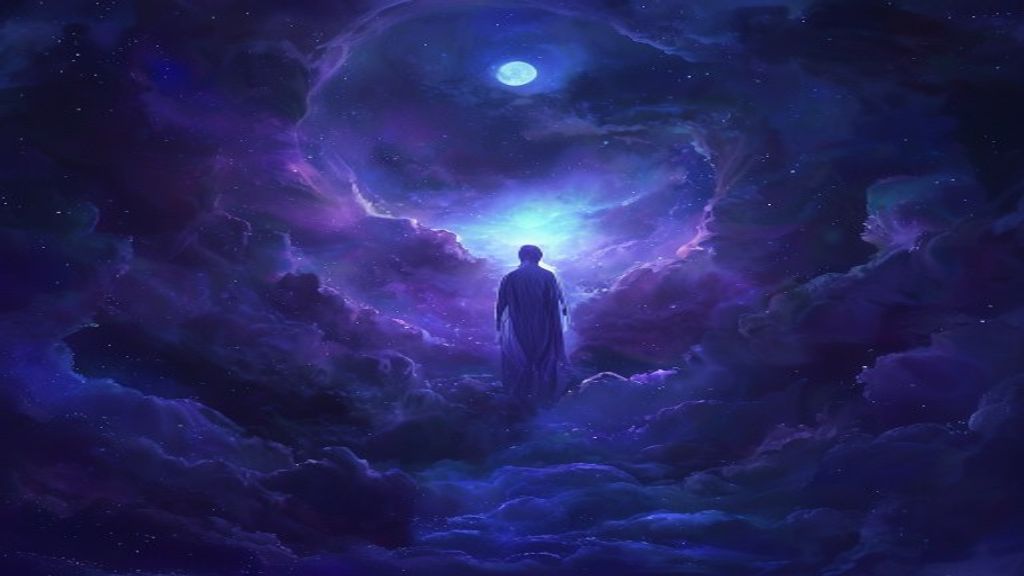
A low grey sky, the kind that presses down on a city in late November. And somehow you know, in the way you can only know things in dreams, that the sky itself is looking at you. Not watching. Looking. With specific, unhurried attention. People describe dreaming of God in dozens of different forms, a voice, a light, a figure, an absence that somehow communicates, but almost all of them describe some version of this. The sensation of being seen completely, from the outside in. It’s nothing like being watched. It’s closer to being understood before you’ve spoken.
Dreaming of God usually surfaces around moments of major decision, deep grief, or a need for meaning that hasn’t been met by any ordinary source. The form God takes in the dream, and especially what happens between you, matters far more than whether you consider yourself religious.
The largest available symbol
Hartmann wrote about how dreams cast emotion in the largest image they can find. The more intense and uncontainable the feeling, the more the mind reaches for something proportional. God is the limit case. If that figure showed up in your dream, your sleeping mind needed a symbol that could hold whatever you’re carrying. Which means whatever you’re carrying is very large. This isn’t a diagnosis. It’s a prompt. What in your waking life right now is the size of what you felt in that dream?
What you did next
This is, genuinely, the part that matters most. Not the form God took. Not whether God had a face, a voice, a colour. What matters is what happened between you. Did you approach? Did you stay still? Did you argue? Did you feel judged? Did you feel held? Did something enormous get said, or nothing at all? Did you wake up changed, or wake up troubled, or wake up with a question sitting on your chest that you didn’t have the night before? The dream is less a statement than a conversation. And in every conversation, the important thing is what the two parties did to each other.
- Notice what form God tookA voice, a light, a figure, a presence, a force you couldn’t see but knew was there. The form reflects how you currently conceive of the largest possible authority in your life, religious or not.
- Track the emotional directionDid the encounter move toward relief, toward guilt, toward longing, toward peace? The direction of the feeling is usually the direction your waking life needs to move.
- Find what it mirrorsDomhoff’s continuity hypothesis suggests this dream didn’t arrive from nowhere. What decision, loss, or longing is currently the largest thing in your life? That’s probably what the dream was attempting to be proportional to.
- Sit with the unanswered partDreams of God rarely conclude neatly. If you woke with an unresolved question, that question is probably more important than any answer the dream seemed to offer.
The judging dream and the held dream
Two versions come up so often I’ve started thinking of them as almost separate phenomena. In one, God is an adjudicator. You’re being weighed. The atmosphere carries the specific gravity of being known entirely and found lacking. People who’ve grown up in religious traditions with a strong emphasis on judgment are more likely to get this version, but not exclusively. Plenty of people who left faith decades ago still dream it. That particular structure of conscience doesn’t always leave when the belief does. In the other version, God is simply present. No evaluation. No words, sometimes. Just an immense, almost weightless warmth. People who’ve had this dream and who are in grief, or facing something unsurvivable-looking, describe it as the most comforting experience they’ve had. Rosalind Cartwright’s work on dreams and emotional processing would say this is the mind offering the largest available comfort to match the largest available pain. I’m not sure that explanation takes anything away from the experience. The comfort was real. What delivered it is a separate question. If you’ve been dreaming of a baby or new life around the same period, both dreams sometimes belong to the same emotional moment: something enormous beginning, and the mind reaching for the largest symbols it knows.
If you’re not religious
Worth its own section, briefly. These dreams happen constantly to people who have no active faith. The figure may not be labelled God at all. It may be a vast presence, an overwhelming authority, a light that seems to know things. The label matters less than the scale. Something that size showing up suggests your psyche needed a symbol for something that exceeds you. The concept of God is, among other things, the idea of a magnitude greater than the self. That concept can be present in a dream even when the theology isn’t.
The question you woke up carrying
Almost everyone who tells me about dreaming of God mentions one other thing: they woke up with a question. Not usually one they can articulate cleanly. More of a direction. An unresolved beat that keeps pulling at them through the morning. I think that question is the actual content of the dream. Not the figure, not the setting, not whether there were words. The question you’re left with is what the whole experience was building toward. If you’ve been dreaming of reconciling with family, or of a hug that felt like forgiveness, those dreams and this one are probably chapters of the same thing. The same need, looking for its answer in different costumes. That grey sky, pressing down over the city. Still there when I close my eyes and think about it. I don’t know what it meant exactly, or who it was for. But I know it wasn’t random. Dreams that feel like that never are.
- What form did God take, and what does that form mean to me specifically?
- What happened between us? Did I approach, argue, submit, question?
- What feeling did the encounter leave? That emotional direction is probably a direction I need.
- What question am I carrying out of the dream? That question is probably more important than any answer it seemed to offer.
Quick answers
What does it mean to dream of God?
Dreaming of God usually surfaces around a major decision, deep grief, or a need for meaning. Hartmann’s research suggests the mind reaches for its largest available symbol when the emotion is too big for ordinary images. The form God takes and what happens between you in the dream tells you most of what you need to know.
Does dreaming of God mean I’m religious or becoming religious?
Not necessarily. These dreams happen frequently to people with no active faith. The figure represents an overwhelming magnitude rather than a theological statement. What matters is the scale of what you’re carrying emotionally, not your belief system.
What does it mean if God judged me in a dream?
A judging God dream often reflects an active conscience weighing something you’ve done or haven’t done. It can persist long after religious belief itself has faded, because the structure of moral self-assessment doesn’t always leave with the theology. The dream is usually about something specific you’re holding yourself accountable for.
What does it mean if the encounter with God felt peaceful?
The held or comforting version of this dream tends to arrive at moments of profound grief or fear, when you’re facing something that feels unsurvivable. Cartwright’s work on dreams and emotional processing suggests this is the mind finding its most adequate response to the largest pain it can carry. The peace was real, whatever its source.