- Tradition
- Biblical reading
- Also read as
- PsychologySame symbol, other tradition
- Scripture
- Exodus, Corinthians, James, Proverbs
- Reviewed
- 4 min read
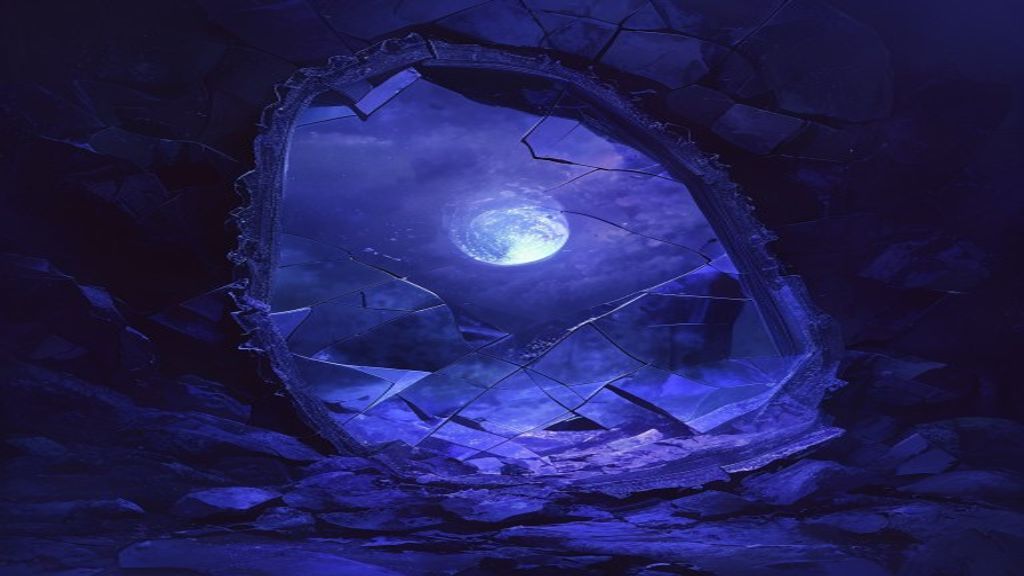
When a mirror breaks in a dream, the phrase that arrives first is usually ‘seven years bad luck.’ It comes unbidden, half joking, and it lodges anyway. It is an old superstition, traditionally traced to Rome, with nothing to do with Scripture. The biblical tradition has something far stranger and more interesting to offer than a counting-down curse.
No dream in the Bible involves a mirror, broken or otherwise. But the mirror appears in Scripture as one of its most powerful images of knowledge and self-perception. That’s the thread worth pulling.
What the Bible actually says about mirrors and reflection
- Exodus 38:8
The bronze mirrors of the women serving at the tabernacle were used to make the bronze laver for washing. Objects of vanity converted to instruments of purification.
- 1 Corinthians 13:12
‘For now we see through a glass, darkly; but then face to face: now I know in part; but then shall I know even as also I am known.’ Paul on the limits of human self-knowledge.
- James 1:23-24
A person who hears the word but doesn’t do it ‘is like unto a man beholding his natural face in a glass: for he beholdeth himself, and goeth his way, and straightway forgetteth what manner of man he was.’
- Proverbs 27:19
‘As in water face answereth to face, so the heart of man to man.’ Reflection as a metaphor for self-knowledge and human connection.
- 2 Corinthians 3:18
‘We all, with open face beholding as in a glass the glory of the Lord, are changed.’ Transformation through seeing clearly.
Pull those passages together and a coherent picture emerges. In Paul’s first letter to the Corinthians, seeing in a mirror isn’t vanity: it’s epistemology. It’s the condition of partial, imperfect human knowledge before we stand in full light. When a mirror breaks in a dream, a biblical lens reads it as disruption to that partial seeing. What you thought you knew about yourself, what you thought was true of your situation, has cracked. That can be frightening. It can also be the beginning of something.
No broken mirror in the biblical record
No broken-mirror dream appears in the biblical record. The seven-years superstition is traditionally traced back to Roman folk belief that a person’s image in a mirror held their soul, and that a fracture took seven years to heal. The Bible has no such tradition. What it has instead is James 1:23-24’s image of the man who looks in a mirror and immediately forgets what he saw. The broken mirror in your dream might be doing the opposite: forcing you to remember something about yourself you’ve been avoiding. You can read the secular perspective on this image at dreaming of a broken mirror if you want a non-scriptural angle alongside this one.
Partial sight and what gets broken
1 Corinthians 13:12 is Paul’s most honest statement about human limitation. We see, but partially. We know, but imperfectly. A broken mirror in a dream can be read within this framework as the crack in your current understanding: the version of yourself or your situation that you’ve been carrying around has been disrupted, and that might be exactly what needs to happen. Within the tradition, readings vary: some would see the broken mirror as a call to repentance, a crack in pride or self-deception; others would read it as disorientation before growth; some would treat it with the caution of Ecclesiastes 5:7 and simply note the dream without constructing a meaning around it.
The Exodus 38 passage is strange and worth sitting with. The women’s bronze mirrors, instruments of self-regard, were melted down to make the laver at the tabernacle entrance, the basin where priests washed before approaching the holy. That transformation, from self-reflection to preparation for encounter with God, is not a verse about your dream. But it’s a movement worth considering. What if the broken mirror in your dream isn’t about loss or bad luck, but about something being repurposed? If the dream had a quality of judgment or being seen rather than seeing, the biblical meaning of being naked in public deals with exposure and shame. And the same mirror passages are read without the breaking in the biblical meaning of a mirror in dreams.
The identity question under everything
Genesis 1:26-27 describes humanity as made in the image of God. The Hebrew word, tselem, is sometimes translated ‘image’ and sometimes ‘reflection.’ We are, in one reading of that text, God’s mirror in the world. A broken mirror dream touches something much older than superstition. It touches the question: whose image are you actually showing? Who do you reflect? The crack in the glass might be asking that. I don’t have an easy answer to give you, and I’d be suspicious of anyone who did.
- Was the broken mirror in your dream frightening, or almost a relief? What does your reaction to the breaking tell you about what that self-image has been costing you?
- James 1:23-24 describes a man who looks in a mirror and immediately forgets what he saw. Is there something true about yourself that you’ve been moving past too quickly?
- 1 Corinthians 13:12 frames partial sight as the human condition before full knowing. What aspect of your life are you seeing most clearly right now? What are you seeing ‘darkly’?
- The Exodus 38 mirrors were converted from self-reflection to sacred use. Is there something in your self-perception that might be ready to be repurposed?
One symbol, two traditions
Read side by side, the two traditions pull in different directions: broken mirror as a signal from your own mind, or broken mirror as an image to test against the text. Knowing which question you are asking is half the interpretation.
A broken mirror in a dream usually points to a cracked or altered self-image: something you believed about yourself just came apart. The shards matter less than the moment before the break, because that’s where the real question…
Read the psychological meaning →No dream in the Bible involves a mirror, broken or otherwise. But the mirror appears in Scripture as one of its most powerful images of knowledge and self-perception. That’s the thread worth pulling.
You are reading this oneQuick answers
Does a broken mirror in a dream mean bad luck according to the Bible?
No. The ‘seven years bad luck’ tradition is Roman in origin and has no basis in Scripture. The Bible uses the mirror as an image of knowledge and self-perception, not as a luck-bearing object. A broken mirror in a biblical framework is more likely a question about how you see yourself than a forecast of misfortune.
Is a broken mirror dream a message from God?
Joel 2:28 leaves genuine room for God to speak through dreams, and that tradition is worth taking seriously. But Ecclesiastes 5:7 and Jeremiah 23:25-28 counsel against over-building on a single dream image. The wise move is to hold it as a possible prompt for reflection rather than a direct divine communication, and bring it to prayer and trusted counsel.
What does the mirror symbolize in Scripture?
Partial knowledge (1 Corinthians 13:12), forgetfulness and self-deception (James 1:23-24), and transformation through seeing clearly (2 Corinthians 3:18). In Exodus 38, bronze mirrors are repurposed from vanity into sacred use. The biblical mirror is consistently about how we see ourselves, and how limited that sight is.
Could a broken mirror dream relate to identity or self-image?
Yes, and this is where the biblical reading is most interesting. If humanity is made in the image of God (Genesis 1:26-27), questions about how we see ourselves carry theological weight. A crack in your self-image might be the beginning of a more honest self-perception rather than something to fear.
Sources for this reading
- The Holy Bible, King James Version (1611). Public domain. Scripture quotations on this site are from the KJV.
Full bibliography on Sources and method. Found a mistake? Tell us and see the corrections log.