- Tradition
- Biblical reading
- Also read as
- PsychologySame symbol, other tradition
- Scripture
- Zechariah, Revelation, Ecclesiastes, Jeremiah
- Reviewed
- 4 min read
You see a single black horse at a fence line, a storm rolling in behind it. The sky has that particular yellow-gray that comes before hail, and the horse isn’t moving. The image holds two things at once: power and foreboding, beauty and threat, and the frame makes neither one wrong. That is close to what the biblical passages about black horses do.
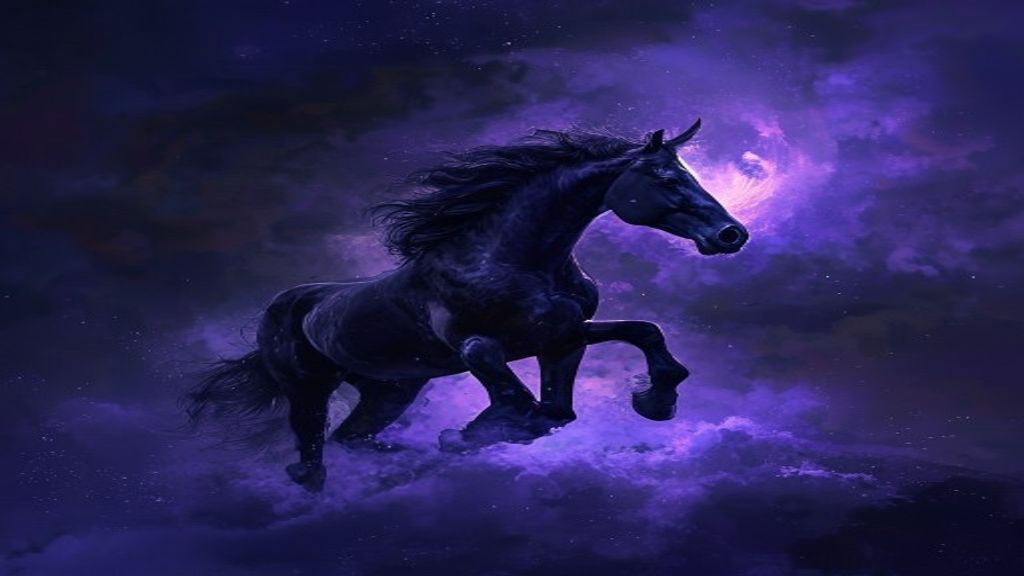
If you dreamed of a black horse and are wondering whether the Bible has something specific to say about it, the answer is yes, more specifically than most animals. The black horse appears in two prophetic books with clear contextual meaning, and those passages are worth knowing precisely before you decide whether they fit your dream. For the secular dream reading, the black horse dream without the biblical lens is worth comparing.
What the Bible actually says about the black horse
- Zechariah 6:2-6
In Zechariah’s vision of the four chariots, black horses pull the chariot going north, interpreted by the angel as the four winds of heaven and as patrolling the earth on God’s behalf. The black horses go north first, then follow the white; the vision is about divine governance of the nations, not personal foreboding.
- Revelation 6:5
The third seal opens and ‘lo a black horse; and he that sat on him had a pair of balances in his hand.’ The voice from among the four living creatures announces the prices of wheat and barley, and the instruction ‘see thou hurt not the oil and the wine.’ The black horse in Revelation is explicitly associated with scarcity, economic pressure, and measured distribution; famine conditions rather than plague or war, which belong to other horses.
- Revelation 6 as a whole
The four horses together represent the conditions of a broken world: conquest, war, famine, death. They’re not personal omens in the text; they’re apocalyptic imagery describing patterns of history. Reading them as specific prophecies for an individual is a move the text itself doesn’t make.
- Zechariah 1:8
An earlier vision in Zechariah shows a man among myrtle trees with horses of red, speckled, and white. The horses here are described as those who patrol the earth. The rider on the black horse isn’t present in this vision; it comes in chapter 6.
What strikes me about the Revelation passage is the specificity: it’s not just darkness and doom. There are scales, careful measurements, a voice that names exact prices and then says ‘hurt not the oil and the wine.’ In the middle of scarcity imagery, there’s a note of protection for the luxuries. Whatever the passage means in its full apocalyptic scope, that detail suggests the black horse’s moment isn’t pure destruction. Something is being preserved through it.
The honest limits of applying these passages to a dream
Neither Zechariah nor Revelation describes these visions as dreams in the normal sense. Zechariah calls his nighttime visions by that name, but they’re clearly prophetic visions given to a specific figure in a specific historical moment. Revelation is a vision given to John on Patmos. When a person today dreams of a black horse, connecting it to these passages is a move the biblical text itself doesn’t sanction automatically. The honest position is that these are the richest biblical images of black horses available, and they’re worth reflecting with, not that they constitute a direct message.
Ecclesiastes 5:7 runs like a quiet thread under all of this: ‘in the multitude of dreams and many words there are also divers vanities: but fear thou God.’ Jeremiah 23:25-28 warns against those who ’cause my people to err by their dreams.’ That warning is about false prophets who weaponize dream interpretation to control communities, but the underlying principle applies to anyone who treats a dream as certain divine speech without testing it carefully. The biblical meaning of a white horse covers the first seal of the same Revelation 6 sequence, and the biblical meaning of horses looks at how Scripture treats the animal itself.
If I’m honest about my own reading of this imagery: the black horse in Revelation sits between the red horse of war and the pale horse of death. It’s not the worst thing in the sequence. It represents scarcity and careful measurement, which in a life context might point toward a season of watching what you have, counting what matters, deciding what gets protected. The ‘hurt not the oil and the wine’ detail suggests that in moments of pressure, some things are meant to be preserved. That’s not a prophecy about your dream. But it’s a frame that might be more useful than ‘impending doom.’
- In your dream, was the black horse moving, still, threatening, or majestic? The quality of its presence matters as much as its color.
- Is there a season of scarcity or careful measuring in your current life? Financial, emotional, spiritual?
- The Revelation black horse carries scales: judgment of what things cost, what can be afforded. What in your life is currently being weighed?
- If God’s governance of the nations involves even the hard horses (as Zechariah suggests), what would it mean for you to trust that what looks threatening in your life is still under that kind of oversight?
One symbol, two traditions
Where the psychological read treats black horse as a mirror of your inner state, the biblical tradition treats it as something to weigh, prayerfully, against what Scripture actually says.
A black horse in a dream usually signals raw, unintegrated energy, something powerful in you that’s either running without direction or waiting to be ridden. The black coat amplifies the intensity but doesn’t determine whether…
Read the psychological meaning →In Revelation 6:5, the black horse’s rider carries scales and announces famine-level prices for grain while sparing oil and wine. It represents scarcity and measured judgment, not simply evil or death. In Zechariah 6, black…
You are reading this oneQuick answers
What does the black horse in the Bible represent?
In Revelation 6:5, the black horse’s rider carries scales and announces famine-level prices for grain while sparing oil and wine. It represents scarcity and measured judgment, not simply evil or death. In Zechariah 6, black horses pull a chariot associated with divine governance and patrolling the nations. Neither passage reads as a personal omen; both are prophetic imagery about historical conditions.
Is dreaming of a black horse a warning?
Joel 2:28 affirms that God can speak through dreams, but Ecclesiastes 5:7 and Jeremiah 23:25-28 both caution against treating dreams as automatic divine messages. A vivid dream of a black horse is worth prayerful attention, especially if it connects to something real in your current circumstances. The Revelation imagery of scarcity and careful measurement may be a useful biblical lens for a season of pressure or transition.
Does a black horse in a dream mean famine or disaster?
In Revelation 6, yes, the black horse is associated with famine conditions specifically. But applying apocalyptic imagery to a personal dream is a move the text doesn’t make for you. It might point metaphorically toward a scarcity in your life, whether material, relational, or spiritual. It doesn’t function as a prediction.
How is the black horse different from the pale horse or the red horse?
In Revelation 6, the red horse (second seal) represents war and bloodshed; the black horse (third seal) represents famine and economic hardship; the pale horse (fourth seal) represents death by multiple means. The black horse sits between conflict and mortality in that sequence. Its scales and the specific prices announced for grain make it more about measured survival than outright destruction.
Sources for this reading
- The Holy Bible, King James Version (1611). Public domain. Scripture quotations on this site are from the KJV.
Full bibliography on Sources and method. Found a mistake? Tell us and see the corrections log.